Carbon monoxide is called the silent killer for a reason. It has no colour, smell or taste. If a boiler, gas fire or heater starts producing it, you won’t notice until people start feeling ill, and an alarm is the only way to know it’s there.
The problem is, loads of CO alarms sold online don’t actually work, which is pretty shocking considering they’re essential safety items.
According to Which?’s CO alarm tests, every unbranded alarm it tested failed to detect the gas. These are the cheapest listings on the big marketplaces that a lot of people go for.
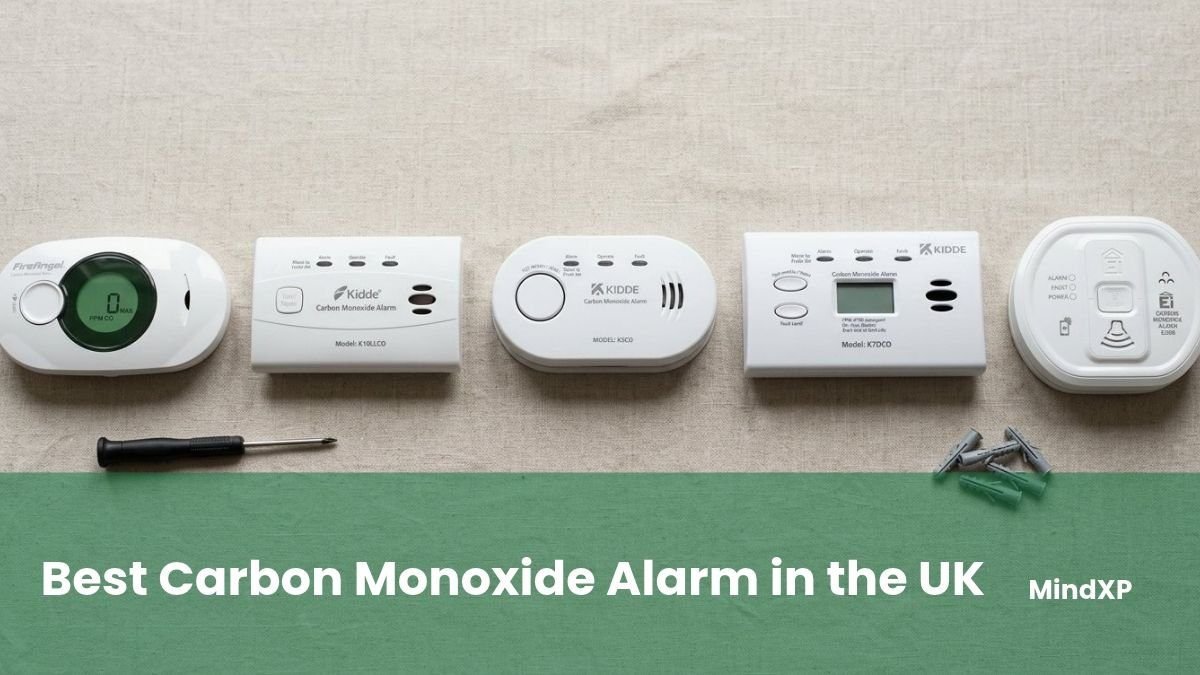
If you’re looking for a CO alarm, I’ve picked the five best UK options from reputable brands to save you some time and help you avoid buying a dud. All are certified to UK standards and sold by mainstream retailers.
Quick answer
- Best overall: FireAngel FA3322, with a digital display and a sealed 10-year battery (about £40).
- Best value sealed battery: Kidde K10LLCO, which never needs a battery change (from £22.49).
- Best budget: Kidde K5CO, a trusted brand at a budget price (£17.45).
- Best for travel and power cuts: Kidde K7DCO, portable with a digital display (£21.90).
- Best for landlords and Scotland: Aico Ei208, with a tamper-proof sealed battery (£29.99).
In this guide
The best carbon monoxide alarms in the UK
| Alarm | Best for | Battery | Approved for | Price |
|---|---|---|---|---|
| FireAngel FA3322 | Best overall | Sealed, 10 years | Homes, caravans and boats | £39.98 |
| Kidde K10LLCO | Value sealed battery | Sealed, 10 years | Homes | From £22.49 |
| Kidde K5CO | Budget | AA (included) | Homes | £17.45 |
| Kidde K7DCO | Travel and power cuts | AA (included) | Homes, caravans and boats | £21.90 |
| Aico Ei208 | Landlords and Scotland | Sealed, 10 years | Homes, caravans and boats | £29.99 |
Prices checked on 19 October 2026.
1. FireAngel FA3322
- Best for: Most homes, especially if you want to see CO levels, not just hear an alarm.
- Cost & where to buy: £39.98 at Screwfix.
- Battery and lifespan: Sealed lithium battery that lasts the alarm’s 10-year life. 5-year manufacturer’s guarantee.
- Standards: Kitemarked to BS EN 50291-1 for homes and BS EN 50291-2 for caravans and boats.
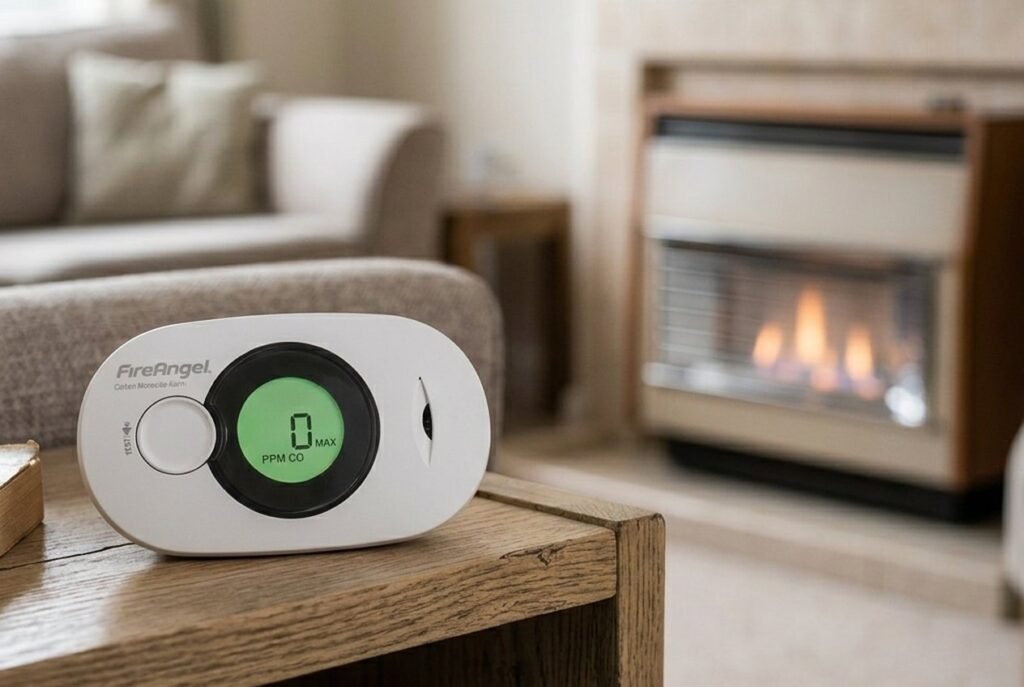
The FA3322 does everything a CO alarm should, then adds a screen. It shows the carbon monoxide level in the room (which should be zero), along with the temperature and humidity.
It has a sealed battery, so no annoying chirps and no replacements. After 10 years, you simply buy another alarm. If you live in Scotland and don’t have a hardwired alarm, the law actually requires you to use the sealed type.
It works on a wall or stands on a shelf, and because it’s approved for caravans and boats as well as homes, you can take it with you on holiday. It’s also a Which? Best Buy, which means it detected CO in every one of Which?’s 20-plus lab tests.
The only potential downside is price. At around £40, it costs twice as much as a basic alarm, and if you need several, that can add up.
Verdict: The best all-rounder. Put one in the room you’re most worried about, like the one with the boiler or a gas fire, and use cheaper alarms elsewhere.
2. Kidde K10LLCO
- Best for: Anyone who never wants to think about batteries.
- Cost & where to buy: £22.49 at Safelincs (plus delivery), or £27.49 at Screwfix.
- Battery and lifespan: Sealed lithium battery that lasts 10 years. 10-year manufacturer’s guarantee.
- Standards: Kitemarked to BS EN 50291-1 for homes.
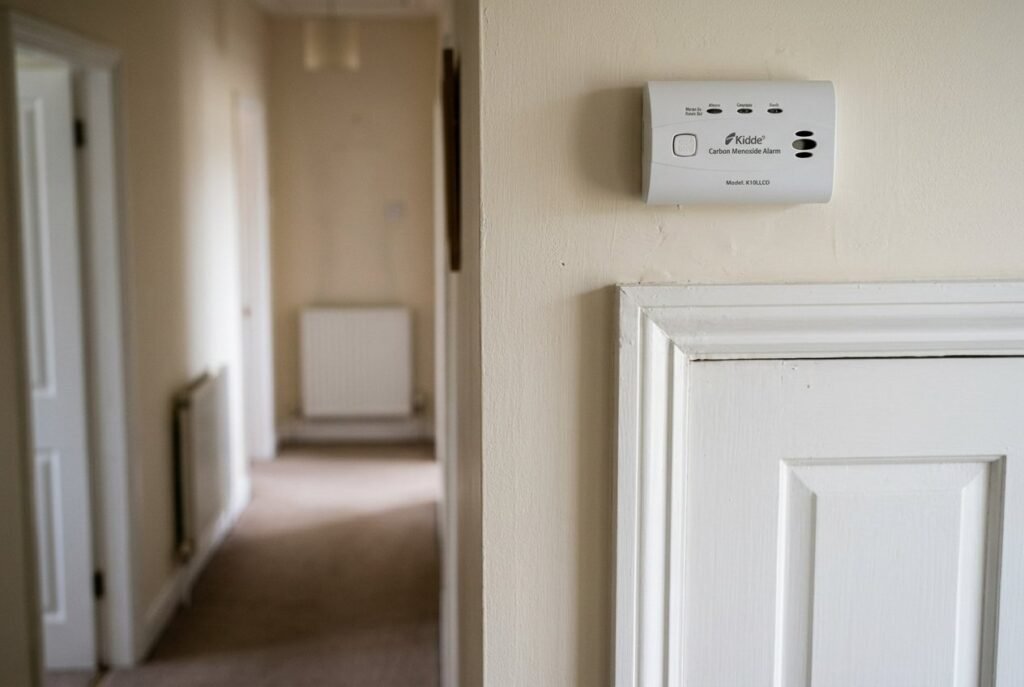
The K10LLCO is the simplest way to get proper protection with no upkeep. There’s no screen, just LED lights and a loud alarm. The sealed battery lasts 10 years, and Kidde backs that up with a 10-year guarantee.
The main thing it lacks compared with the FA3322 is the display. At first glance, you might think, “Who cares?” But after some thought, I like the display. Instead of just silence or panic, you’ve got an informative safety device.
If you want a screen, the Kidde K10LLDCO is the same alarm with a digital display, and costs a little more. If you’re not that fussy, grab this one.
Verdict: The best value for fit-and-forget protection. A great choice for bedrooms, hallways and every room that needs an alarm.
3. Kidde K5CO
- Best for: A trusted alarm on a tight budget.
- Cost & where to buy: £17.45 at B&Q.
- Battery and lifespan: Two AA batteries, included. The sensor lasts 10 years, and Kidde gives it a 7-year warranty.
- Standards: Kitemarked to BS EN 50291-1 for homes.
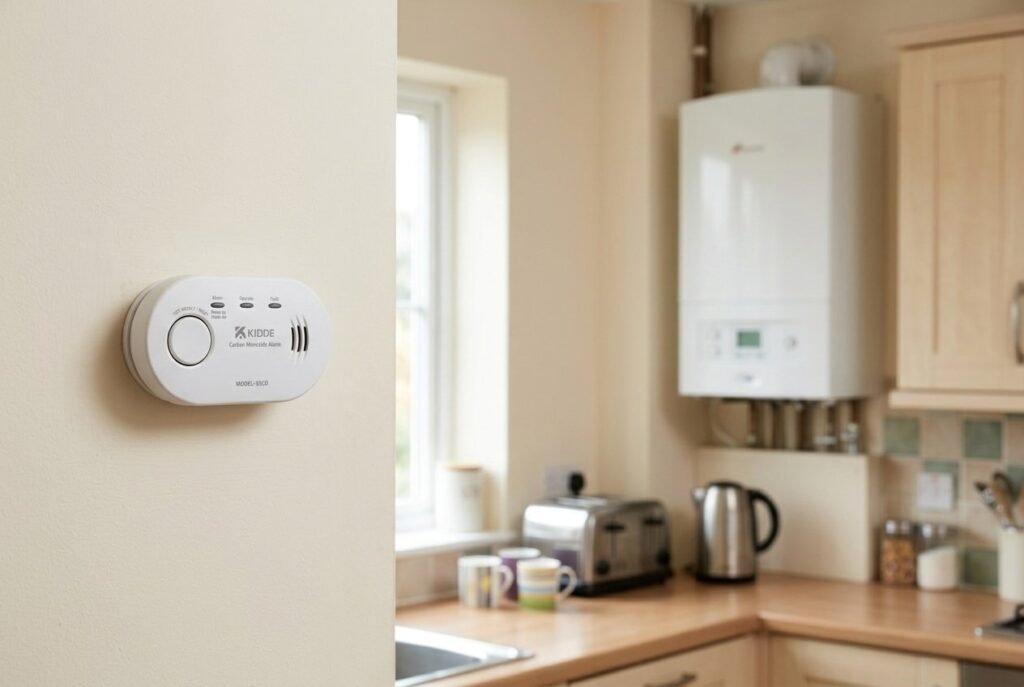
If you’re looking for cheap and cheerful, the K5CO is ideal. Don’t get sucked in by the unbranded ones for a tenner. For a few pounds more, you can get one that actually works.
It takes two AA batteries, which come in the box. That’s the main drawback if it matters to you; unlike the options above, this one needs fresh batteries every so often.
Batteries are pretty pricey these days too, so changing them once a year can add up. In the long run, you might be better off spending a bit more on a sealed one. And in Scotland, battery CO alarms must be sealed, so this one wouldn’t be compliant.
Verdict: The cheapest alarm I’d trust. Ideal if you need to cover several rooms without spending much.
4. Kidde K7DCO
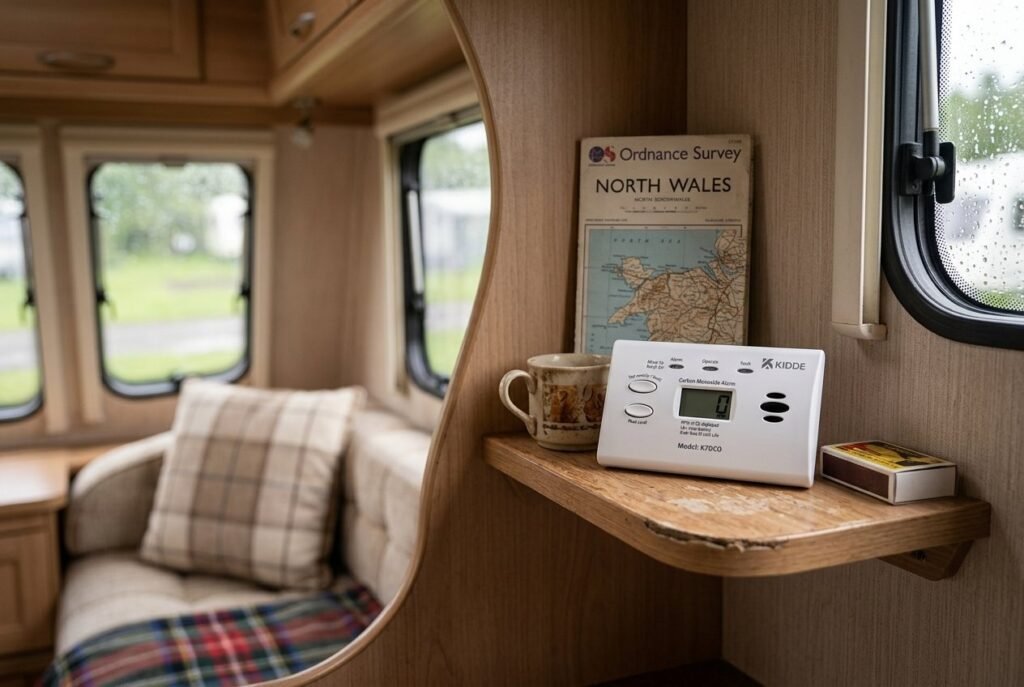
- Best for: Caravans, boats, travel, and moving between rooms in a power cut.
- Cost & where to buy: £21.90 at B&Q.
- Battery and lifespan: Two AA batteries, included. 10-year life and 10-year warranty.
- Standards: Kitemarked to BS EN 50291-1 for homes and BS EN 50291-2 for caravans and boats.
The K7DCO is portable, so you can move from room to room, or take it away with you. It has a digital display showing the CO level, and a memory function that records the highest level it’s detected, so you can see if there was a problem while you were out or asleep.
It’s certified for caravans and boats, so it’s a good one to take camping or on a narrowboat holiday. Like the K5CO, it runs on AA batteries, so in Scotland it’s best used as an extra portable alarm if you do buy one.
It’s also my pick for power cuts. If you’re running a gas or paraffin heater, or cooking on a camping stove indoors, it can sit in whichever room you’re using. It’s small enough to move as you do.
Verdict: The most versatile alarm here. If you use a portable heater or go away in a caravan, this is the one to get.
5. Aico Ei208
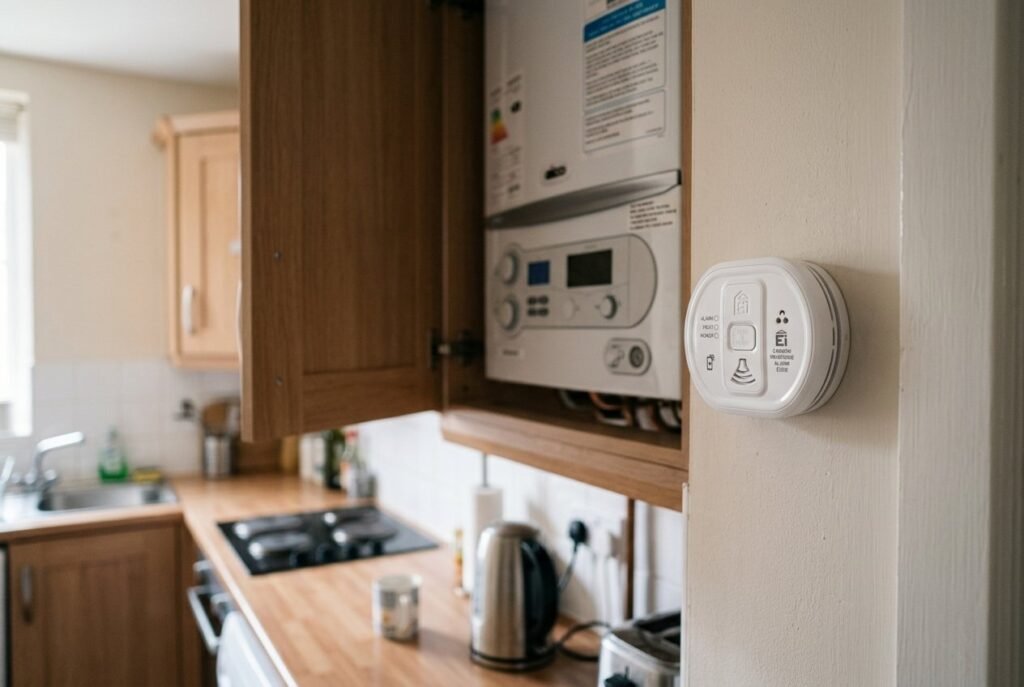
- Best for: Landlords, homes in Scotland, and anyone who wants a professional-grade alarm.
- Cost & where to buy: £29.99 at Toolstation.
- Battery and lifespan: Sealed lithium battery that lasts 10 years. 5-year guarantee.
- Standards: Kitemarked to BS EN 50291-1 for homes and BS EN 50291-2 for caravans and boats.
The Ei208 comes from Aico, a UK brand that mainly makes alarms for electricians and professional installers. The sealed, tamper-proof battery is the type landlords in Scotland are required to fit, and it’s a good choice for any rented home.
It has a feature called AudioLINK, which lets an installer or landlord download the alarm’s history using a phone app, handy for checking it’s working properly.
It’s a little more expensive than the Kidde sealed-battery alarm, and it doesn’t have a display. For most homeowners, the K10LLCO does the same job for less.
Verdict: The alarm to choose if you’re a landlord or need something built to a professional standard.
Why you shouldn’t buy a cheap unbranded CO alarm
If you search for a CO alarm on Amazon or eBay, the cheapest results are often unbranded alarms for under £10, many claiming to meet the British standard.
Which? says every unbranded CO alarm it tested failed to detect the gas, and they’re all on its Don’t Buy list.
In one round of Which? tests, unbranded alarms bought on eBay, Amazon, AliExpress, and Wish failed to sound between 10 and 22 times. The alarms from well-known brands like FireAngel and Kidde detected CO every time.
Expect to pay around £20 for a reliable alarm. Every pick in this guide is from a recognised brand and sold by a mainstream UK retailer.
What to look for in a carbon monoxide alarm
Every alarm in this guide ticks these boxes, but here’s what to check if you’re shopping around.
The right standard
Check the box or listing for BS EN 50291. London Fire Brigade says to only buy alarms certified to this standard, with a British or European approval mark like the Kitemark.
- BS EN 50291-1 is the standard for homes.
- BS EN 50291-2 is for caravans and boats. If you need an alarm for either, make sure it has this one.
Battery type
- Replaceable AA batteries make the alarm cheaper, but you’ll need to change them when it warns you.
- A sealed 10-year battery costs more upfront, but there’s nothing to replace and no way for the battery to be removed and forgotten. In Scotland, battery CO alarms must use this type.
A digital display
A screen shows the CO level in the room. It’s not essential, as any certified alarm will sound when levels get dangerous, but it lets you spot a slow leak early. Models with peak memory, like the Kidde K7DCO, also show the highest reading while you were away.
An audible alarm
Always buy an alarm that makes a loud noise. Cheap colour-changing “spot” detectors don’t wake you up or warn you if you’re not looking at them.
Where to put a carbon monoxide alarm
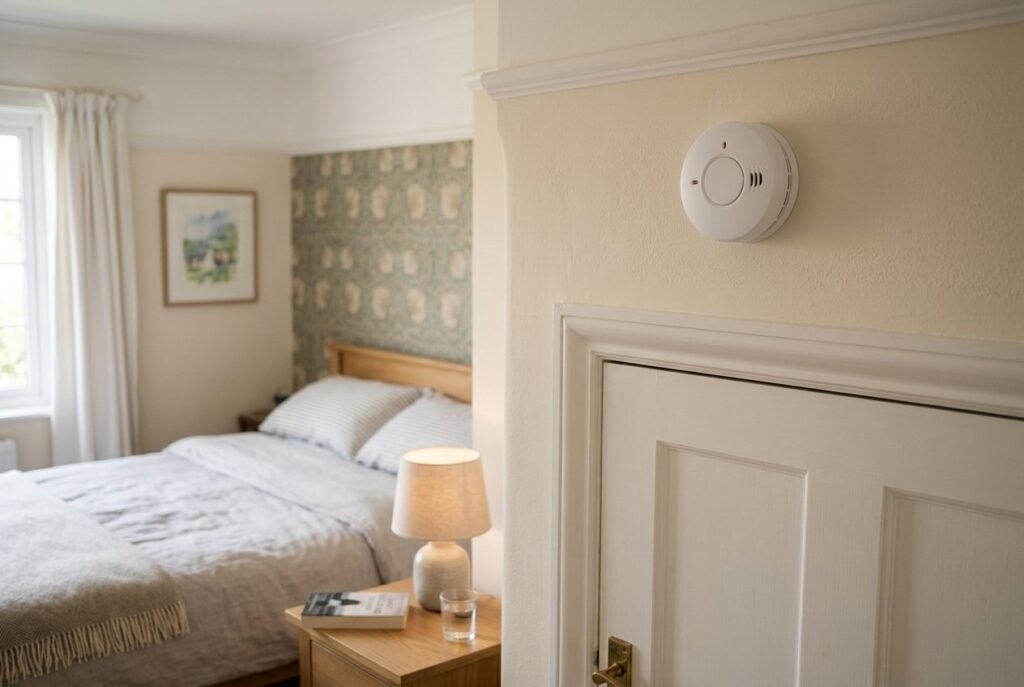
Fit an alarm in every room with a fuel-burning appliance, like a boiler, gas fire, wood burner or heater. London Fire Brigade also suggests keeping one in the bedroom, so it wakes you if it goes off at night.
Kidde’s placement guidance, based on the British Standard, says to fit an alarm:
- Between 1 and 3 metres from the appliance, measured horizontally.
- On a wall, at least 150mm below the ceiling and above the height of any door or window.
- Or on a ceiling, at least 300mm from any wall.
Don’t fit one:
- In a cupboard or enclosed space.
- Where furniture or curtains could block it.
- Directly above a sink.
- Next to a door, window, extractor fan or air vent.
- Anywhere the temperature might drop below -5°C or rise above 40°C.
Battery alarms don’t need an electrician. Most come with screws and wall plugs, and some, like the FireAngel FA3322, can simply stand on a shelf. Test yours regularly using the test button, following the manufacturer’s instructions.
Do you need a carbon monoxide alarm by law?
It depends on where you live and whether you rent. The rules are different in each UK nation, according to Kidde and RoSPA.
| Nation | Homeowners | Landlords |
|---|---|---|
| England | Required when a new or replacement fixed combustion appliance (except a gas cooker) is installed | Required in any room with a fixed combustion appliance, except gas cookers, since October 2022 |
| Scotland | Required in every home, in any room with a fixed combustion appliance, since February 2022. Battery alarms must have a sealed, long-life battery | The same, and landlords must repair or replace faulty alarms when told |
| Wales | Required when a new solid fuel appliance, like a wood burner, is installed | Required in rooms with a gas, oil or solid fuel appliance |
| Northern Ireland | Required when a new fossil fuel appliance is installed, since 2012 | Required in private rentals, under rules updated in 2024 |
Even where the law doesn’t require one, it’s worth fitting an alarm in every room with a fuel-burning appliance.
Carbon monoxide alarms and power cuts
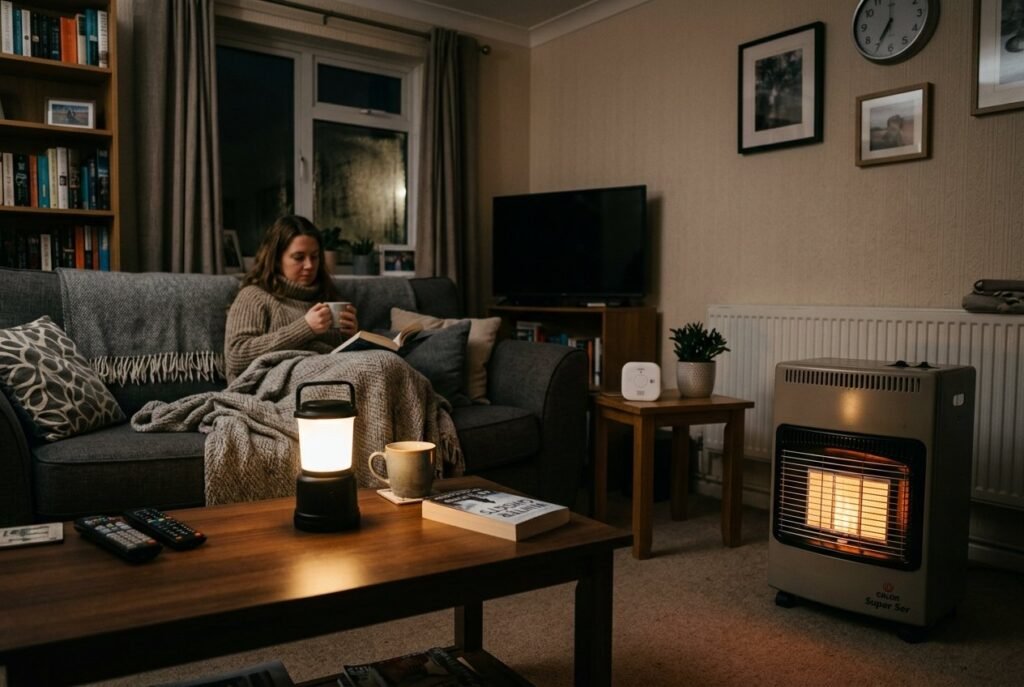
Power cuts are when CO risk goes up. When the heating stops, people bring in gas and paraffin heaters, cook on camping stoves, and sometimes run generators in the wrong place.
- Heaters: If you use a gas or paraffin heater, keep a CO alarm in the same room. Our guide to the best non-electric heaters explains which are safe indoors, and how to heat a room without electricity safely.
- Cooking: Camping stoves produce CO too. Our power cut cooking guide covers using them safely.
- Generators: Never run one indoors, in a garage or near an open window. Our generator guide covers how to use one safely.
A portable alarm like the Kidde K7DCO is ideal here. It can move with you to whichever room you’re heating. If you have a mains-powered alarm, check it has a backup battery so it keeps working when the power’s off.
Can you get a free carbon monoxide alarm?
Some households can. Gas networks run schemes giving free CO alarms to people who need extra support, like older or disabled customers. SGN and Northern Gas Networks, for example, both run them in their areas.
If you or someone you live with might qualify, ask your energy supplier or gas network, and join the Priority Services Register, which gets you extra help during a power cut or gas emergency.
Stay safe this winter
A CO alarm is cheap, quick to fit and one of the most important bits of safety kit in any home with gas, oil or solid fuel appliances. Fit one in every room with a fuel-burning appliance, test it regularly, and replace it when it reaches the end of its life.
If you want just one recommendation, the FireAngel FA3322 is the best all-rounder. For covering several rooms on a budget, the Kidde K10LLCO and K5CO are hard to beat.
An alarm works best as part of a wider plan. Our guide to making a household emergency plan covers what to do if your alarm goes off or you smell gas, plus how to prepare your home for the emergencies you’re most likely to face.
Which carbon monoxide alarm does the fire brigade recommend?
Fire services don’t recommend a specific brand. London Fire Brigade advises buying from a reputable DIY store or supermarket, and only buying alarms certified to BS EN 50291 with an approval mark like the Kitemark.
Is Kidde or FireAngel better?
Both are well-known brands sold across the UK, and both detected CO every time in Which?’s tests. Choose on features and price rather than brand.
Is a battery or plug-in carbon monoxide alarm better?
Battery alarms are easier to fit, can go anywhere and keep working in a power cut. Plug-in alarms don’t need batteries but only work near a socket, and they’ll stop in a power cut unless they have a backup battery.
What’s the difference between a carbon monoxide alarm and a detector?
In everyday use, nothing. Both terms describe the same thing: A device that detects CO and sounds an alarm. Just make sure whichever you buy has a loud alarm, not a colour-changing spot.
Can my phone detect carbon monoxide?
No. Phones don’t have a CO sensor, so you need a proper alarm.
What happened to the Google Nest Protect?
Google stopped making the Nest Protect in March 2025, according to Tom’s Guide. Existing alarms keep working until they reach their expiry date, but the replacement it announced with First Alert was launched for the US and Canada, so there’s no direct UK equivalent.
What are the warning signs of carbon monoxide?
The NHS lists headaches, dizziness, feeling sick, tiredness and confusion, stomach pain and shortness of breath. If you suspect CO, get into fresh air, open doors and windows, and call the gas emergency line (0800 111 999 in England, Scotland and Wales). Call 999 if anyone is seriously unwell.
Images on MindXP are AI-generated illustrations. Product images are checked against manufacturer photos for accuracy.

Professional writer and editor. Founder of MindXP, helping UK households prepare for power cuts, storms, and supply disruptions.