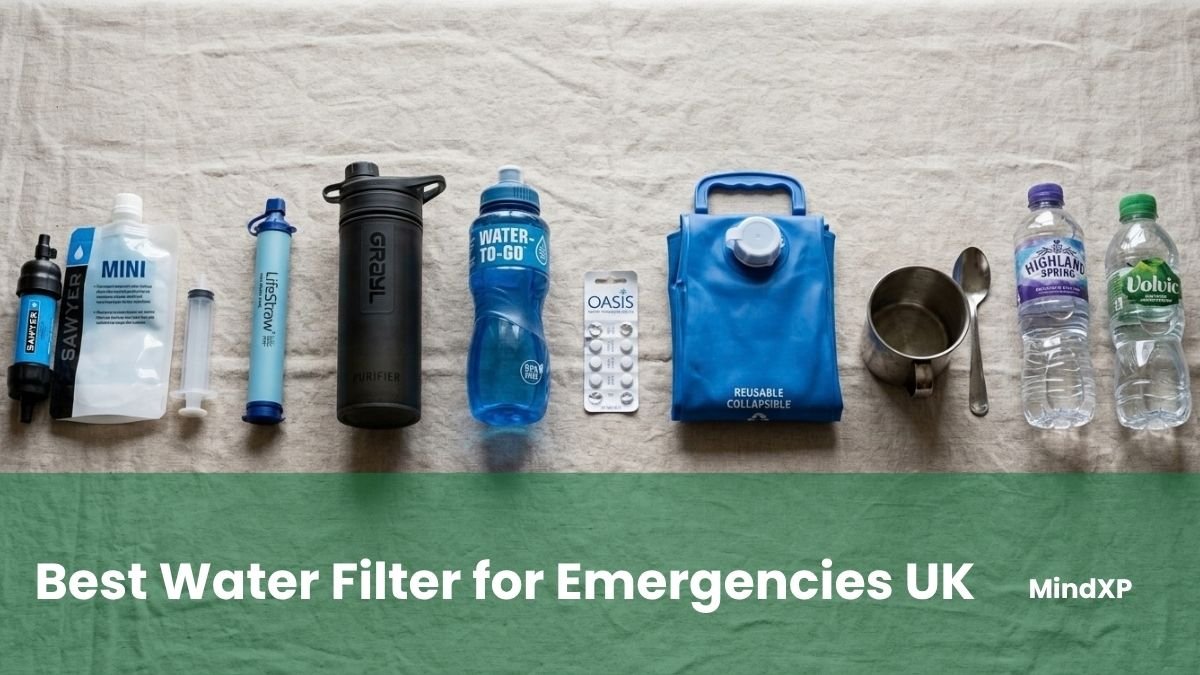
Water filters are a great bit of kit for camping and hiking. Instead of lugging litres of water around, you can use one to turn natural water sources into safe drinking water.
But they’re also really useful in various emergency scenarios. Whether it’s a boil-water notice due to an outbreak or a bad storm knocking out your supply, having a water filter on hand means you can relax while everyone else scrambles for bottled water at the shops.
Both scenarios happened recently too. In May 2024, a Cryptosporidium outbreak in Brixham put 17,000 properties on a boil-water notice. In January 2026, Storm Goretti left 30,000 homes without mains water in Kent and Sussex.
Bottom line, water filters are worth it. I’ve tested six popular ones to give an informed recommendation. This guide covers what each one removes, what it’s like to use, and which is best for you.
Quick answer: For a grab bag, a Sawyer Mini or LifeStraw Peak (£30 to 40). For staying put at home, a British Berkefeld gravity filter (around £165). If you need virus protection too, get a Grayl UltraPress or Water-to-Go bottle for one person, or a LifeSaver Jerrycan for the whole household.
In this guide
Do you actually need a water filter?
Most UK outages only last a few days, so having some stored water on hand will do the trick most of the time. If you’d prefer that route, we have a guide on how to store water for an emergency that shows how much you need and the best solutions.
That said, longer outages can happen due to infrastructure failures, extreme weather, or even a cyberattack on treatment plants and pumping stations. The government mentioned water supply interruptions specifically in their Prepare Campaign, so there’s no harm in being cautious.
Purification tablets are a cheap backup too. Our guide to purifying water in an emergency covers how to use them.
A filter earns its place when:
- You want to prepare for longer outages.
- You might need to drink from a stream, river or water butt.
- You don’t have much room to store water.
- You can’t boil water, like during a power cut.
Water filters are highly effective, but you do have to use them on water they’re designed to treat. Most don’t handle viruses or chemicals, and floodwater is off limits with any of them, as it could contain industrial waste or sewage.
What’s the difference between a water filter and a purifier?
A filter removes bacteria and parasites. A purifier removes those plus viruses. It matters more than any litre rating on the box.
| Type | Bacteria (E. coli, salmonella) | Parasites (Giardia, Cryptosporidium) | Viruses (norovirus, hepatitis A) |
|---|---|---|---|
| Filter: Sawyer Mini, LifeStraw Peak, British Berkefeld | Yes | Yes | No |
| Purifier: Grayl UltraPress, Water-to-Go, LifeSaver Jerrycan | Yes | Yes | Yes |
Viruses are far smaller than bacteria, so they slip through a standard filter. Purifiers use finer membranes or charged filter media to catch them.
In the UK, the virus risk from a stream is lower than in much of the world, so a filter is usually fine for wild water. But lower isn’t zero, especially downstream of a sewage overflow.
If you’ve only got a filter and you’re unsure, filter first, then boil it or add a tablet. That combination covers everything biological.
Neither type removes dissolved chemicals, salt or fuel. If water might be chemically contaminated, don’t drink it, whatever you’re using.
Best water filters for a grab bag
A grab bag, or bug out bag, is a ready-packed bag of essentials you can take if you have to leave home in a hurry, like during a flood. Anything in it needs to be small, light and work on whatever water you find along the way.
1. Sawyer Mini
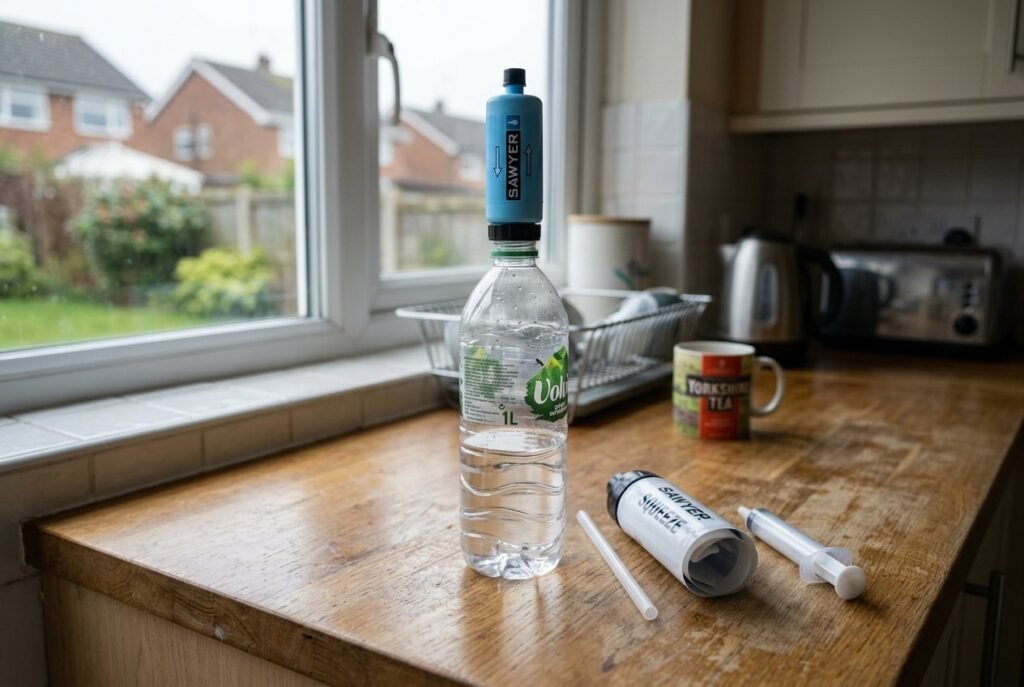
The Sawyer Mini is one of the best-known filters for a reason; it’s a small and mighty device that’s perfect for camping and hiking, and not a bad choice for an emergency water backup.
It works in a few ways, either as a straw, screwed onto standard drinks bottles, run inline with a hydration bladder, or with its own squeeze pouch. It’s versatile and weighs almost nothing.
The only downside I’ve noticed after years of light use is flow speed. Brand new ones work great, but once it picks up some sediment it slows right down. It’s not a big deal if you’re just filling your drinking bottle, but as an emergency water filter for your household, it could fall short.
Backflush it regularly and it’ll last for years. The 100,000-gallon rating it promises is probably technically correct, but it becomes annoying to use before that. Don’t expect it to improve the taste either, as there’s no carbon inside.
Verdict: Perfect for light use as a portable filter, but if you’re filtering litres at a time, the bigger Sawyer Squeeze is worth the extra few quid.
- What it removes: Bacteria and parasites, not viruses.
- Lifespan: Rated for up to 100,000 US gallons, with no cartridge to replace. Once it’s been used, keep it from freezing, as ice can damage the fibres without any visible sign.
- Cost & where to buy: £40.99 at Ultralight Outdoor Gear.
2. LifeStraw Peak Series Personal Straw
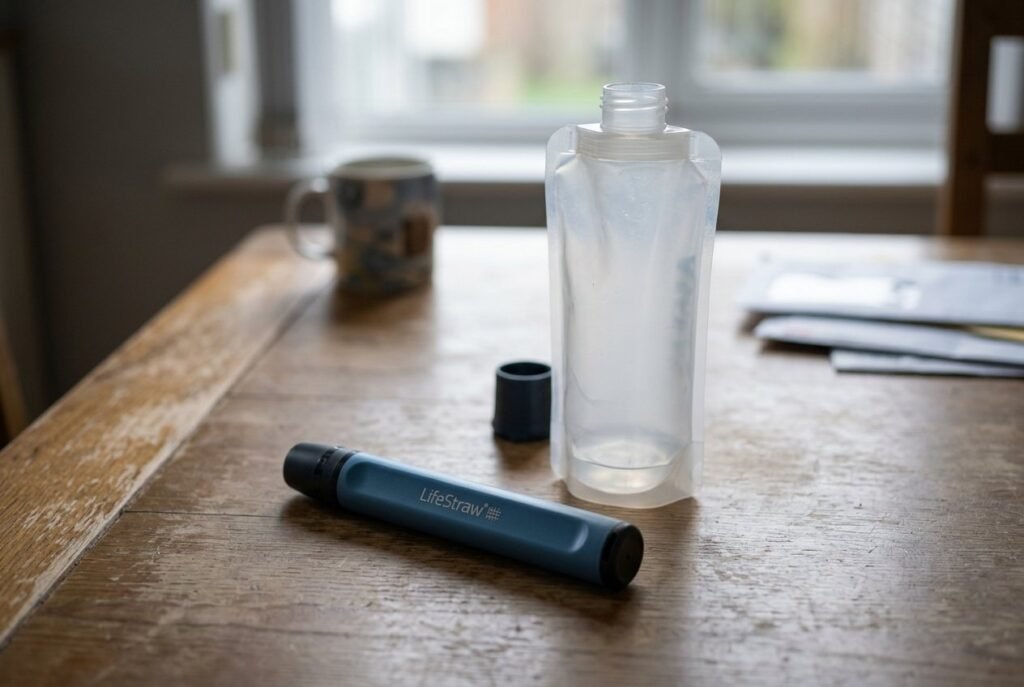
The LifeStraw Peak Series Personal Straw is fairly similar to the Sawyer Mini, but it’s often quite a bit cheaper and the initial flow rate is faster. The Peak’s bottom cap unscrews to fit standard bottles, so you can squeeze water through it like a Sawyer, or still drink straight from the source if you want.
While it’s a decent choice if you want it mainly for outdoor adventures, the only thing I don’t like is storage. Mine broke quickly because I left it out for too long and the membrane dried out (my fault for not reading the instructions). You’re supposed to keep it in a saline solution to prevent this.
Verdict: A good personal filter for a grab bag, but not something to supply a household with.
- What it removes: Bacteria and parasites, not viruses. LifeStraw says it meets US EPA and NSF P231 drinking water standards for both.
- Lifespan: Rated for up to 4,000 litres. Protect it from frost once it’s been wet.
- Cost & where to buy: £29.99 at Ultralight Outdoor Gear.
Sawyer or LifeStraw? The Sawyer is rated for far more water and has more ways to set it up. The LifeStraw is nicer to drink from and needs no thought until its first use. Either makes a solid grab bag filter.
Best water filters for staying put at home
If the taps go off but you can stay at home, you need something that can supply the whole household, not just one person. These two handle bigger volumes, so you’re not stuck at the sink squeezing a filter all day.
3. British Berkefeld gravity filter
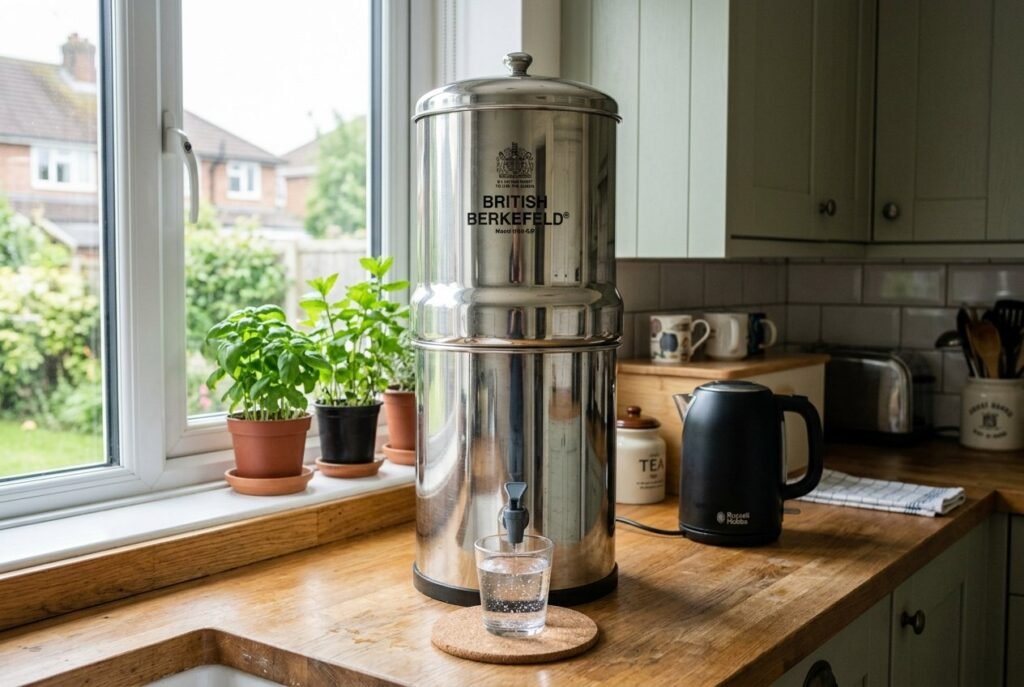
The British Berkefeld is the opposite of the little hiking filters. Fill the top chamber and gravity pulls the water through ceramic candles into the bottom one, ready to pour from the tap.
I love this one. No squeezing, pumping or batteries. You fill it and get on with your day. I use this at home even when there isn’t a water emergency, just to get some extra-clean tap water.
The biggest win is taste. Chlorinated tap water comes out noticeably nicer, which the Sawyer and LifeStraw can’t do. And speaking of taste: Run a few full tanks through new filters, as the first batches can taste a bit metallic.
It’s pretty slow, and there’s no getting around that. The trick is to keep it topped up, rather than waiting until you’re thirsty and finding the bottom chamber empty.
Verdict: For dealing with a water problem at home, it’s solid. Just don’t buy it if filtering speed is a priority.
- What it removes: Bacteria, cysts, sediment and microplastics, but not viruses. The candles hold NSF listings under standards 42, 53 and 401 for specific claims.
- Lifespan: Replace the candles roughly every six months, and clean the ceramic in between. Replacements are easy to get in the UK.
- Cost & where to buy: From £124.95 at Doulton.
4. LifeSaver Jerrycan
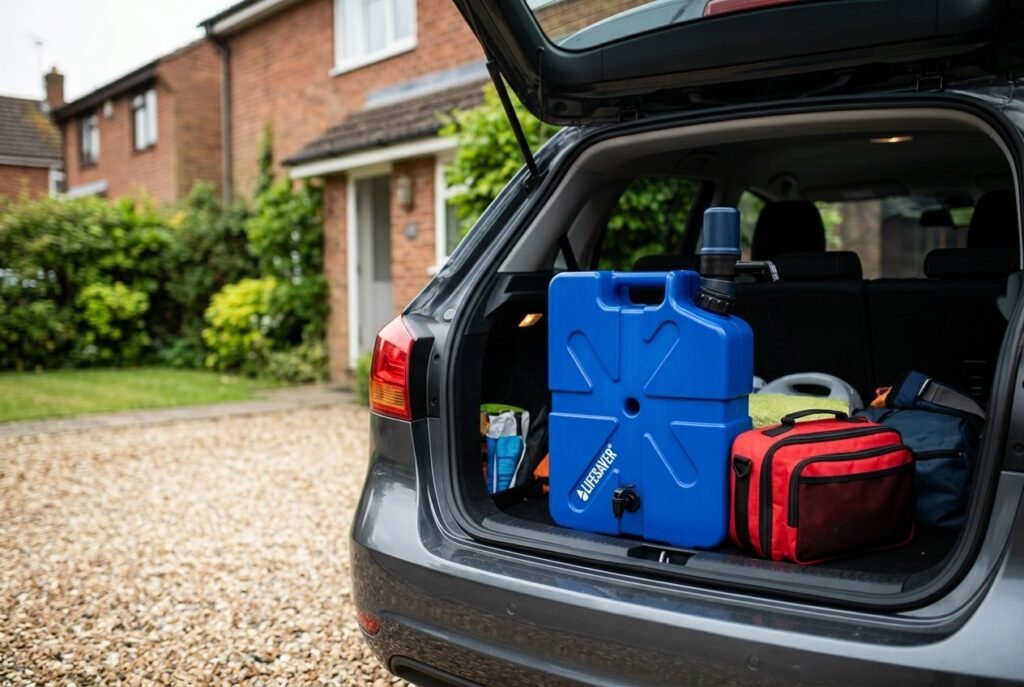
The LifeSaver Jerrycan is the serious prepper’s option. It holds about 18.5 litres of untreated water. Fill it at the source, pump it up, and purified water comes out of the tap. You don’t need a separate bag for dirty water or a second container to filter into.
When it’s working, it’s excellent. LifeSaver quotes up to around four litres a minute, which is massively faster than the personal filters. Unlike the Sawyer, LifeStraw or Berkefeld, it removes viruses, and the carbon stage takes the edge off funny-tasting water.
Its one weak point is the tap. Mine’s still working fine after just a handful of uses during testing, but apparently a lot of owners have to order new taps after a while. That means you have to spend roughly another £20 for a new tap or your initial £330-ish is wasted. I don’t like that, but in terms of functionality, it’s still up there with the best.
It also takes more looking after than a normal water container. Once you’ve primed the cartridge, it needs storing properly, and the seals, pump and consumables all need checking.
Verdict: If cost is a secondary concern and you need heavy-duty filtration for several people, this is the one to get.
- What it removes: 99.99% of viruses, 99.9999% of bacteria and 99.9% of cysts, according to LifeSaver.
- Lifespan: The main cartridge is rated for 20,000 litres, but the carbon discs need replacing much sooner, at around 500 litres. An unused standard cartridge keeps for three to five years; a foil-sealed version (around £150) keeps for 10 years or more.
- Cost & where to buy: £330 at LifeSaver.
Best water purifiers for virus protection
If viruses are a worry, like after a sewage overflow or when travelling, you need a purifier rather than a filter. These two are small enough to carry and cover viruses as well as bacteria and parasites.
5. Grayl UltraPress
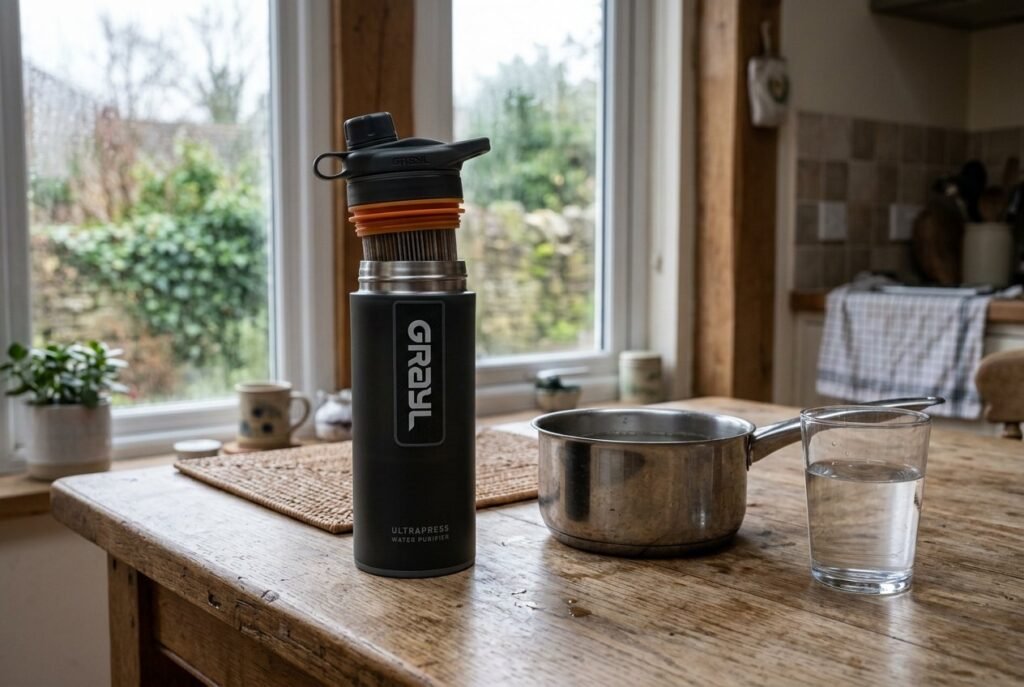
The Grayl UltraPress has the nicest idea of any personal purifier here. Fill the outer cup, push the inner bottle down through it like a cafetière, and you’ve got about half a litre of purified water.
After that, it’s just a bottle of clean water. Drink it, pour it into a pan, share it or brush your teeth with it, which is a big step up from drinking through a filter. With a fresh cartridge, a press takes around 10 seconds. The carbon deals with nasty tastes and smells too.
The catch is how long it stays that easy. As the cartridge clogs, pressing gets a lot harder, until you’re leaning both hands and most of your body weight into it. Grayl says a press of 25 to 30 seconds means it’s time for a new cartridge.
I pressure-tested the cartridges using clean and mucky stream water to compare the impact on lifespan. Clean tap water goes easy on it, while silty stream water can pretty much finish one off. Start with the cleanest source you can.
Some dirty water also stays in the outer cup after pressing. Tip it above your face or throw it sideways in a bag and that untreated water can leak out.
Verdict: A decent pick if viruses are a real worry and you want water you can pour. Just budget for replacement cartridges, as dirty water can wear one out well before 150 litres.
- What it removes: Viruses, bacteria, and parasites.
- Lifespan: Cartridges are rated for 300 presses (150 litres), and replacements cost £29.95. You can replace most other parts individually too.
- Cost & where to buy: £89.95 at Grayl, often less on offer.
6. Water-to-Go 75cl Eco Active
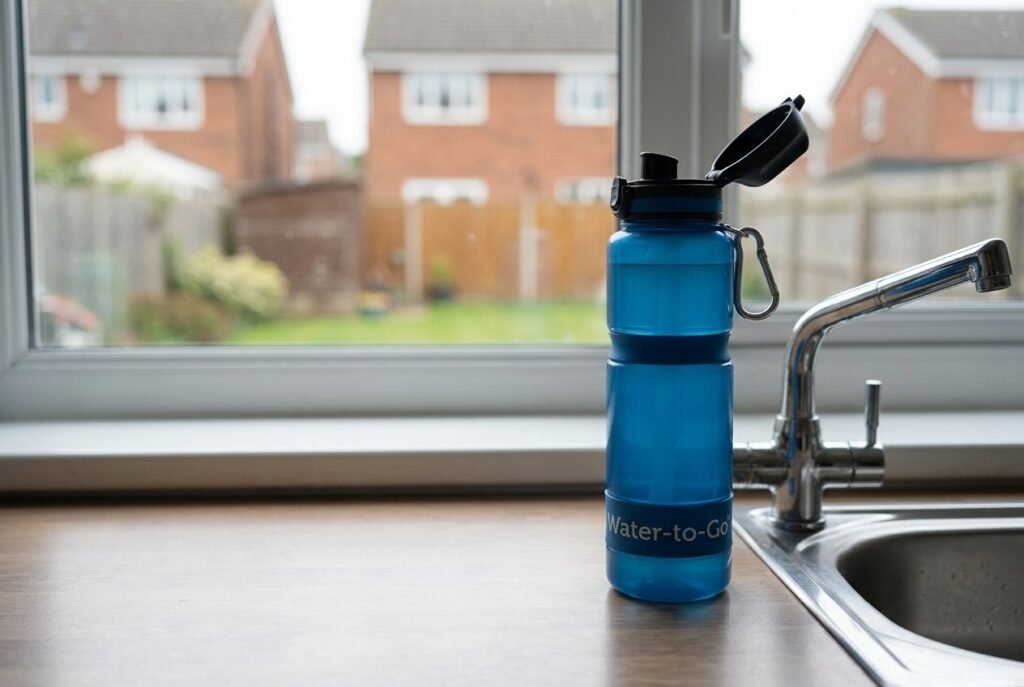
Water-to-Go is the least complicated purifier here. Fill the bottle, screw on the lid, and drink. There’s nothing to backflush or press.
The trade-off is resistance. You have to squeeze the bottle and suck harder than you would with a normal sports bottle, which is pretty frustrating when you want a big gulp. It’s nowhere near as bad as wrestling with a clogged Grayl, though.
For a purifier, it’s very light at about 138g, and 750ml is a useful size. The carbon helps with taste, so it’s nicer for tap water than a basic filter.
There are a lot of bad reviews floating around that actually refer to the older model. Water-to-Go has since redesigned the bottle and lid, and those problems didn’t appear for me.
Verdict: The easiest purifier for one person. The Grayl gives you a proper batch of pourable water, but it costs more, weighs more and needs pressing every time.
- What it removes: Viruses, bacteria, and parasites, according to Water-to-Go’s own independent lab testing.
- Lifespan: Replace the filter every 200 litres or three years, whichever comes first. Replacements are easy to find in the UK. In an emergency bag, it’s the three-year limit you’ll hit.
- Cost & where to buy: £39.95 at Water-to-Go.
Which emergency water filter should you get?
Match the filter to the job, not to the biggest number on the box.
| If you want | Get |
|---|---|
| A cheap filter for a grab bag or car | Sawyer Mini or LifeStraw Peak |
| Drinking water for the household in a long outage | British Berkefeld |
| Virus protection for the whole household | LifeSaver Jerrycan |
| Virus protection for one person, with water you can pour | Grayl UltraPress |
| Virus protection for one person, with the least faff | Water-to-Go |
For most UK households, the best setup is stored water for the first few days plus one grab bag filter. Add a gravity filter or Jerrycan if you’d want to stay put through a longer outage.
Can a Brita jug filter work in an emergency?
Jug filters like Brita aren’t emergency filters. They’re made for mains water that’s already safe to drink, and they cut chlorine and limescale to improve the taste. They won’t remove bacteria or parasites, so they can’t make stream water or boil-notice water safe.
That’s why Brita versus LifeStraw isn’t really a contest. One makes safe water taste better, the other makes unsafe water safe to drink. Keep using your jug day to day, but don’t count it as part of your emergency kit.
How do you keep an emergency water filter working?
When an emergency filter lets you down, it’s usually because you stored it badly, not because it’s worn out. A few habits keep yours ready:
- Know the rules once it’s wet. Used hollow-fibre filters like the Sawyer and LifeStraw need protecting from frost, and the LifeStraw shouldn’t dry out completely.
- Start with the clearest water you can find. Let sediment settle or strain it through a cloth. Silt clogs filters and kills cartridges early.
- Backflush when you can. The Sawyer and LifeStraw both recover a lot of flow this way.
- Check cartridge dates. Purifier cartridges age even unused: Three years for Water-to-Go, three to five for a standard LifeSaver cartridge.
- Keep spares for the weak points. A second cartridge for the Grayl and a spare tap for the Jerrycan.
A LifeStraw Peak is rated for up to 4,000 litres, which is years of drinking water for one person. Poor storage after use is far more likely to finish it off than volume.
Get your water sorted before you need it
A grab bag filter costs about £30 and takes two minutes to pack. Pair it with a few days of stored water and you’re covered for almost any UK outage. If you want the whole household covered for longer, add a gravity filter or a Jerrycan.
Whatever you go for, read the storage instructions as soon as it arrives. As I found out with my LifeStraw, a badly stored filter won’t be much use when the taps go off.
Water’s only one part of being prepared, though. Our emergency preparedness guide for beginners puts the whole plan together, and our power cut kit guide covers what you’ll need if the power goes too.
What is the best water filter system for emergencies?
The best system depends on the job: A Sawyer Mini or LifeStraw Peak for a grab bag, a British Berkefeld gravity filter for home, and a LifeSaver Jerrycan if you need virus protection for a household. Stored water plus one small filter covers most UK homes.
What is the best survival water purifier in the UK?
The LifeSaver Jerrycan is the best survival purifier for a household, removing viruses, bacteria and parasites at up to around four litres a minute. For one person, the Grayl UltraPress or a Water-to-Go bottle does the same job and fits in a bag.
Should I filter my tap water in the UK?
No, water companies treat and test UK mains water to drinking standards, so you don’t need to filter it for safety. A filter just improves the taste. If there’s a boil-water notice, follow your water company’s advice and boil it.
Can you really drink any water with a LifeStraw?
No. A LifeStraw removes bacteria and parasites, but not viruses, chemicals, fuel or salt. Never use it on floodwater, water near industrial sites or seawater, and always pick the clearest source you can find.
What cannot be filtered out of water?
Standard filters can’t remove viruses, dissolved chemicals, heavy metals, fuel or salt. Purifiers add virus removal, and carbon reduces some chemicals and improves taste, but no portable filter makes chemically contaminated water safe.
What is the safest way to purify water in a survival situation?
Boiling is the safest method. A rolling boil for one minute kills bacteria, viruses and parasites. Our water purification guide covers boiling, tablets and the other options.
What is the best water filtration system for emergency water storage?
The LifeSaver Jerrycan is the best option for emergency storage, as it holds up to 18.5 litres of untreated water and purifies it as you pour. If you’d rather store clean water, our water storage guide covers the best containers.

Professional writer and editor. Founder of MindXP, helping UK households prepare for power cuts, storms, and supply disruptions.