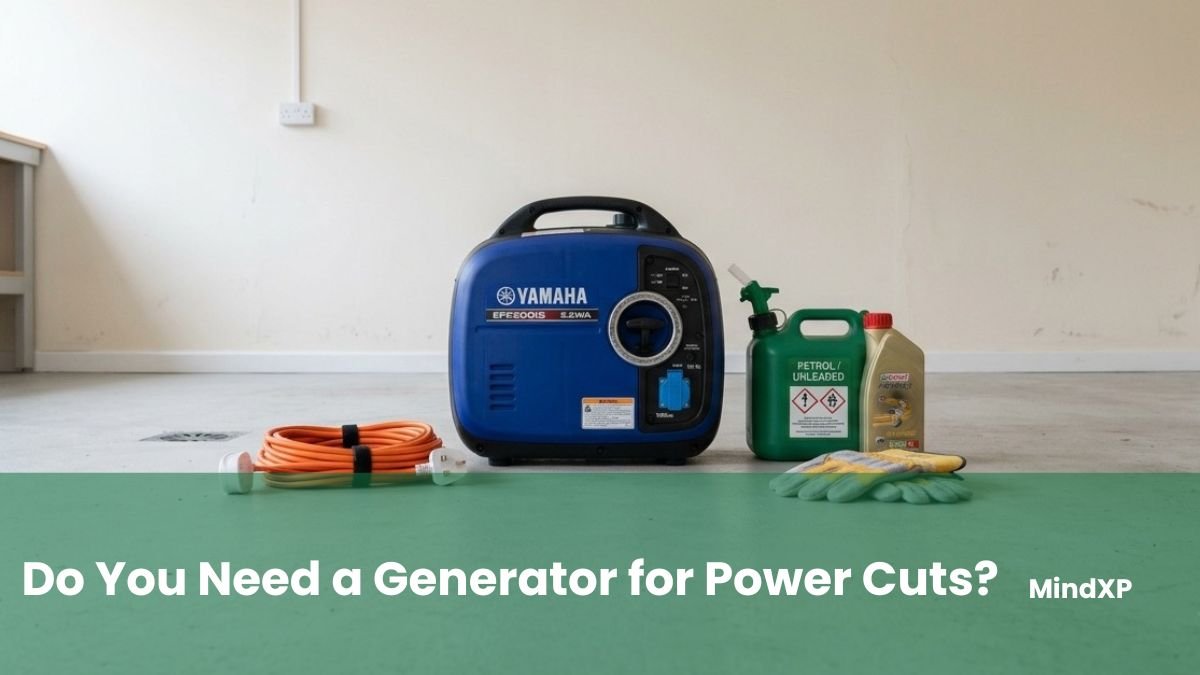
When the power goes off, a generator is the only backup that gives you your whole house back. But for most UK homes, it’s overkill. A lot of the advice online is American, written for an audience where huge permanently installed generators are normal.
This guide covers the UK angle, including whether you need a generator for power cuts, what size, and how to use them safely, so you don’t waste time and money following the wrong advice.
If you’re worried about heating in particular, which is the biggest power cut problem for most, check out our guide on how to heat a room without electricity.
In this guide
Do you actually need one?
If power cuts happen a lot where you live or somebody in your house relies on electricity for medical equipment, a backup generator is unbeatable for peace of mind.
They’re one of the few off-grid power solutions that can easily handle all your electricity requirements. Simply take it outside, fire it up, and run an extension cord into your house.
That said, unless you use generators at work or for something else, it might not be worth the investment.
A generator earns its place when:
- Cuts are regular or long where you live. Rural homes on vulnerable lines, especially after storms, can be off for days.
- Someone relies on powered medical equipment. Powered beds, stairlifts, oxygen machines – even central heating is essential for some. Sign up to the Priority Services Register for extra support during power cuts.
- You’d lose real money. A freezer full of food, a home business, or work that can’t stop.
- It has dual use. If you use a generator for work, caravaning, or DIY projects, you can also use it during power cuts.
If none of that describes you, read our power cut kit guide instead and stay comfortable during cuts for a tenth of the money.
What the American advice gets wrong
Search for generator advice and you’ll mostly find US content recommending whole-house standby generators: permanently installed units the size of an air conditioner that switch on automatically and run everything.
That’s a normal purchase in parts of America. In the UK it barely exists, because it costs thousands, most homes have nowhere sensible to put one, and our outages are rarer and shorter.
The realistic UK options are:
- A suitcase inverter generator plus extension leads. The answer for most homes: £300 to 500, runs your essentials and a heater, packs away in a cupboard.
- A larger portable with a transfer switch. The serious rural option, where an electrician wires a changeover so the generator can feed the house circuits, including the boiler.
- A battery power station. No engine at all. This is what most people searching for a “silent generator” actually want without knowing it.
Some of the more advanced battery power stations are great. They’re silent, safe to use indoors, and can run heavy appliances. Generators are louder and less convenient, but cheaper for the same output, and run for as long as you have petrol.
What size generator do you need?
Generator sizing sounds technical, but it’s just adding up what you want to run at the same time. Typical figures, based on the Centre for Sustainable Energy’s appliance data:
- Kettle: Around 3kW
- Fan heater: 2kW
- Fridge or freezer: Around 150W running
- Boiler electronics: Roughly 100 to 200W
- TV: Around 100W
- Router, phones, & LED lights: Under 100W combined
A fridge, freezer, boiler, router, lights, TV, and phone chargers all running together come to well under 1kW. Add a 2kW heater and you’re at about 3kW.
Surprisingly, a kettle uses more power than all your essentials combined while it boils. So when the kettle’s on, switch the heater off. This is called load management, and it’s what stops the generator tripping.
On that note: anything with a motor or compressor, like a fridge, draws two to three times its running wattage for a second or two when it starts. That startup surge is why a small generator can trip when the fridge kicks in, and why you want headroom above your steady total rather than a generator sized exactly to it.
The verdict: Around 3kW of continuous output covers a UK home’s essentials plus real heating. Whole-house setups need 8kW plus and a transfer switch, and for most homes that’s a luxury, not a necessity.
Can it run the boiler?
Not through an extension lead. Running the boiler means feeding the house circuits, and that needs a changeover switch fitted by an electrician.
A manual transfer switch costs £200 to £500, and a straightforward fitted installation typically lands between £1,200 and £2,000. For homes with frequent long outages, it’s worth pricing up, because a working boiler beats any space heater.
Most homes don’t need any of that. Run extension leads to a heater, the fridge, and your chargers, and leave the boiler off.
Generator safety
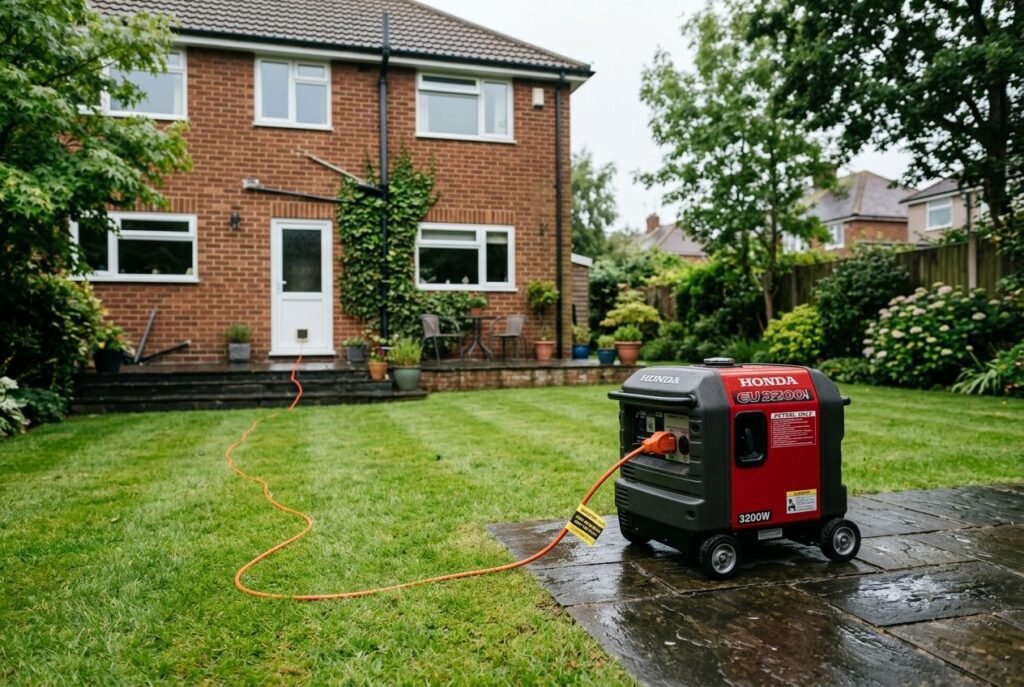
Generators are safe when used properly, and dangerous when used wrong: most deaths involve exhaust fumes reaching indoors.
- Outside only: Well away from windows, doors, and vents, exhaust pointing away from the house. Never in a garage, shed, or conservatory, even with the door open, as generator exhaust produces carbon monoxide, which is colourless, odourless, and deadly.
- Never plug it into a wall socket: A generator connects to appliances, not to the house. Plugging it into a socket feeds power back into the network, which can electrocute the engineers restoring your supply and wreck your appliances when the mains returns. If you want it powering house circuits, that’s what the transfer switch is for.
- Refuel cold, store fuel properly: Let the engine cool before topping up, keep petrol out of living spaces, and know that you can store up to 30 litres at home without notifying anyone.
- Run it in blocks, not round the clock: A couple of hours keeps the fridge cold, the room warm, and everything charged. Shut it down between blocks; it needs oil checks and rest.
When setting up, the order matters: carry the generator outside and position it first, check the oil, start it, and let it settle for a minute. Only then connect your leads and appliances. Never plug anything in before it’s running outside, and never refuel a hot engine.
Petrol, diesel, or battery?
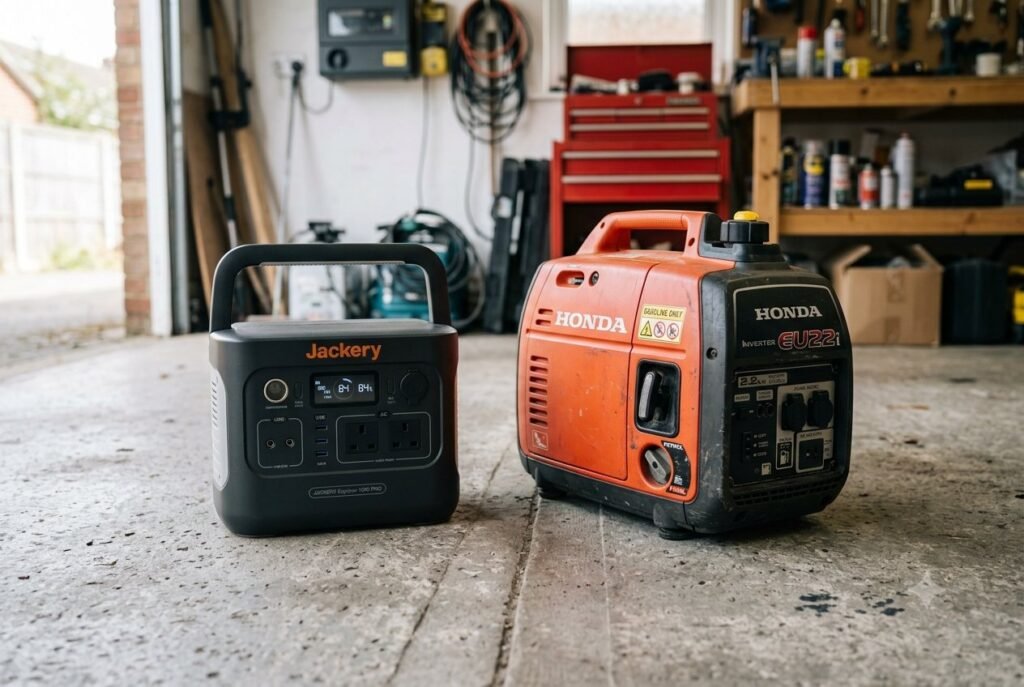
The other big decision is between a petrol or diesel generator and a battery power station. They do the same job in different ways, and the right one depends on how long your cuts last.
Petrol generators
The standard choice for homes. They’re the cheapest way to get real power, and modern inverter models run at conversation-level noise (around 52 to 60dB) and produce clean, stable power that’s safe for laptops, TVs, and boiler electronics.
Diesel generators
The heavy-duty option: sound-dampened cabinets, bigger tanks, built to run all day. They start around £1,300, which is overkill unless power cuts are a regular part of your life.
Battery power stations
A big rechargeable battery with plug sockets. Silent, no fumes, safe to use indoors, and no maintenance. Some of the more advanced ones can match a generator’s power output, but there are two catches.
The first is cost: a power station with a generator’s output costs three to four times as much. The second is duration: once the battery’s flat, that’s it until the grid comes back, while a generator runs for as long as you have petrol.
What to buy
One buying rule before the options: check the rated (continuous) output, not the peak. Plenty of “2000W” generators sustain closer to 1,600W, which a 2kW heater will overload.
- 3kW petrol inverter generator (for most homes). Enough to run a 2kW heater with a full kilowatt spare for the fridge, router, lights, and chargers. This 3kW inverter generator ticks all the boxes at £499: 3kW continuous, clean inverter power, and light enough for one person to move.
- A battery power station (short cuts and essentials only). If you don’t need real heating and your cuts are measured in hours, skip the engine entirely. A 512Wh unit like this power station (£449) covers phones, lights, the router, and a heated throw, silently and indoors.
- A silenced diesel with a transfer switch (Frequent long outages). The full setup for rural homes where multi-day cuts are a fact of life: a diesel unit from around £1,300, plus the electrician-fitted transfer switch from earlier, so the boiler and house circuits run. Price the whole job, not just the generator.
Not sure? Hire first. Hiring a generator for a weekend is a cheap way to find out what you actually need before you commit, and it’s also the answer for a one-off like a long planned outage.
Prepare before the next cut
A generator is the top tier of power cut preparation, but it works best as part of a plan: fuel stored safely, leads ready, and everyone knowing the drill.
If you’re building that plan from scratch, our emergency preparedness guide for beginners covers the rest, from water and food to lighting and communications.
What size generator do I need to run a house?
A generator with around 3kW of continuous output runs a UK home’s essentials: fridge, freezer, lights, router, chargers, and a 2kW heater, as long as you don’t boil the kettle at the same time. Running the whole house as normal, including the boiler, needs 8kW plus and an electrician-fitted transfer switch.
Can a 5kW generator run a house?
Yes, a 5kW generator comfortably runs a UK home’s essentials and heating with room to spare. The only discipline is not running every high-drain appliance at once, since a kettle and two heaters together would still exceed 5kW. Size matters less than switching things on in turn.
What should you not plug into a generator?
Never plug a generator into a wall socket to feed the house: backfeeding can electrocute network engineers and wreck your appliances when the mains returns. Don’t plug in anything that exceeds the generator’s continuous rating, and don’t run sensitive electronics from a non-inverter generator, as the rough power can damage them.
Is it OK to run a generator 24 hours a day?
No, generators aren’t designed to run 24 hours a day, and with sensible load management you shouldn’t need to. They need oil checks, rest, and refuelling with the engine cold. Run it in blocks instead: a couple of hours keeps the fridge cold, the room warm, and everything charged.
What’s the quietest generator for home use?
The quietest option for home backup is a battery power station, which is silent because it has no engine. Among true generators, suitcase inverters run at conversation-level noise (around 52 to 60dB), and silenced diesel units in acoustic cabinets manage around 70dB.
Images on MindXP are AI-generated illustrations. Product images are checked against manufacturer photos for accuracy.

Professional writer and editor. Founder of MindXP, helping UK households prepare for power cuts, storms, and supply disruptions.