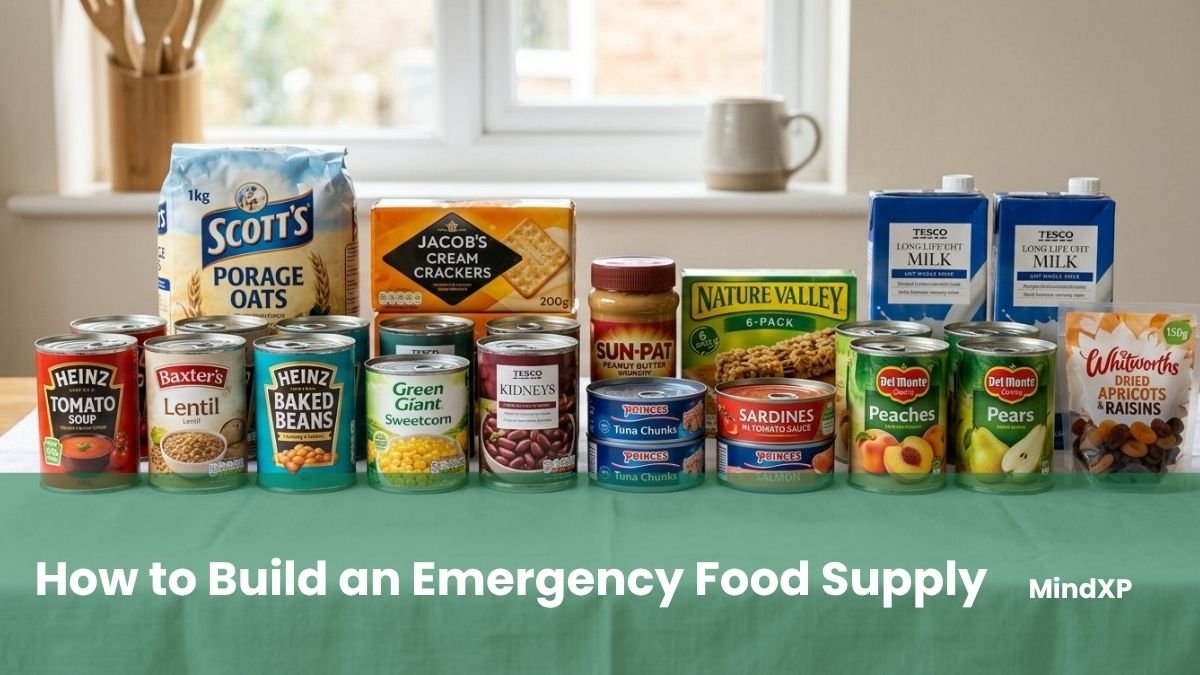
The government is urging UK households to stock up on food as part of its wider push to improve household resilience nationwide. Major news outlets are also amplifying this message amid rising geopolitical tensions, climate worries, and global supply chain instability.
An emergency food supply is one of the simplest forms of household preparedness and it covers you in a range of emergency situations. Paired with an emergency water supply, you could hunker down in your home for days if you needed to.
This guide walks you through how much your household needs, how to keep it fresh, what the government recommends, and more. For the bigger picture behind the government’s advice, see our guide on how to prepare for war in the UK; this one handles the food.
In this guide
How much food should you store?
The typical recommendation is 3 days of food per person. Treat that as a minimum and aim for a bit more if you have the space. If you live in an area prone to flooding, power cuts or other emergencies, two weeks’ worth of food is a sensible target.
Three days’ food for one person fits into a shopping bag, so it’s not as big as it sounds. Two weeks’ worth for a family of four takes up about one decent-sized cupboard.
If you live with babies, pets, or anyone with special dietary requirements, factor that in too. Products like baby formula get swept up fast in the panic buying.
What the government recommends
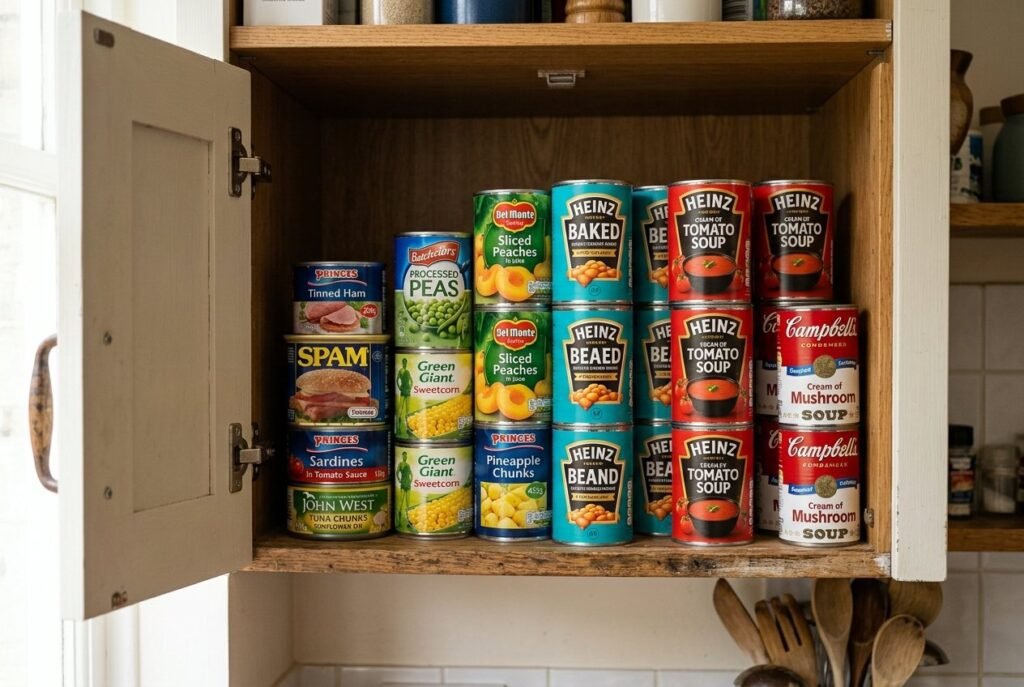
The government’s advice is pretty basic: non-perishable food that doesn’t need cooking, like tinned fruit, vegetables, and meats. We all have our favourites (or is it just me that enjoys tinned meats?), but here’s what I’d recommend:
- SPAM
- Corned beef
- Baked beans with sausages
- Tuna, mackerel, sardines
- Pineapple, peaches, mixed fruit
- Sweetcorn, baby carrots, peas, tomatoes
- Soups, curries, stews, spaghetti
You’re not strictly limited to tins. Any food that’s dry or preserved is good, like crackers, rice, oats, peanut butter, a jar of pickles (or anything pickled), beef jerky, and UHT milk. And don’t forget a few items for morale, like tea and coffee and a few chocolate biscuits.
What a 3-day supply looks like
Adults need around 2,000 to 2,500 calories per day, and even more in emergency situations where stress, cold, and increased activity burn extra calories.
Aim for around 3,000 calories per person per day to be on the safe side. So, a 3-day supply for one person needs 9,000 calories of non-perishable food.
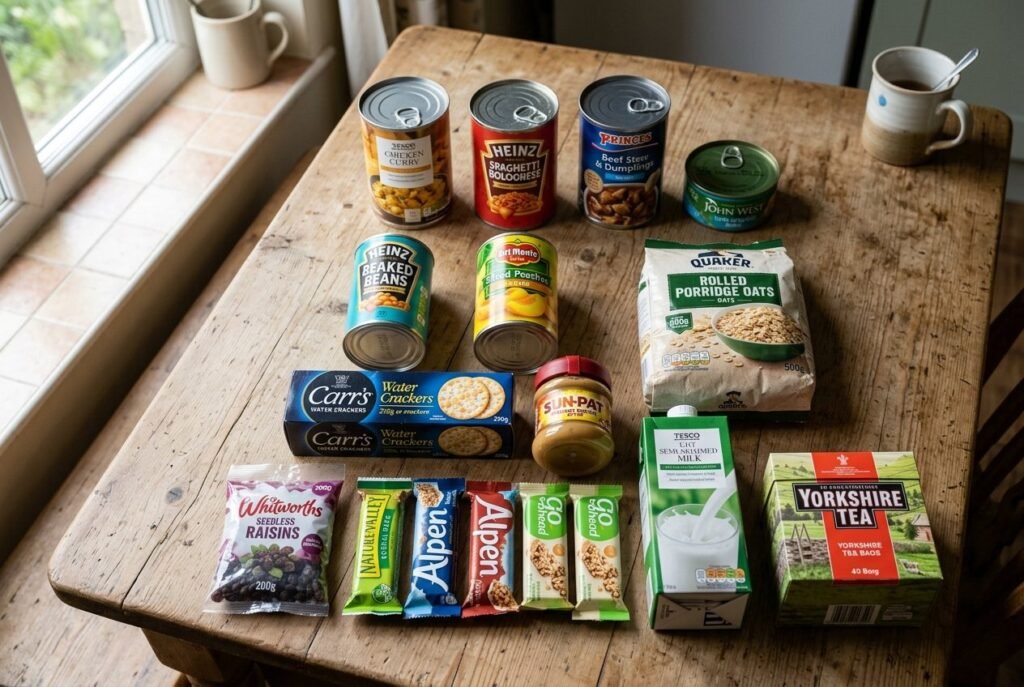
Here’s an example build for one person you can scale as needed:
- 3 tins of ready-to-eat meals (soup, stew, or curry)
- 1 tin of fish
- 1 tin of beans
- 1 tin of fruit
- 500g porridge oats
- 1 pack of crackers
- 1 small jar of peanut butter
- 6 cereal bars
- 250g dried fruit (raisins or similar)
- 1 litre of UHT milk
- Tea or coffee
This is roughly three breakfasts, three lunches, and three dinners, comfortably hitting the 9,000-calorie target. Multiply this based on how many people and how many 3-day blocks you’re preparing for.
And if you don’t want to eat straight out of the tin like a cowboy, our guide on how to cook in a power cut covers the safe, off-grid options.
How to build an emergency food stockpile
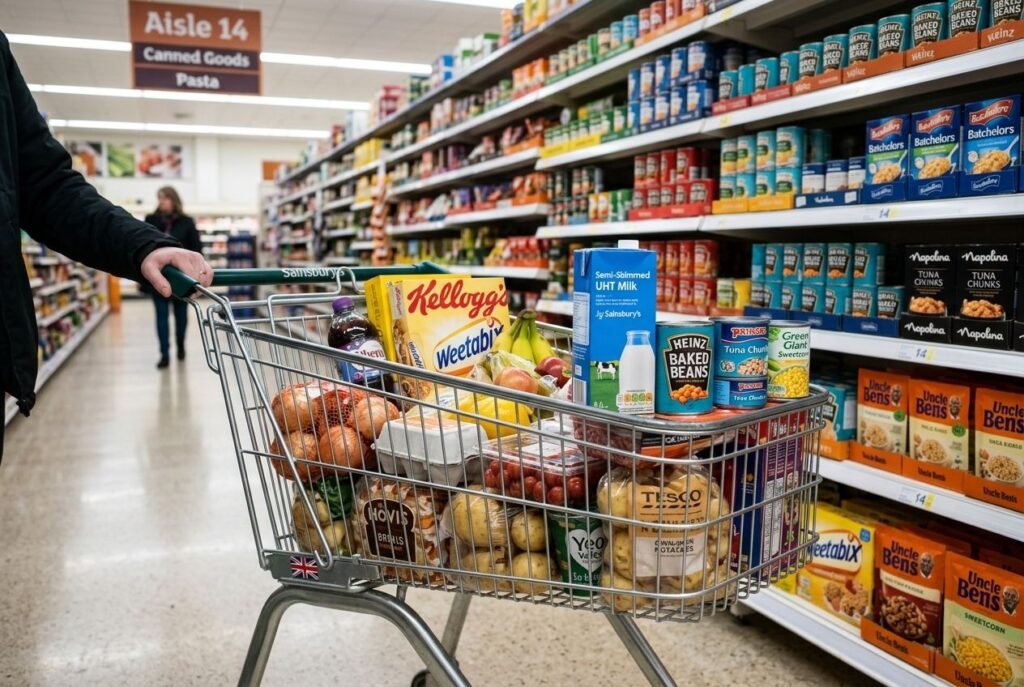
The best approach is to add a few extra items to your usual shop and build up gradually. But if you want to get it sorted, you can just buy everything in one go.
The case for doing it gradually is that you can get into the habit of topping up and rotating your stash, buying stuff you actually eat, like baked beans, soup, and spaghetti.
Here’s what we recommend:
- Add a few extra long-life items each week. £5 to 10 on top of the usual shop builds a full two-week store within a month or two.
- New at the back, eat from the front. The tins will happily sit for years; it’s the crackers, cereal bars, and UHT milk that run on months, and eating from the front keeps them moving through your normal meals.
- Glance at the dates when the clocks change. Anything getting close, eat it this week and replace it on the next shop.
Done this way, your emergency supply is just your normal cupboard with more depth: nothing extra spent overall, nothing wasted, always stocked.
Is freeze-dried survival food worth it?
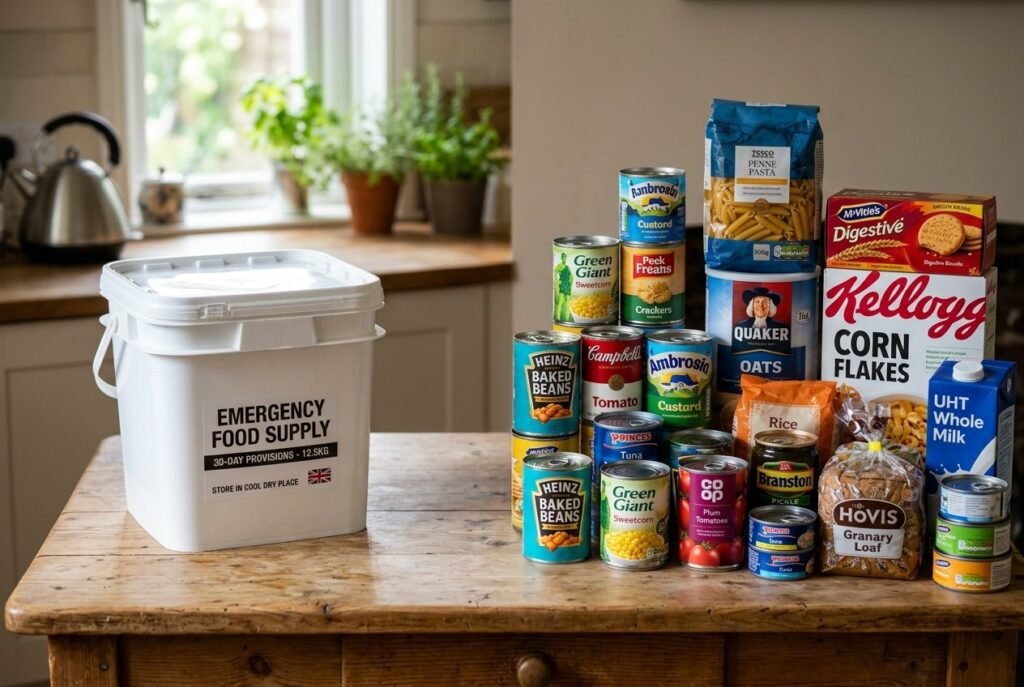
Most households don’t need them, but they do have their uses.
Pros:
- Long shelf life. Up to 25 years against the tinned food’s 1 to 5 year best before dates.
- Zero effort. No rotation, no date-checking, and compact storage.
Cons:
- They’re expensive. 5 to 10 times more per meal, and for the same price, you could fill a cupboard for a whole family using the method above.
- Weird taste & texture. The way they’re manufactured can make food bland and mushy.
Where they’re genuinely good:
- Grab bags. Survival meals are light, calorie-dense, and don’t need replacing. See our bug out bag guide for the full kit.
- Set-and-forget. If you know you’ll never keep a cupboard topped up, you’re better off building a stash that lasts and leaving it alone.
If freeze-dried sounds right for you, buy from an established UK supplier and check the per-meal price before buying a multi-pack.
How to store an emergency food supply
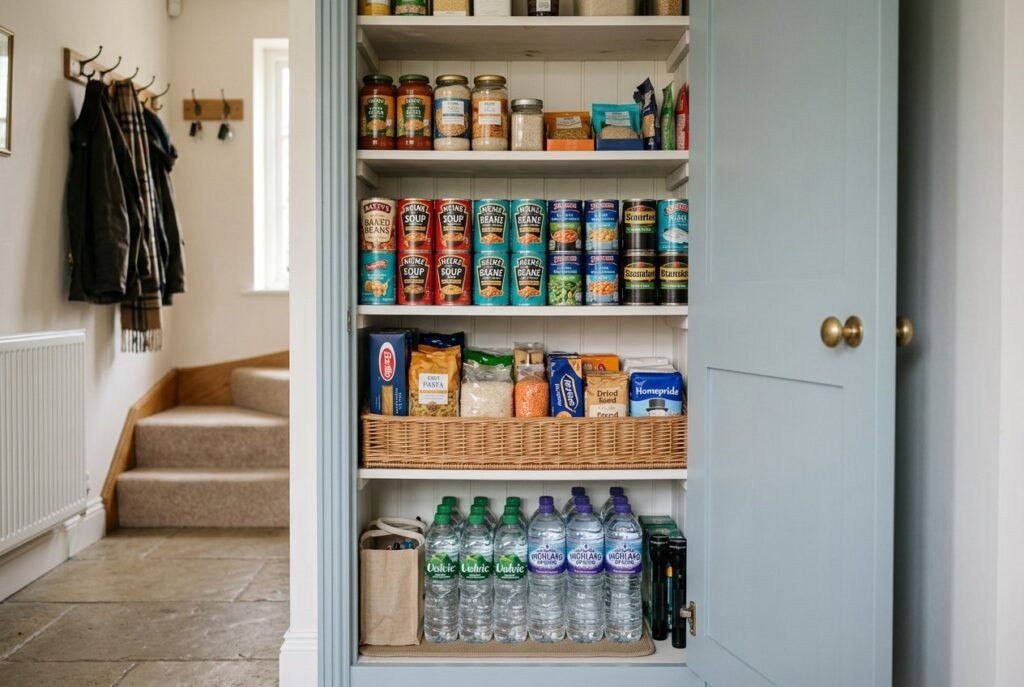
Two things matter: where you keep it and expiry dates.
Where to keep it
Food keeps best somewhere cool, dark, and dry. A kitchen or hallway cupboard is ideal.
Avoid garages and sheds, since big temperature swings age food quickly and damp rusts tins, and don’t sit tins directly on bare concrete for the same reason.
Keep your stored water in the same place if you can, since the two supplies work as a pair and it’s easier to check both at once.
Do tinned & dried foods expire?
Not really. The best-before dates they carry are about quality rather than safety, so a tin a few years past its date is normally fine to eat, just maybe a little duller.
Use-by is the one to follow; it’s a safety limit on fresh and chilled food. What actually makes a tin unsafe is damage. Deep dents, rust, bulging, or leaking means the bin, no exceptions.
Prepare before the panic buy
Empty shelves during a crisis aren’t caused by shortages; they’re caused by everyone shopping at once. Your food supply exists so you never have to join that queue.
Start with the 3-day box this week, grow it toward two weeks, and you’re covered for storms, power cuts, supply problems, and every headline in between.
For the rest of your household’s cover, our emergency preparedness guide for beginners puts the whole plan together.
What food should I stockpile in the UK?
Stockpile the government’s recommended staples: tinned fish, beans, fruit, and ready-to-eat meals, plus oats, crackers, peanut butter, cereal or cereal bars, and UHT milk. Everything should need little or no cooking, and only store food your household actually eats, so it rotates through your normal meals.
How much food should I store for an emergency?
Store a minimum of 3 days of food per person, and aim for two weeks if you have the space. Three days fits in a shopping bag per person; two weeks for a family of four is one well-stocked cupboard. Include formula, pet food, and any special dietary needs.
What should I stockpile in case of war in the UK?
The same supplies as any emergency: the government’s advice for conflict-related disruption is 72 hours of self-sufficiency, food that needs no cooking, stored water, and a way to stay informed. Our guide on how to prepare for war in the UK covers the full picture beyond food.
What are the best long-life foods?
Tinned meals, fish, beans, and fruit last years; oats, rice, pasta, crackers, peanut butter, honey, and UHT milk all keep for months to years unopened. Prioritise things that can be eaten without cooking, and check dates twice a year rather than assuming.
Do I need freeze-dried survival food?
No, most households are better served by supermarket tins and dry goods at a fraction of the price. Freeze-dried food earns its place in grab bags, or as a zero-maintenance backstop if you know you won’t rotate a normal store. Check the per-meal cost before buying, the markup over supermarket food is 5 to 10 times.

Professional writer and editor. Founder of MindXP, helping UK households prepare for power cuts, storms, and supply disruptions.