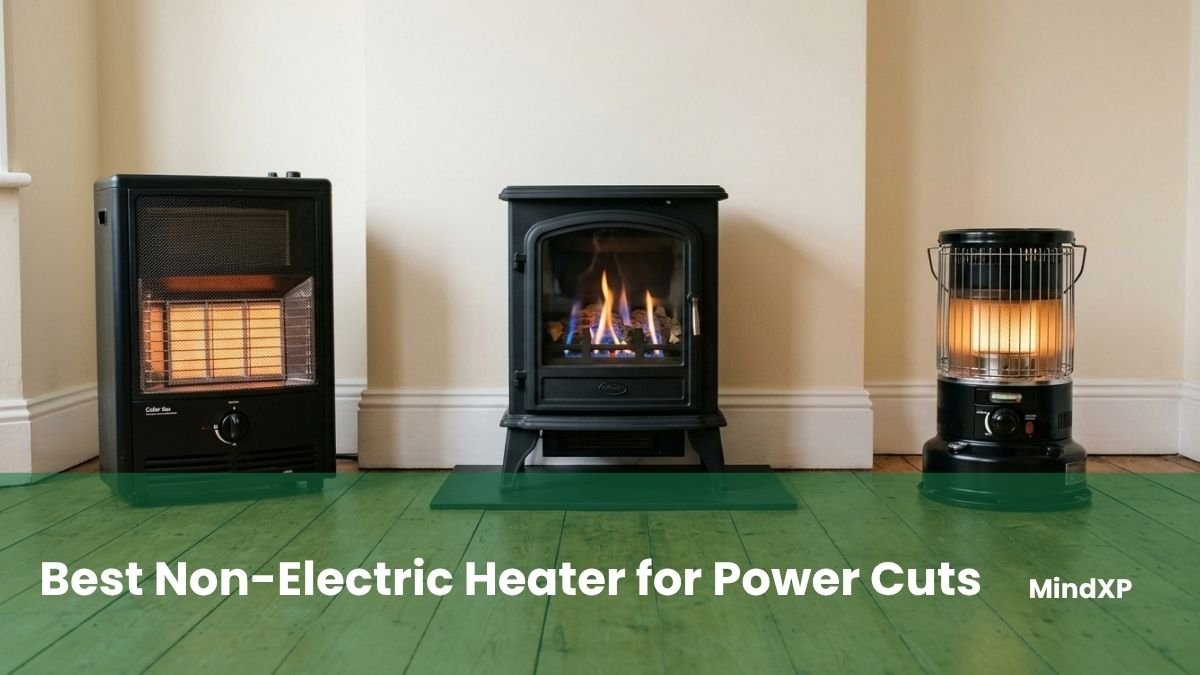
When the power goes off, the heating usually goes with it. Even if your boiler runs on gas, it needs electricity for its pump and controls, so most gas central heating stops working in a power cut.
In 2021, Storm Arwen left just over 1 million homes without power, some for almost two weeks. Those affected told the BBC that staying warm was the biggest challenge.
With the government actively telling the public to prepare for emergencies like power cuts, now is a good time to invest in a non-electric heater. If you’d rather start with the free options, our guide on how to stay warm without heating covers the best methods.
For this guide, I’ve gone through the manuals, UK safety guidance and owner reviews for five popular heaters, so you can pick one that works safely in a British home.
Quick answer: The Super Heat 4.2kW Radiant (£109) is the best-value butane heater for most homes. If you’d rather not keep a gas bottle indoors, the Zibro RS-30 paraffin heater (£229.95) is the pick. Whichever you buy, put a carbon monoxide alarm in the same room.
In this guide
What types of non-electric heaters are there?
Three types of heater run without mains electricity and are safe for indoor use in the UK:
| Type | Fuel | Where to get fuel | Heat | Good to know |
| Butane cabinet heater | Butane gas bottle (7kg to 15kg) | Calor stockists, garages, DIY stores | Strong, direct heat | Most heat for the money |
| Butane catalytic heater | Butane gas bottle | Calor stockists, garages, DIY stores | Gentler, flameless heat | Uses less gas, gives out less heat |
| Paraffin wick heater | Premium-grade paraffin (kerosene) | DIY stores, garages, fuel merchants | Strong, all-round heat | Smells briefly when lighting and switching off |
Because they all burn fuel indoors, every one of them needs ventilation and a carbon monoxide alarm in the same room.
Why butane and not propane?
In the UK, indoor gas heaters run on butane. Liquid Gas UK, the trade body for the LPG industry, says only butane cylinders should be used indoors, and propane is for outdoor use.
That’s why the Mr Heater Buddy isn’t on this list. It’s a popular choice in American reviews, but it runs on propane. If you’re buying a Calor bottle, butane is the blue one and propane is the red one.
Best butane gas heaters
Butane heaters are freestanding cabinets on wheels, with the gas bottle hidden in the back. They’re the cheapest way to get a lot of heat without electricity, and most light with a push-button spark.
1. Super Heat 4.2kW Radiant
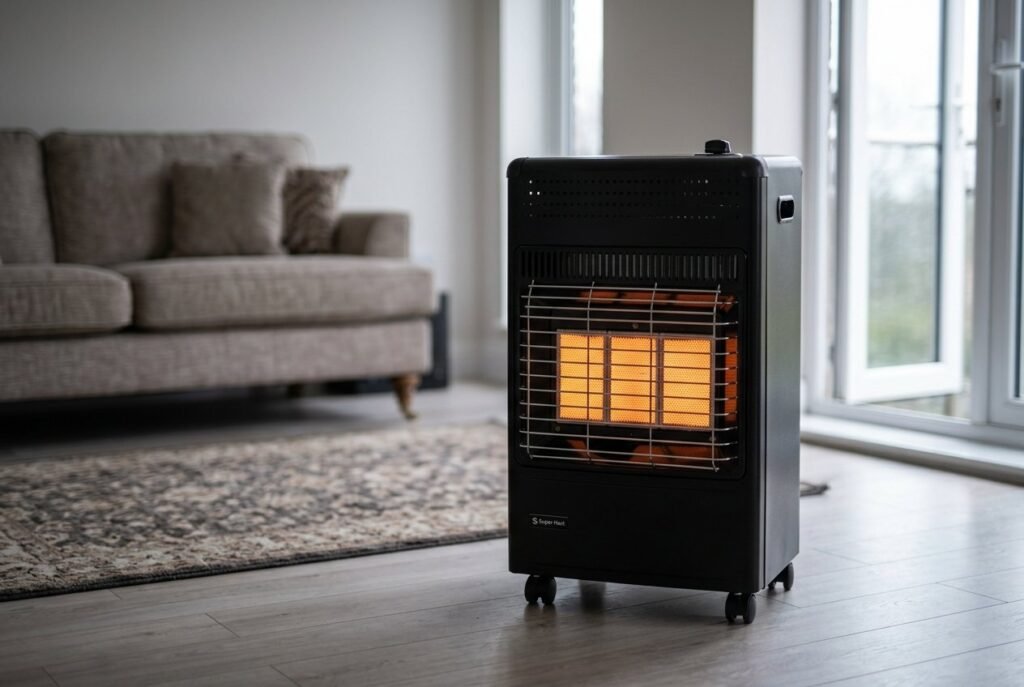
The most heat for your money. Ceramic panels on the front glow when it’s lit and throw out strong, direct warmth.
- Best for: Big living rooms on a budget.
- Fuel & output: Butane, using a 7kg or 15kg bottle. Three settings: 1.5, 2.8 and 4.2kW.
- Runtime: Roughly 48 hours on high from a 15kg bottle, and much longer on the lower settings.
- Room size & ventilation: At least 82m³ for a living room (roughly 34m² of floor space with a standard ceiling), or 41m³ for other rooms, with 103cm² of permanent ventilation.
- Safety features: Flame failure device and oxygen depletion sensor.
- Good to know: Owners say it’s sturdy and warms a room quickly. The regulator and hose come in the box, and lighting it means holding the control down for about 20 seconds.
- Watch out for: The manual rules out bedrooms, bathrooms, basements, high-rise flats and caravans. Calor’s “60 hours on high” claim doesn’t match its own gas use figures, so plan on closer to 48.
- Cost & where to buy: £109 from Calor Appliances.
Verdict: The one to get if you want the most heat for the least money.
2. Super Heat 3kW Catalytic
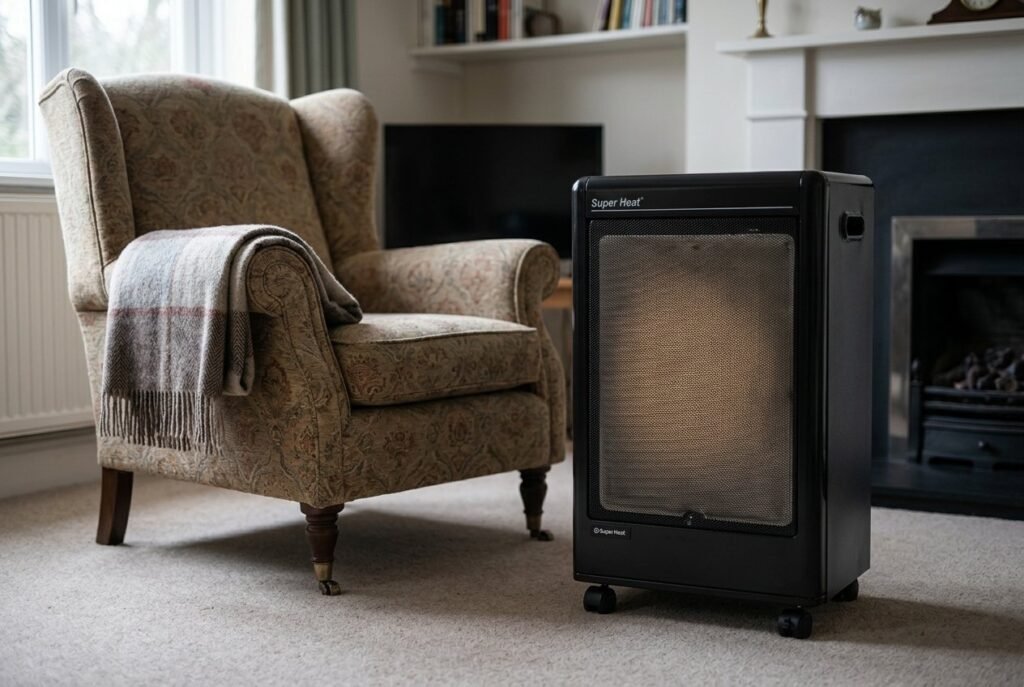
A gentler option from the same range. Instead of glowing ceramic panels, the gas reacts across a catalytic panel, which the maker says gives softer, more even heat.
- Best for: Smaller living spaces where you want the gas to last.
- Fuel & output: Butane, using a 15kg bottle. Three settings: 1.5, 2 and 3kW.
- Runtime: Roughly 70 hours on full from a 15kg bottle, based on the maker’s fuel use figure.
- Room size & ventilation: Check the manual for the minimum room size before you buy.
- Safety features: Flame failure device and oxygen depletion sensor.
- Good to know: It weighs 9kg and lights the same way as the 4.2kW.
- Watch out for: It gives out about 29% less heat than the 4.2kW, and there’s very little owner feedback on it yet, so long-term reliability is hard to judge.
- Cost & where to buy: £129 from Calor Appliances.
Verdict: Worth it if making a gas bottle last matters more to you than raw heat.
3. Calor Provence 3kW
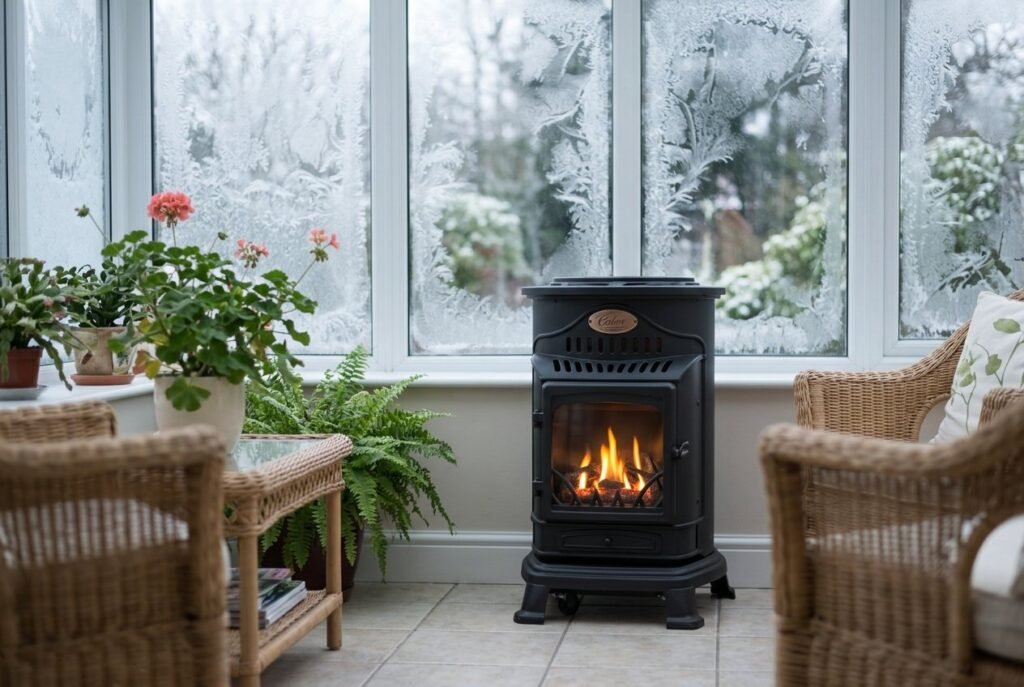
A living-flame stove that looks good enough to leave in the living room all year. The extra money buys build quality and looks rather than extra heat.
- Best for: A permanent backup heater in a living room or conservatory.
- Fuel & output: Butane, using a 15kg bottle. Adjustable from 1.2 to 3kW.
- Runtime: About 61 hours on full from a 15kg bottle. Calor’s “up to 105 hours” is on a lower setting.
- Room size & ventilation: At least 64m³, with 80cm² of permanent ventilation.
- Safety features: Flame failure device and oxygen depletion sensor.
- Good to know: Owners describe it as solid and well made, and one owner’s is still going after 14 years, with a replacement ignition part. The heavy body keeps giving off heat after you switch it off.
- Watch out for: It weighs 34kg before you add the gas bottle. New ones also give off a curing smell, so the manual says to run them on full for about four hours somewhere well ventilated first.
- Cost & where to buy: £299 from Gas Products.
Verdict: Buy it if it’ll live in your living room, but look elsewhere if you want the most heat for your money.
Best paraffin heaters
Paraffin heaters are a good choice if you’d rather not keep a gas bottle in the house. Before you buy one, check it’s a wick heater. Laser or fan paraffin heaters need mains power to run, so they’re no use when the electricity goes.
Both picks below are wick heaters from Zibro, which is being rebranded as Toyotomi, so you might see either name.
4. Zibro RS-30
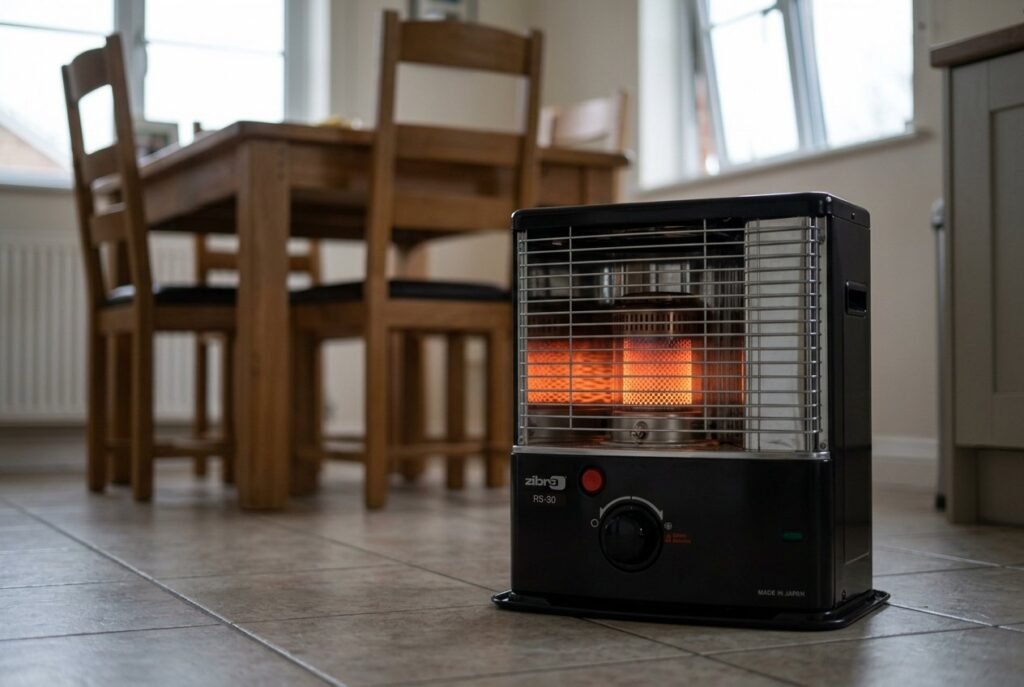
A simple single-wick heater that’s easy to move and quick to refill. It lights with a battery spark, and the batteries are only used for ignition.
- Best for: Mid-size rooms, and anyone who’d rather avoid gas bottles.
- Fuel & output: Premium-grade paraffin. 3kW.
- Runtime: About 13 hours on full from its 4L removable tank.
- Room size & ventilation: Ventilated rooms of roughly 25 to 46m² of floor space.
- Safety features: CE approved, with a 4-year UK warranty. Toyotomi’s listing doesn’t mention a tip-over shut-off, so check before buying if that matters to you.
- Good to know: It weighs 8kg, has no fan so it’s quiet, and replacement wicks are easy to get in the UK. Owners say it heats a room quickly.
- Watch out for: You’ll smell paraffin briefly when lighting and switching off. It can also be too powerful for a small room, as the flame only turns down a little. Before first use, leave the wick to soak for about 30 minutes.
- Cost & where to buy: £229.95 from Toyotomi.
Verdict: The best all-round paraffin heater for most homes.
5. Zibro RC-32
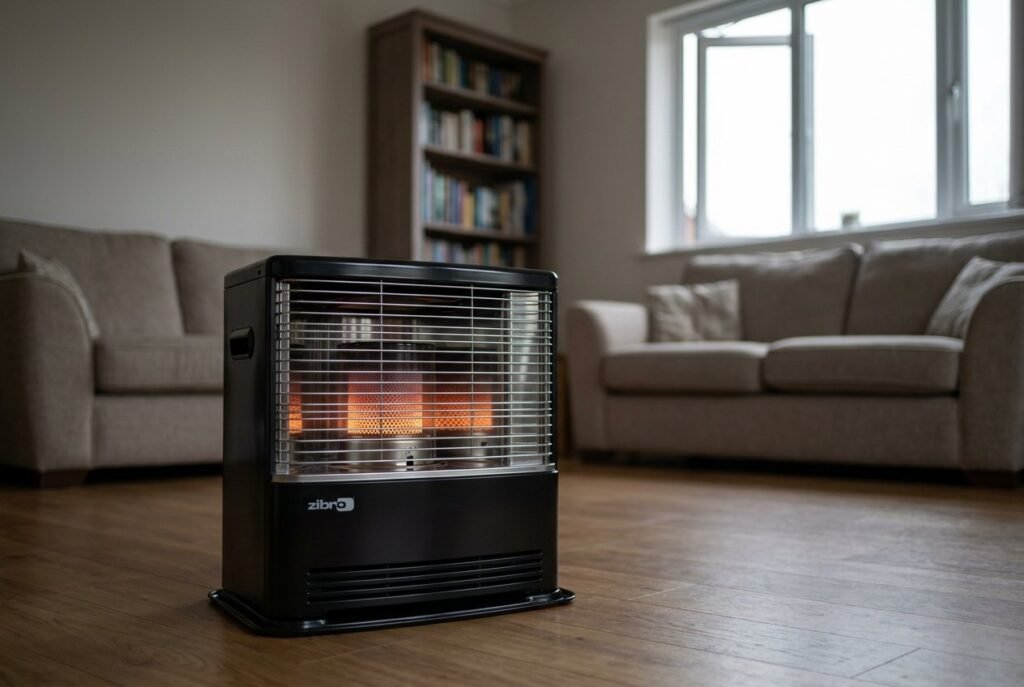
A bigger, cleaner-burning paraffin heater. Its Double Clean burner adds a second stage that burns off more of the fumes.
- Best for: Larger rooms.
- Fuel & output: Premium-grade paraffin. 3.2kW.
- Runtime: About 13.5 hours on full from its 4.5L removable tank.
- Room size & ventilation: Ventilated spaces up to about 120m³, which is roughly 50m² of floor space with a standard ceiling.
- Safety features: Air-quality monitoring, tip-over shut-off and a leak-resistant tank. CE approved, with a 4-year UK warranty.
- Good to know: Owners say it heats large rooms quickly and lights reliably. A manual siphon pump comes in the box for refilling.
- Watch out for: The same brief smell when lighting and switching off, and only limited flame adjustment. It’s 10kg empty and noticeably heavier with a full tank.
- Cost & where to buy: £369.95 from Toyotomi.
Verdict: Worth the extra over the RS-30 for bigger rooms and its air-quality and tip-over protection, but not for fuel economy, as it burns slightly more paraffin.
Which non-electric heater should you get?
Match the heater to your room and how you’ll use it:
| If you want | Get |
| The most heat for the least money | Super Heat 4.2kW Radiant |
| A gas bottle that lasts longer | Super Heat 3kW Catalytic |
| A heater that looks good all year round | Calor Provence 3kW |
| No gas bottles in the house | Zibro RS-30 |
| A cleaner-burning heater for a bigger room | Zibro RC-32 |
For most UK homes, one heater for the main living room is enough. Get everyone into that room during a power cut, and keep the doors shut to hold the heat in.
How do you use a non-electric heater safely?
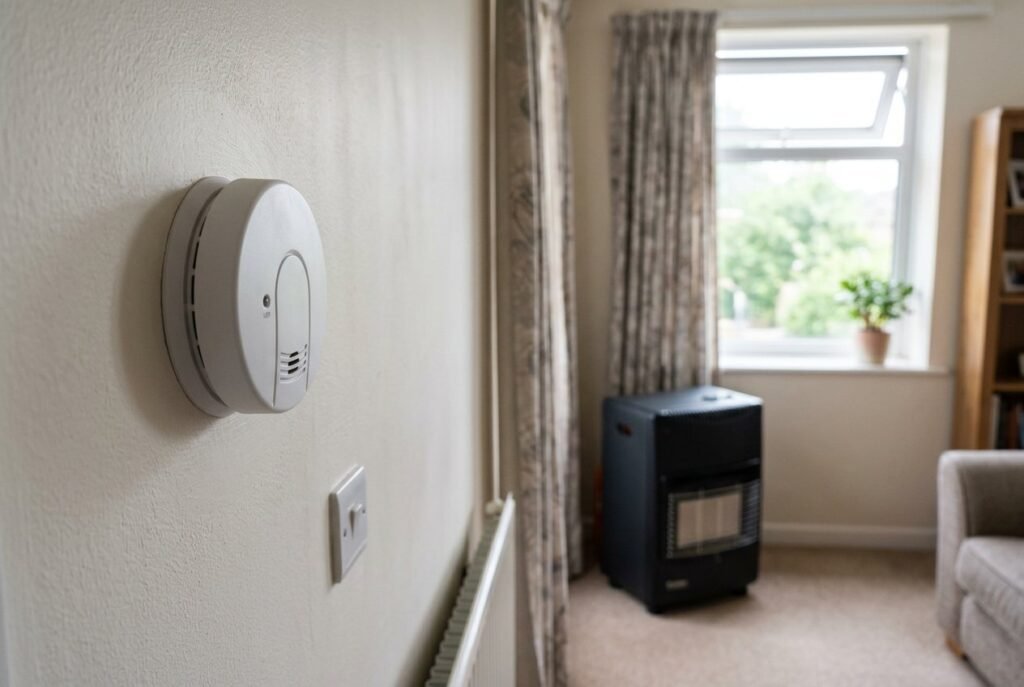
Every heater in this guide burns fuel inside your home, so the safety basics matter as much as the heater you choose:
- Fit a carbon monoxide alarm in the same room. London Fire Brigade recommends one in any room with a gas or paraffin heater. In Scotland, homes with fuel-burning appliances such as boilers and fires are legally required to have CO alarms.
- Keep fresh air coming in. These heaters use up oxygen, so follow your manual’s ventilation rules. Most need a permanent air vent or a window kept slightly open.
- Watch out for damp. Heaters without a flue release their combustion water into the room. A 4.2kW gas heater on full produces roughly half a litre of water vapour an hour, which is why ventilation also helps stop condensation and mould.
- Turn it off before bed. Scottish Fire and Rescue advises switching portable heaters off before you go to sleep, and the Super Heat’s manual rules out bedrooms entirely.
- Change gas bottles outside. Swap them in the open air, and store spare bottles outside too.
- Use the right paraffin. Stick to premium-grade paraffin, let the heater cool before refilling, and never buy a second-hand paraffin heater.
- Check for recalls. Search your heater’s make and model on the GOV.UK product recalls page before you buy, and again every winter.
- Keep it clear. Keep the heater away from curtains, furniture, and anything that could fall onto it.
Which heaters should you avoid?
Some heaters look like a good fit for a power cut but aren’t:
- Propane heaters indoors. This includes the Mr Heater Buddy. UK guidance is that propane is for outdoor use only.
- Laser paraffin heaters. They need a plug socket, so they stop working when the power does.
- Cheap unbranded paraffin heater-stoves. You’ll see plenty for £40 to £60 online, but it’s hard to check their certification or safety cut-offs. Stick to known brands from reputable retailers.
- Bioethanol fireplaces. Most are designed as decorative features rather than room heaters, so check the heat output before relying on one in a power cut.
- “Free warmth” gadgets. Hand warmers and similar gadgets warm you, not the room.
Sort your backup heat before winter
Nobody wants to sit through a winter power cut in three jumpers, watching their breath in the living room.
Get your heater sorted now, run it once somewhere well ventilated so the new-heater smell burns off, and keep a full gas bottle or a can of paraffin stored safely outside.
Warmth is only one part of getting through a power cut, though. Our power cut kit guide covers light, food and comms, and our emergency preparedness guide for beginners puts the whole plan together.
Is there a heater that works without electricity?
Yes, butane gas heaters and wick paraffin heaters both work without mains electricity. Some paraffin heaters use batteries, but only for the spark that lights them.
What are the best non-electric heaters for indoor use in the UK?
The Super Heat 4.2kW Radiant is the best-value butane heater, the Calor Provence is the best-looking, and the Zibro RS-30 is the best paraffin option. All of them are designed for indoor use in a ventilated room with a carbon monoxide alarm.
What is the safest non-electric heater to use indoors?
No fuel-burning heater is risk-free, so the safest choice is one with automatic safety cut-offs, like an oxygen depletion sensor or tip-over shut-off. Use it in a ventilated room with a carbon monoxide alarm, and never leave it on overnight.
What is the best heater when the power goes out?
A butane cabinet heater or a wick paraffin heater, as both run without mains electricity. Avoid laser paraffin heaters, which need a plug socket.
Can you use a gas heater indoors in the UK?
Yes, as long as it’s designed for indoor use and runs on butane. Only use it in a ventilated room with a carbon monoxide alarm, and never use propane indoors.
Do paraffin heaters need electricity?
Wick paraffin heaters don’t, but laser paraffin heaters do, so they won’t work in a power cut.
Is there a battery-powered heater?
Not one that will heat a room for long. A 20,000mAh power bank stores about 74Wh, which would run a small 500W heater for around nine minutes. Our guide on heating a room without electricity explains what works instead.
Can you use a non-electric heater in a shed?
Usually not in a small one. These heaters’ manuals set minimum room sizes, such as 41m³ for the Super Heat 4.2kW, and the Zibro RS-30 is designed for rooms of about 25m² and up. A typical garden shed is much smaller. For a larger outbuilding, keep it ventilated, fit a carbon monoxide alarm and never leave the heater unattended.

Professional writer and editor. Founder of MindXP, helping UK households prepare for power cuts, storms, and supply disruptions.