The world feels pretty unpredictable right now. We’ve got ongoing conflicts in Ukraine and the Middle East, fuel and supply chain issues, power cuts and cyber attacks, and the threat of another pandemic, to name a few.
In July, the government added seven new risks to the National Risk Register, including cyber attacks on the UK’s water infrastructure and large-scale IT failures, like the CrowdStrike outage in 2024.
We humble folk on the ground can’t do much about these big issues, so there’s no point panicking. What we can do is prepare, and that’s exactly what the government’s Prepare campaign asks us to do.
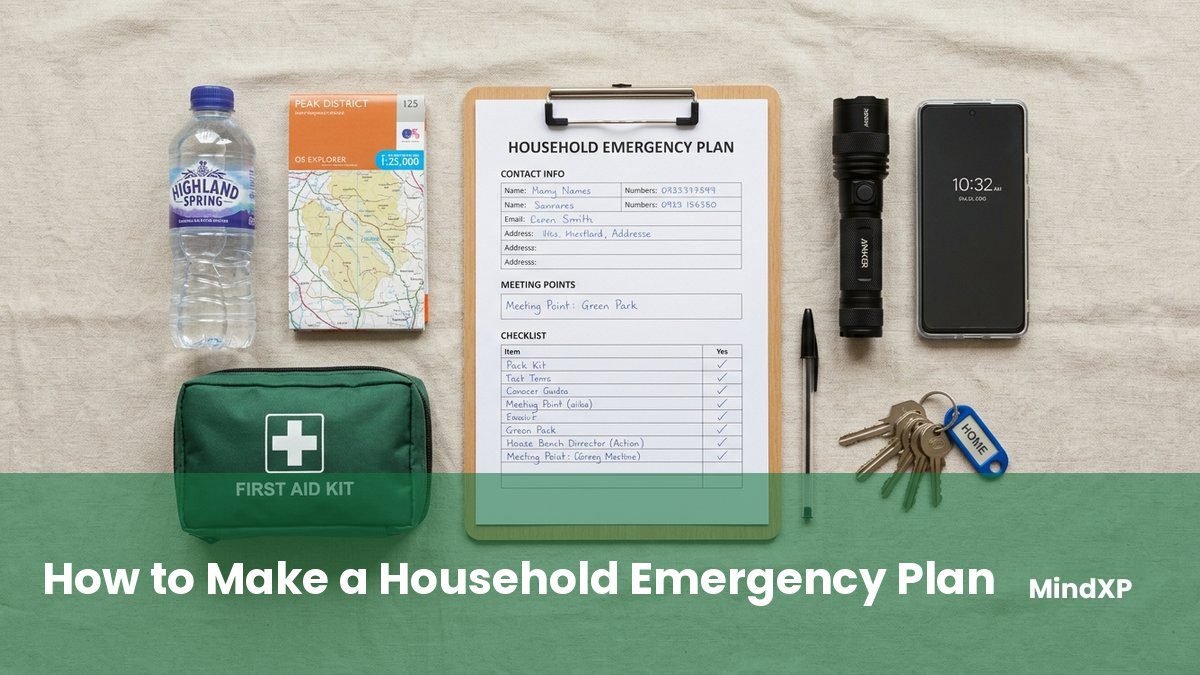
This guide explains how to put together a household emergency plan in five steps, covering what to do in each type of emergency, so the plan actually helps when something goes wrong.
Quick answer:
- Write down your emergency numbers
- Learn how to turn off your gas, water and electricity
- Agree where to meet and how to stay in touch
- Pack your supplies and a grab bag
- Know what to do in each type of emergency
- Keep a paper copy where everyone can find it
In this guide
What is a household emergency plan?
A household emergency plan is a one or two-page document that answers five questions:
- What dangers do we face?
- Which contact numbers do we need?
- How do we make the house safe?
- How do we stay in touch or meet up?
- What do we need for staying home or leaving in a hurry?
The government’s free household emergency plan form gives you the boxes to fill in. Scotland has its own version from Ready Scotland, and Northern Ireland’s is on NI Direct. This guide shows you how to fill one in properly, and what to do with it afterwards.
How do you make a household emergency plan? 5 steps
Work through these steps to build a personalised plan for your household. Ideally, everyone should be familiar with it.
Step 1: Know the risks where you live
Start with the emergencies most likely to affect you. If you live near a river or the coast, flooding is the big one. Rural and exposed areas tend to lose power more often in storms.
Hillingdon Council suggests thinking about anything nearby that could cause problems, like factories or transport hubs. Even a petrol station can be a risk. In 2024, a leak left over 600 homes in Bramley, Surrey, unable to drink their tap water.
If flooding is a possibility, check your risk and sign up for free flood warnings in England. Scotland, Wales and Northern Ireland run their own warning services.
Step 2: Write down your numbers and contacts
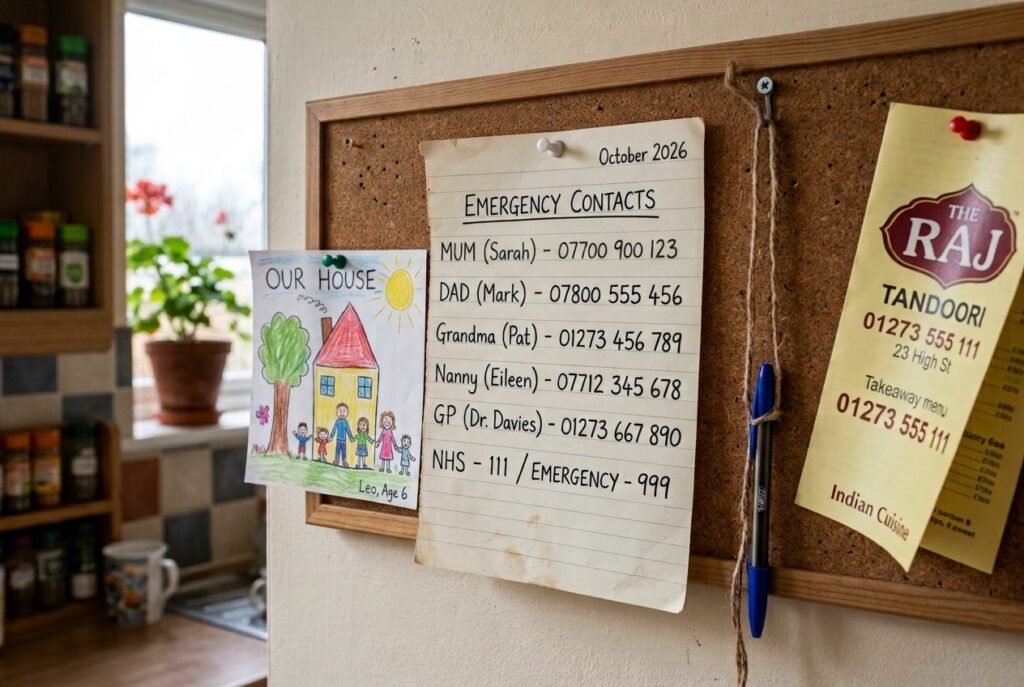
Your plan should have every number you might need on paper, because phones die and signal can be patchy or non-existent, depending on the emergency. These are the UK numbers to include:
| Who | Number |
|---|---|
| Police, fire, ambulance or coastguard | 999 |
| NHS non-emergency | 111 |
| Police non-emergency | 101 |
| Power cut | 105 (03457 643643 in Northern Ireland) |
| Smell gas or suspect carbon monoxide | 0800 111 999 |
| Floodline (England, Scotland and Wales) | 0345 988 1188 |
| Your water company | On your water bill |
Then add your own: Your GP, your home insurer and policy number, your children’s school, your vet, a couple of neighbours, and one out-of-area contact, such as a relative in another town. If your household gets separated, everyone checks in with that one person.
Note down anyone who needs extra help too: Medication and doses, care needs, and whether they’re on their energy supplier’s Priority Services Register, which gets vulnerable people extra support during a power cut. Add your pets and what they’ll need.
Step 3: Learn how to turn off your gas, water and electricity
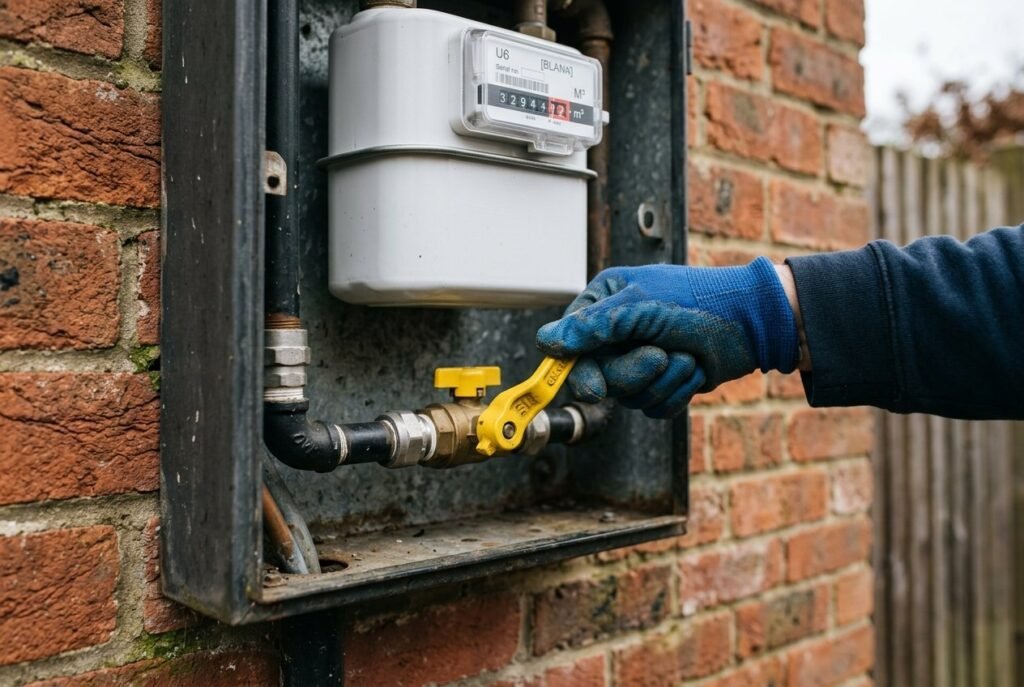
In a gas leak, a flood or a burst pipe, turning things off quickly can stop a bad situation getting worse. Everyone old enough should know where each one is.
- Gas: Your emergency control valve is next to the gas meter. Cadent explains that the handle runs in line with the pipe when the gas is on, and a quarter turn either way switches it off. Don’t turn it back on until you’re told it’s safe.
- Water: Your stopcock is usually under the kitchen sink. United Utilities says to turn it clockwise to shut the water off, and to check now that it works.
- Electricity: The main switch on your consumer unit (fuse box) turns off the power to the whole house. Never touch it if the unit is wet, damaged, smells of burning or is sparking. Get out and call 999.
Write each location into your plan, for example “Stopcock: Under the kitchen sink, behind the bin.”
Step 4: Agree where to meet and how to stay in touch
Pick two meeting places: One just outside your home, like a neighbour’s front gate, for fires, and one further away, like a relative’s house or a local landmark, in case you can’t get back to your street. Ready Scotland recommends somewhere with shelter that’s safe in bad weather.
Agree that everyone texts the out-of-area contact rather than calling, as texts often get through when phone networks are busy. Make sure children know their address and how and when to call 999.
Step 5: Pack your supplies and a grab bag
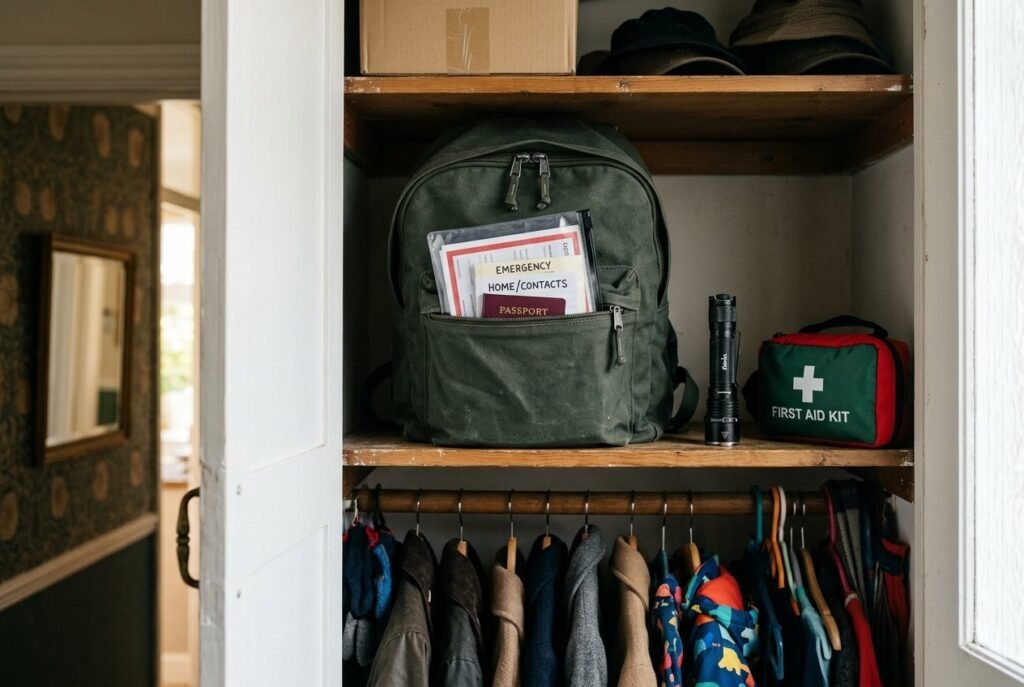
Your plan works best with two sets of supplies: One for staying put and one for leaving in a hurry.
- Supplies to stay at home: Water, long-life food, a torch, a battery or wind-up radio, a charged power bank, a first aid kit, and any medication. Our emergency preparedness guide for beginners and power cut kit guide have the full lists.
- A grab bag by the door: A copy of your plan, ID and insurance documents, medication, cash in small notes, a phone charger, warm clothes, and spare keys. Our bug out bag guide has the complete checklist.
The situation will dictate whether you’re staying put or leaving, but it’s always one or the other, so get both sets of supplies ready.
What to do in each type of emergency
The right action depends on what’s happening, so your plan should cover the emergencies you’re most likely to face. These are the key steps for each.
Fire at home
- Get out, stay out and call 999. Don’t stop to collect belongings or go back in.
- Meet at your nearby meeting point so you know everyone is out.
- If you live in a block of flats, follow your building’s fire plan, which may mean staying put. London Fire Brigadeexplains when that applies.
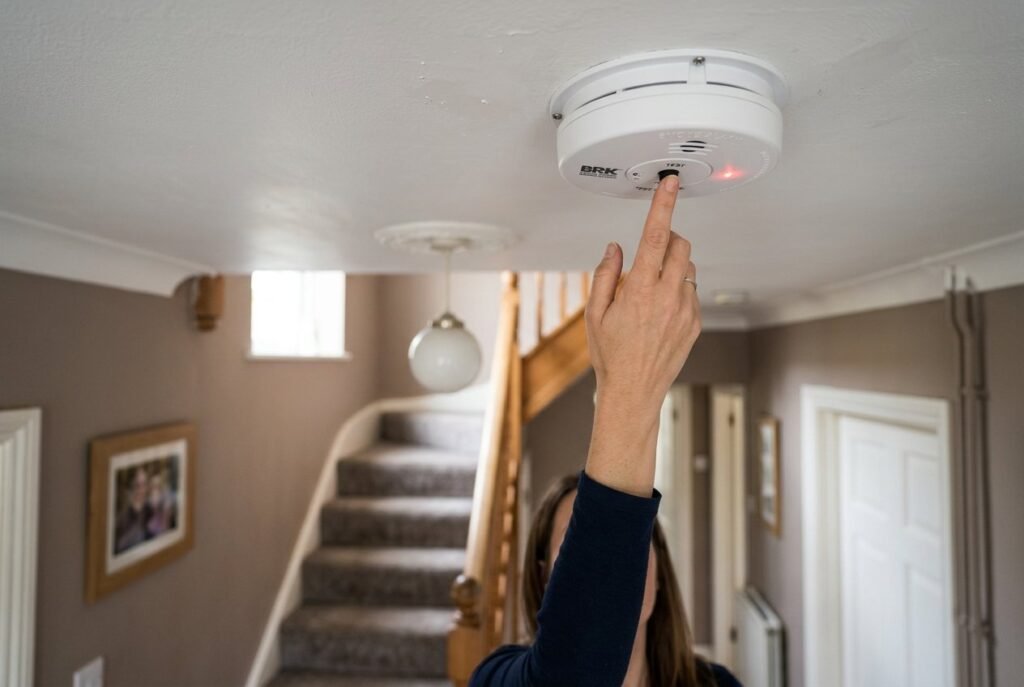
Greater Manchester Fire and Rescue recommends a smoke alarm on every level of your home and a heat alarm in the kitchen, tested at least once a month.
If you rent in England, your landlord must fit a smoke alarm on every floor and a carbon monoxide alarm in any room with a fixed fuel-burning appliance, under rules in force since October 2022.
Smell gas or carbon monoxide alarm going off
- Call the gas emergency line on 0800 111 999, any time of day or night.
- Open doors and windows, and don’t use light switches, plugs or anything that could cause a spark.
- Cadent advises turning off the gas at the meter, unless the leak is in a cellar or basement, in which case get out instead.
- Know the carbon monoxide symptoms the NHS lists, like headaches, dizziness, feeling sick, tiredness and confusion. Get into fresh air, and call 999 if anyone is seriously unwell.
If you use a gas or paraffin heater, our guide to the best non-electric heaters covers using one safely.
Power cut
- Check whether it’s just your home. If the neighbours have power, check your fuse box for a tripped switch.
- Call 105 to report it or find out when power will be back.
- Keep the fridge and freezer doors shut to keep food cold for longer.
- Check on elderly or vulnerable neighbours.
Our power cut kit guide covers lighting, heating and cooking until the power comes back.
Flood
- Act as soon as a flood warning is issued. The government’s personal flood plan explains what each warning level means.
- Move people, pets, valuables and important documents upstairs.
- Turn off your gas, electricity and water if it’s safe to do so.
- Never walk or drive through floodwater, as it can be deeper and faster than it looks.
Burst pipe or no water
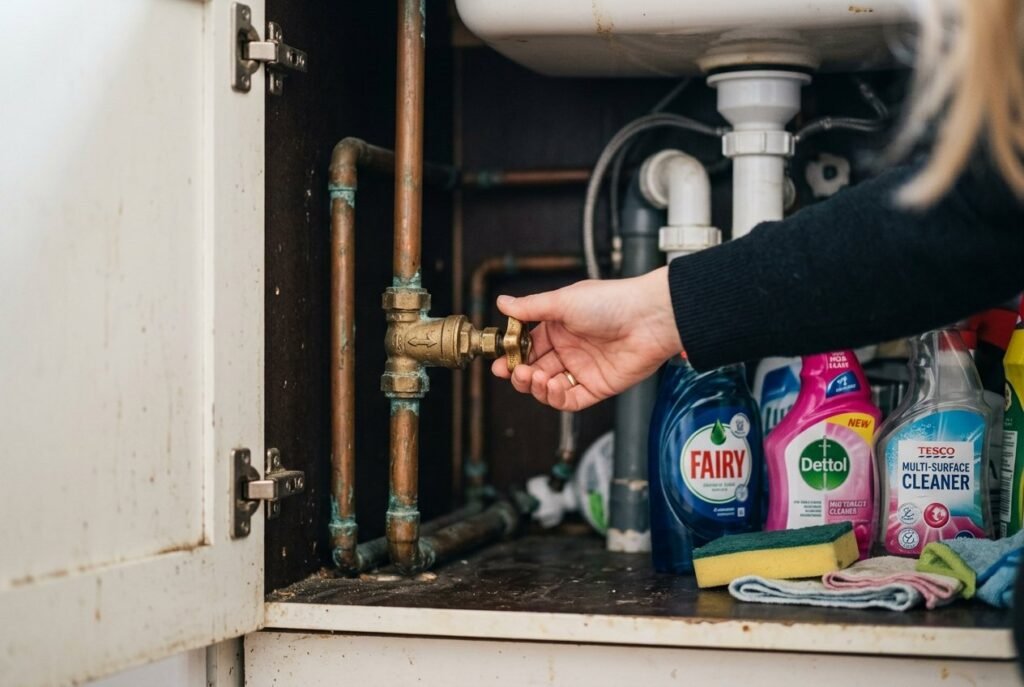
- Turn off the water at the stopcock straight away.
- If water is near electrics, turn off the electricity at the main switch, but only if the fuse box is dry and safe to reach.
- Contact your water company if the problem is outside your home or affecting the street.
- Switch to your stored water. Our water storage guide covers how much you need.
Severe weather
- Prepare as soon as a weather warning is issued, rather than waiting for the storm, snow or heatwave to arrive.
- Stay indoors during high winds and bring in or tie down anything that could blow away.
- Check on anyone vulnerable nearby, especially during cold snaps and heatwaves.
Major incident nearby
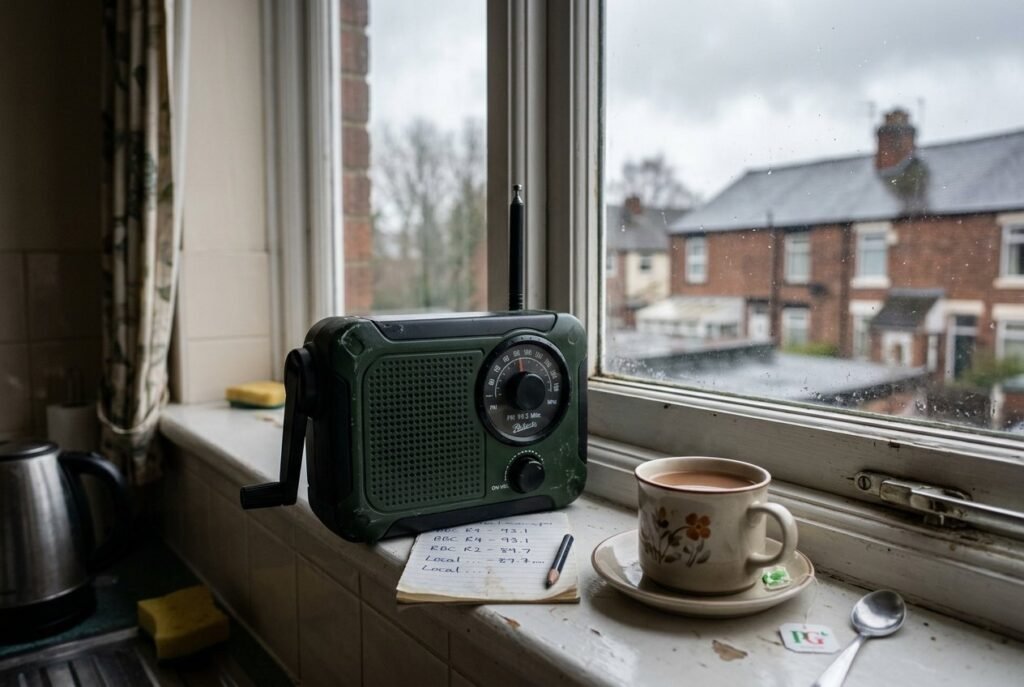
If there’s a major incident near you, like a chemical leak or a large fire, the advice is to go in, stay in, tune in.
- Go in: Get inside and close windows and doors.
- Stay in: Don’t leave until the emergency services tell you it’s safe.
- Tune in: Listen to local radio or check official updates. Ready Scotland suggests writing down your radio frequencies in advance, and keeping a battery or wind-up FM radio in case the power goes.
This doesn’t apply if the fire is in your own home. Then you get out.
War or national emergency
You don’t need a separate plan for war. When MPs debated emergency preparedness in January 2026, the government said its advice applies to any emergency, whatever the cause. The same numbers, supplies, meeting places and grab bag cover you either way.
If war is the worry, our guide on how to prepare for war takes a calm, practical look at what’s worth doing.
If you’re told to evacuate
Hillingdon Council’s evacuation steps are a good checklist:
- Listen to the emergency services and follow their directions.
- Collect your grab bag.
- Check you have your keys, wallet and phone.
- Take warm clothes to change into.
- Move pets to safety.
- Secure your home before you leave.
Where should you keep your plan?
Keep a paper copy somewhere everyone in the house knows about, and another in your grab bag. Hillingdon Council also recommends keeping it with your important documents and saving a copy on your phone. It’s worth giving a copy to your out-of-area contact too.
How often should you update your plan?
Check your plan every six months. The clocks changing in spring and autumn make an easy reminder. Update it straight away if someone moves in or out, changes their number, or starts new medication.
Test your smoke and carbon monoxide alarms monthly, as the Prepare campaign recommends.
Plan, don’t panic
I’ve experienced two natural disasters recently while living and working in Bangkok: the 2025 Myanmar earthquake, which wobbled my condo building from side to side, and September’s floods, when the whole city was declared a disaster zone.
I learned firsthand how a little prep goes a long way, even if it’s mainly psychological. The biggest thing for me is water. It’s scary how something we take for granted can become relatively scarce overnight. A few days’ water stashed away is enough to neutralise the panic and see you through most disruptions.
If you’ve got dependants, older relatives who can’t brave a storm or flood to get what they need, or even pets, the value of preparing skyrockets. So get your household plan sorted and start building up your supplies.
Our emergency preparedness guide for beginners covers the basics, and our power cut kit guide shows you how to be ready for the emergency you’re most likely to face.
What are the 5 steps to an emergency plan?
Know the risks where you live, write down your emergency numbers and contacts, learn how to turn off your gas, water and electricity, agree where to meet and how to stay in touch, and pack your supplies and a grab bag.
Where can I get a household emergency plan template?
The government’s Prepare campaign has a free household emergency plan you can download and print. Scotland’s version is on Ready Scotland, and Northern Ireland’s is on NI Direct.
Is the UK government telling people to stockpile?
Not stockpiling as such, but the government’s Prepare campaign does encourage every household to keep some emergency supplies at home, like water, food, a torch and a radio. Our emergency preparedness guide for beginnersexplains what to keep and how much.
Does the UK need to prepare for war?
The government’s advice is for households to be prepared for any emergency, whatever the cause. A household emergency plan, a few days of supplies and a grab bag cover you for war, storms and power cuts alike.
What should be in an emergency grab bag?
A copy of your emergency plan, ID and insurance documents, medication, cash, a phone charger, a torch, warm clothes and spare keys. Our bug out bag guide has the full checklist.
Images on MindXP are AI-generated illustrations. Product images are checked against manufacturer photos for accuracy.

Professional writer and editor. Founder of MindXP, helping UK households prepare for power cuts, storms, and supply disruptions.