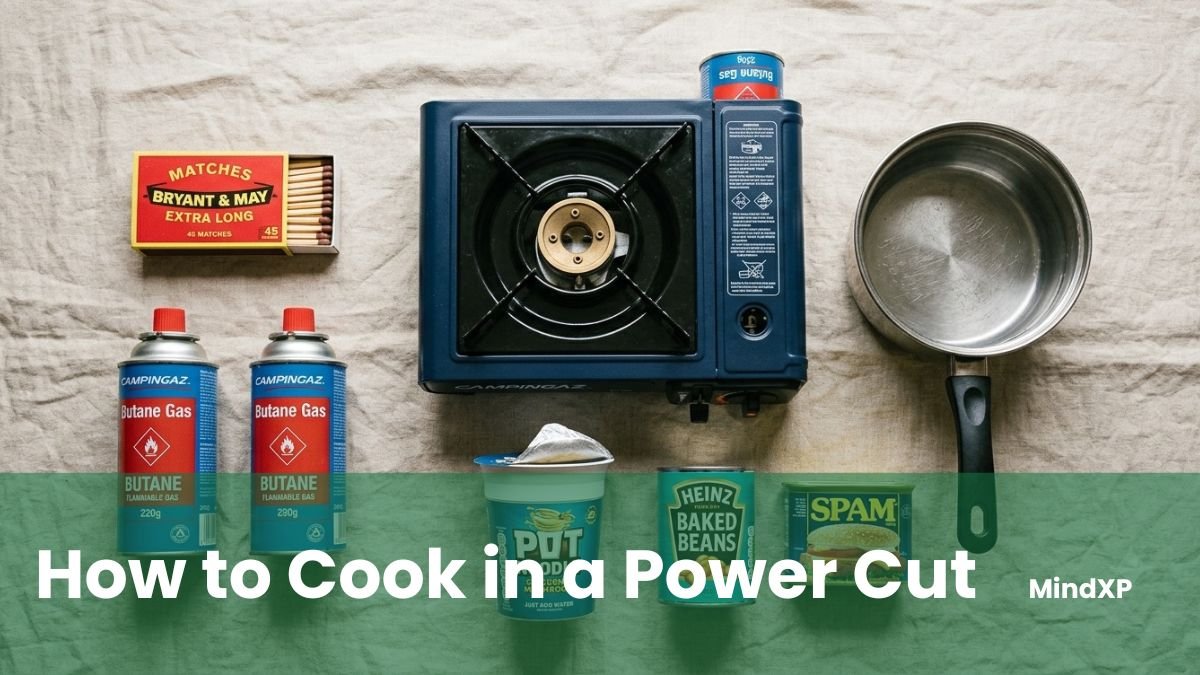
There’s nothing like a warm meal or a hot brew to get you through a tough situation. When the lights go out and the house starts cooling down, even a pot noodle is enough to lift your spirits.
But, if you don’t know how to cook in a power cut, you might have to resort to cold beans – or a jar of peanut butter if you’re lucky. The good news is, cooking without power is pretty easy, as long as you prepare in advance.
This guide covers safety tips, equipment, easy meals to cook, how to make your fuel last, and more.
In this guide
Do you need to prepare?
If you live in a rural area with overhead lines or somewhere prone to extreme weather events, you should definitely prepare. During Storm Arwen in 2021, some homes were left without power for almost two weeks.
For most people, cuts are short-lived. Cooking isn’t a major concern when the power cut lasts 20 minutes. That said, nowhere is truly safe, and the Iberian Peninsula blackout that hit Spain and Portugal in 2025 proved that.
The UK Government now encourages people to prepare for emergencies like floods and blackouts. Luckily, you can prepare to cook in a power cut by setting aside some stuff you probably already own.
Safety first: what not to do
Before we get into the safe cooking options, here are a few things you should never do:
- Bring a BBQ indoors. Not in the kitchen, not in a garage or porch, and not even once it’s down to smouldering embers. Charcoal and gas BBQs both produce carbon monoxide (CO).
- Run a generator in an enclosed space. Petrol and diesel generators, and patio heaters, all give off CO.
- Use gas appliances without ventilation. When using a camping stove or gas hob indoors, keep a window open an inch for airflow.
Carbon monoxide is a colourless, odourless gas that can kill you before you realise anything’s wrong. The NHS specifically warns against using barbecues and camping stoves indoors.
What still works in a power cut?
Your usual cooking methods are likely gone. Anything that relies on electricity, including induction and electric hobs, the electric oven, the microwave, and the kettle.
Your gas boiler stops too, since it needs electricity to run the pump and ignition, so there’s no hot water from the tap either.
That leaves you with a few potential options:
Gas hob
If you’ve got a gas hob, you should still be able to light it manually when the ignition stops working, as power cuts don’t affect the gas supply. Simply turn the dial and hold a match or a lighter to the burner.
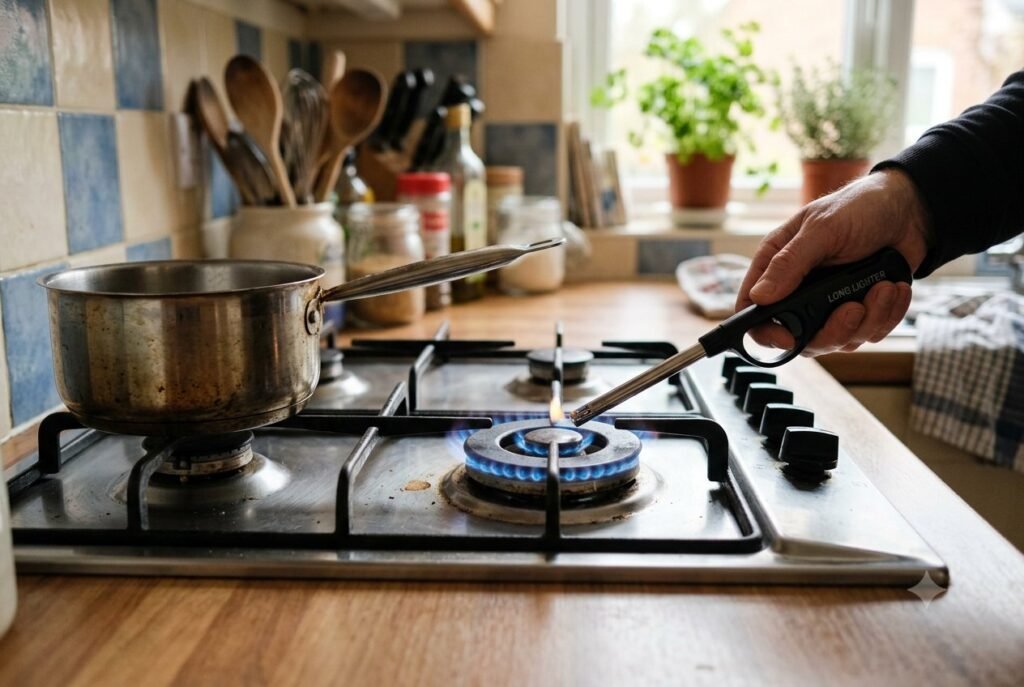
If you’ve got a newer hob with a flame supervision device or safety cut-off that needs power, you won’t be able to light it by hand.
Wood burners & multi-fuel stoves
Wood burners and multi-fuel stoves are life-savers in power cuts, as they’re both excellent cooking and heating devices that don’t need electricity. Most models feature a top plate that gets hot enough to boil water or heat up soup.
They’re slower than hobs and take a bit of practice, but as a combined heating and cooking solution, they’re hard to beat.
BBQ
A lot of people have a standing barbecue in the garden or a portable one tucked away in the shed. As long as you’re stocked up on dry fuel and have a lighter or some matches lying around, the transition should be effortless.
Always use it outdoors and away from doors and windows. Never bring it indoors no matter how cold it is or how well ventilated you think your house is. It’s never a good idea. Cook outdoors, and bring the food in.
Best emergency cooking options for UK homes
About 38% of UK households use electric hobs and 70% use electric ovens, both of which are gone in a power cut.
Barbecuing is off the table for many people too, such as those living in apartment buildings or without private gardens.
That leaves a few solid options for those who take the time to prepare:
Butane bistro stove
These are the single-burner gas stoves that use butane canisters. Camping enthusiasts might already own one.
You can also get a similar, smaller, screw-top canister stove where the burner screws directly onto a gas canister so it stands up like a little tower.
I would personally choose the first option for cooking at home, simply because it’s basically the same as a regular hob and requires little adjustment.
That said, if you don’t live in an area prone to power cuts, the smaller option is perfectly fine. Both also double as great bits of camping kit, so it’s a good investment either way.
Alcohol & spirit burners
Alcohol and spirit burners are light, durable, and simple, with no moving parts to break. The Swedish Trangia stoves are legendary in outdoor circles, as they’re windproof, easy to use, and virtually indestructible. All you have to do is fill the burner with a methylated spirit and ignite it.
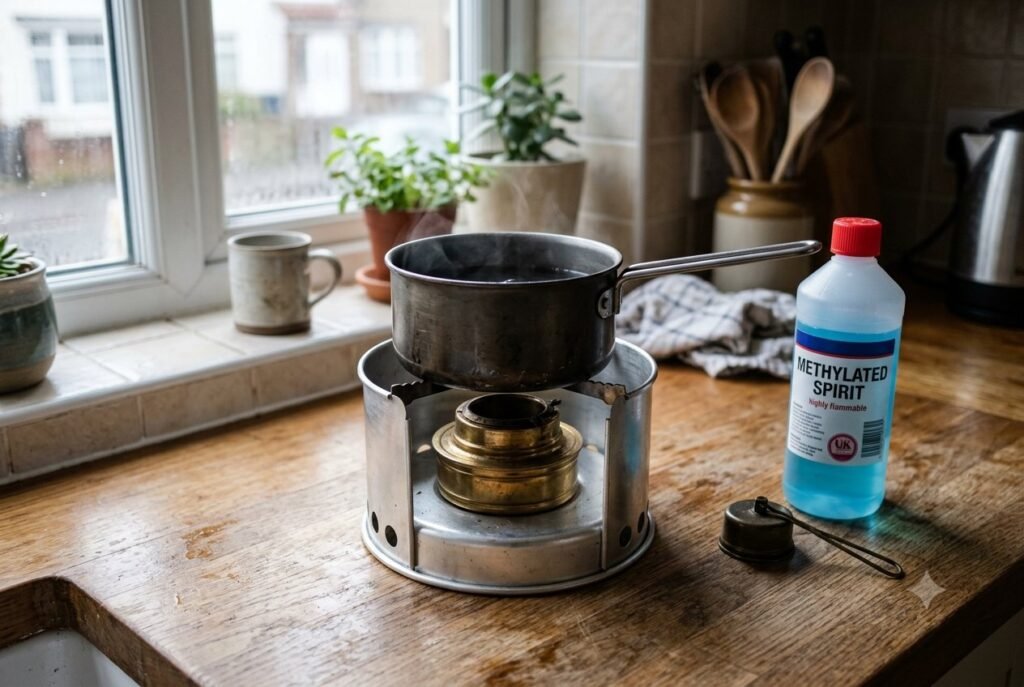
It’s slower than gas, but it’s reliable and stable. The fuel is also much cheaper and more widely available. One quick safety note: alcohol flames are almost invisible in daylight, so it’s easy to think it’s out when it isn’t. They usually come with a snuffer cover you can pop over the top to extinguish the flame.
Self-heating meals
These are the clever little pre-packaged meals that cook themselves through a heat-releasing chemical reaction. They have two compartments, one for the food and one for the heating element.
The chemical reaction happens when water comes into contact with specific reactive minerals, producing heat that warms your food.
Fun Fact: they were invented in the UK when Heinz and Imperial Chemical Industries (ICI) teamed up to produce self-heating cans of soup during WW2.
While they’re generally safe, Hereford & Worcester Fire and Rescue have warned against using them indoors, as they can release small amounts of harmful gases.
How much does an emergency cooking setup cost?
If power cuts are rare where you live, the basic setup will see you through the odd short outage without fuss.
If you lose power more often, or an outage would hit harder, because you’re rural, on an overhead-line network, or someone at home relies on hot food and drink, it’s worth stepping up to the medium or advanced setup.
Here’s the range:
Basic (around £25 to 40)
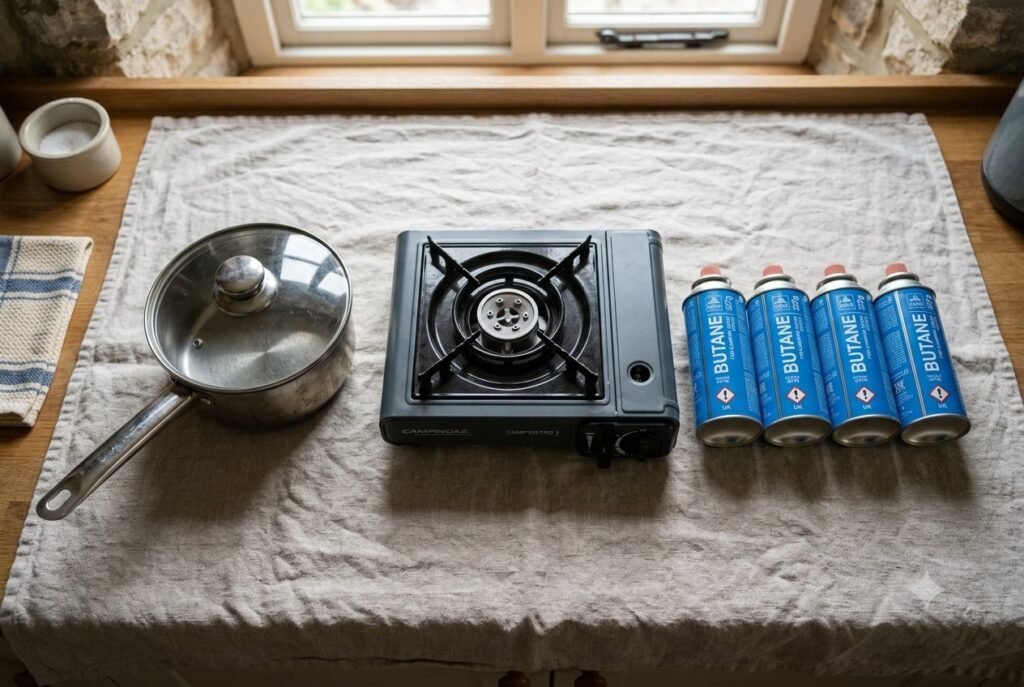
A single-burner butane stove and four canisters, plus a pan you already own. That’s enough to boil water and cook simple meals through a 72-hour outage.
Medium (around £60 to 120)
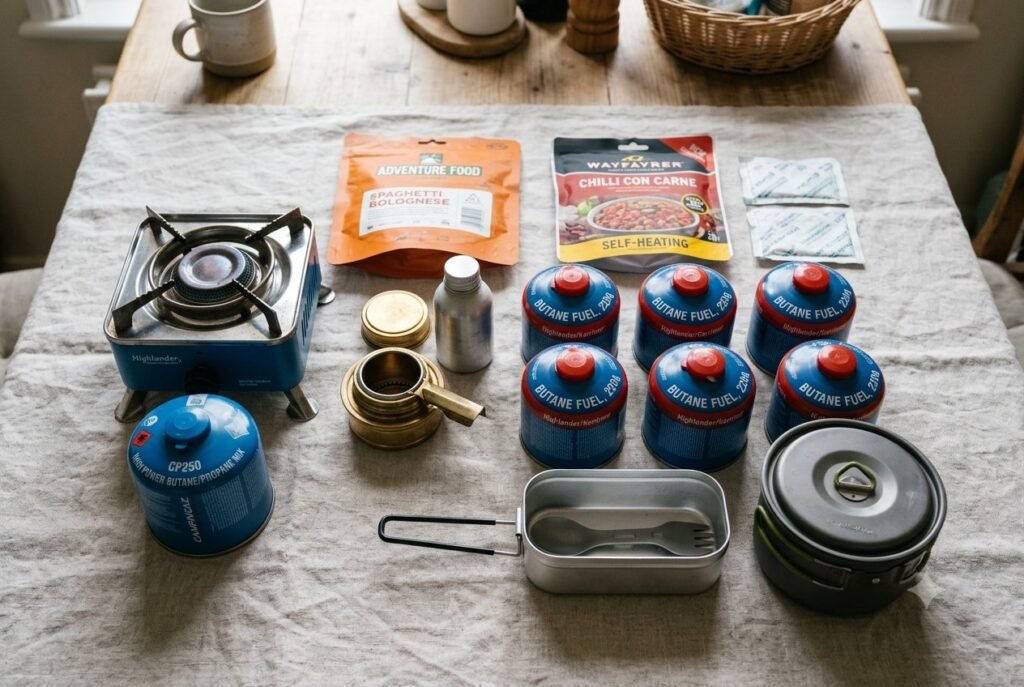
Adds a spirit burner or a second gas stove as backup, a dedicated pot or mess tin, extra fuel, and a few self-heating meals for no-effort days.
Advanced (£150+)
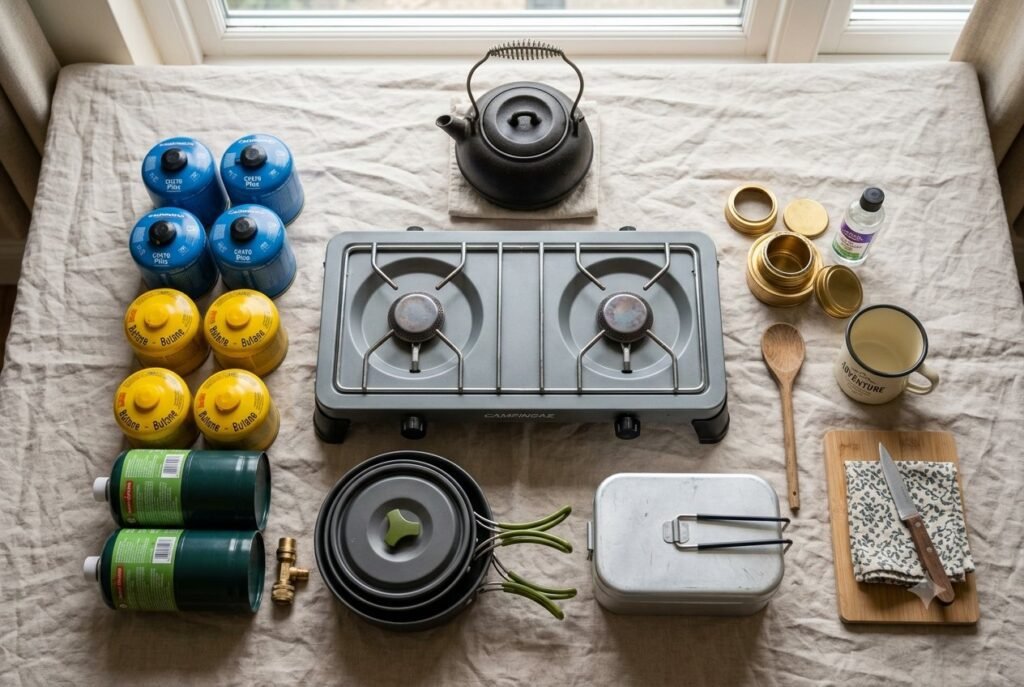
For frequent or rural outages: a larger twin-burner stove, a bigger fuel stock, and a wood burner or multi-fuel stove if you’re set up for one (a much bigger job and cost, but it doubles as heat).
Easy meals to cook in a power cut
Here are some quick-fire meal options tailored to each setup:
No-cook meals
- Nuts, dried fruit, & tinned fruit
- Cereal bars, flapjacks, & malt loaf
- Crackers or oatcakes with peanut butter
- Tinned fish, tinned meat, or a tin of beans eaten as is
- Long-life snacks like breadsticks, rice cakes, and trail mix
Meals that use boiling water
- Couscous & instant mash
- Pasta, then stir through a jar of sauce
- Boil-in-the-bag or microwave rice pouches
- Porridge or instant oats made with hot water
- Cup-a-soups, instant noodles, & pot noodles
- Pouches of ready-made curry or chilli, heated in their bags
Camping stove meals
- Pasta with a jar of sauce
- Tinned stew, chilli, or curry with rice
- Scrambled eggs, an omelette, or a fry-up
- Soup from scratch with tinned or leftover veg
- Beans on toast (toast the bread over the flame)
- Anything from the fridge that needs using up first
How to make your fuel last longer
If you didn’t stash enough fuel or a power cut lasts longer than expected, you’ll need to stretch it beyond its usual limits.
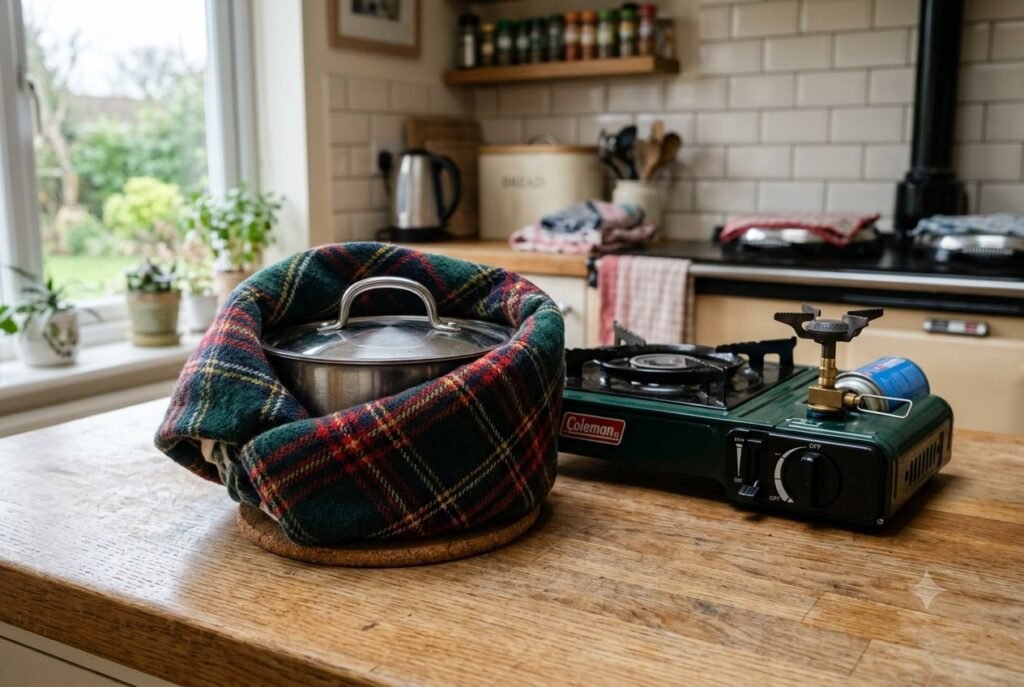
Here are a few tips for doing exactly that:
- Try retained-heat cooking (shown above). For pasta or rice, bring it to the boil for a couple of minutes, then turn the heat off and wrap the lidded pan in a towel or put it inside a sleeping bag. It’ll carry on cooking in its own heat.
- Batch your brews. Boil once and fill a flask, so a single burn gives you hot drinks for hours.
- Prep cold where you can. Do any chopping or mixing off the heat, so the stove’s only on for the cooking itself.
- Boil only what you need. Measure the water in your mug or pan first.
- Use a lid. A pan with the lid on boils faster and uses noticeably less fuel.
Done together, these can roughly double how far a single canister goes.
Is your fridge & freezer food still safe to eat?
For a short cut, your food is fine. Beyond that, a few simple rules keep you safe.
Keep the fridge and freezer doors shut. According to FSA guidance, a fridge (which should sit at 0 to 5°C) keeps food safe for about four hours once the power’s off, as long as you don’t open it.
A full freezer (around minus 18°C) holds its temperature for roughly 24 hours, longer if it’s packed and stays closed.
Eat down the chilled, high-risk food first, the meat, fish, and dairy, before you break into the cupboard tins.
And don’t judge by look or smell: food that’s been above fridge temperature for more than about four hours should be thrown out even if it seems fine, because you can’t always tell when it’s unsafe.
If you’ve a way to keep power going, a battery power station will run a fridge or freezer for a while, which buys you time. That’s covered in our power cut kit guide.
Storing & maintaining your cooking kit
Keep your stove, canisters, lighter, and a pan together in one place, ideally in or beside your power cut kit, so you’re not hunting for them in the dark.
Store gas canisters somewhere cool and dry, never in direct sun or next to a heat source, and keep them upright.
Check now and then that you’ve still got a full set of canisters and that your lighter and matches work. If you use a canister, replace it on your next shop so the kit’s always ready.
Prep before the power goes
The UK Government’s Prepare campaign focuses heavily on power cuts. The fact they’re encouraging people to prepare is a good enough reason to get started, regardless of where in the UK you live.
It’s a fairly cheap bit of preparation that turns a cold, boring evening into a small inconvenience.
If you’re getting the rest of the house ready too, our prepping for beginners guide puts the whole picture together, and our guide to purifying water in an emergency covers what to do if your supply’s affected as well.
FAQs about power cut cooking
Quick answers to the questions people ask most about cooking in a power cut.
What can I use to cook if I lose power?
A gas hob lit manually, a wood burner, a portable butane camping stove, or a spirit burner are all good options, and a barbecue works outdoors only. Self-heating meals need no equipment at all, just water.
Can I use my gas hob in a power cut?
Usually yes. The gas supply isn’t affected by an electrical power cut, so you can light the burners manually with a match or lighter, though some modern hobs with a powered safety cut-off won’t light by hand, so check your model.
How long will food be OK without power?
A fridge keeps food safe for about four hours with the door shut, and a full freezer for roughly 24 hours if kept closed. Eat the chilled, high-risk food first, and throw out anything that’s been above fridge temperature for more than four hours, even if it looks and smells fine.
How long does a butane canister last?
Roughly one and a half to two hours of burn time on a typical stove, depending on how high you run the flame. Keep at least four canisters for a 72-hour outage, and more if it’s your main way of cooking.
Is it safe to use a camping stove indoors?
Yes, a butane camping stove is fine indoors with ventilation, so keep a window open an inch. Never use a barbecue, charcoal, or a generator indoors, as these produce dangerous carbon monoxide.
Images on MindXP are AI-generated illustrations. Product images are checked against manufacturer photos for accuracy.

Professional writer and editor. Founder of MindXP, helping UK households prepare for power cuts, storms, and supply disruptions.