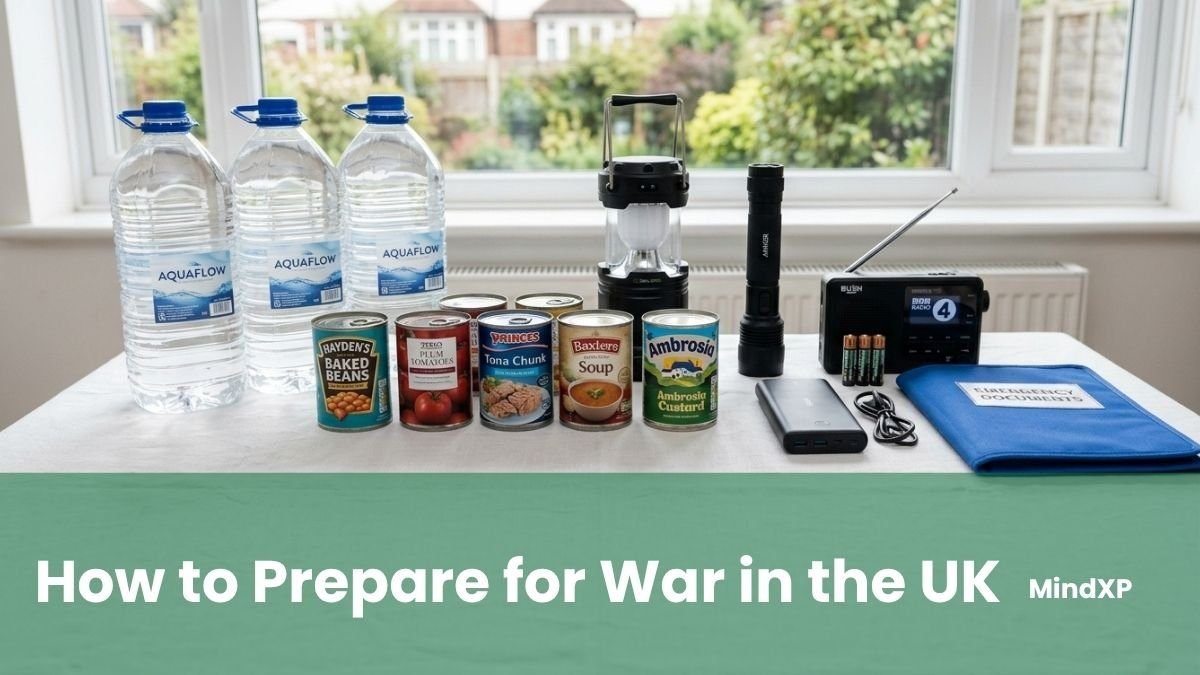
According to intelligence agencies, the UK is already under attack. Not yet with conventional weapons, but with cyberattacks, critical infrastructure sabotage, arson plots, and disinformation campaigns.
In July 2026, we saw the first confirmed case of a hostile nation taking out a UK energy asset, with an Iran-linked cyberattack knocking a power station offline for four days.
It’s hard to separate the hysterics of social media from what’s really going on, which is what this guide is for. The truth is: the government is actively telling people to prepare for national emergencies, including war.
But don’t go digging a bunker just yet. Here’s the straight answer to whether you should prepare for war, and the practical reality of what that looks like in the UK.
In this guide
Should you prepare for war in the UK?
The relevant authorities say yes, UK citizens should prepare for war. Lord Toby Harris, the chair of the National Preparedness Commission, said in plain terms, “Europe is closer to a widespread war than it has been in over 60 years.”
The National Security Strategy 2025 goes further, formally warning the country must “actively prepare for the possibility of the UK homeland coming under direct threat, potentially in a wartime scenario.”
This article isn’t to speculate on the likelihood of war; it’s to show what proper preparation looks like. The old concept of wartime planning was based around conventional military attack.
Nowadays, conflicts are more likely to hit ordinary life through things like cyberattacks, supply-chain issues, disruption to electricity or water, telecoms failures, and attacks on critical infrastructure.
The good news: You don’t need to practise your army crawls in the garden just yet. Modern war prep is the same as the other prep we’ve covered. Build resilience, not bomb shelters. Check out our full guides on water storage and building emergency kits.
How to prepare for war UK
The goal is to build an emergency kit and plan for 72 hours of self-sufficiency. That means minimising reliance on the energy grid, mains water, supply chains, and communications devices.
You need a backup for everything you rely on externally, for three days minimum. We’ve covered all this at length on our blog.
Here’s everything you need:
1. Water storage & purification
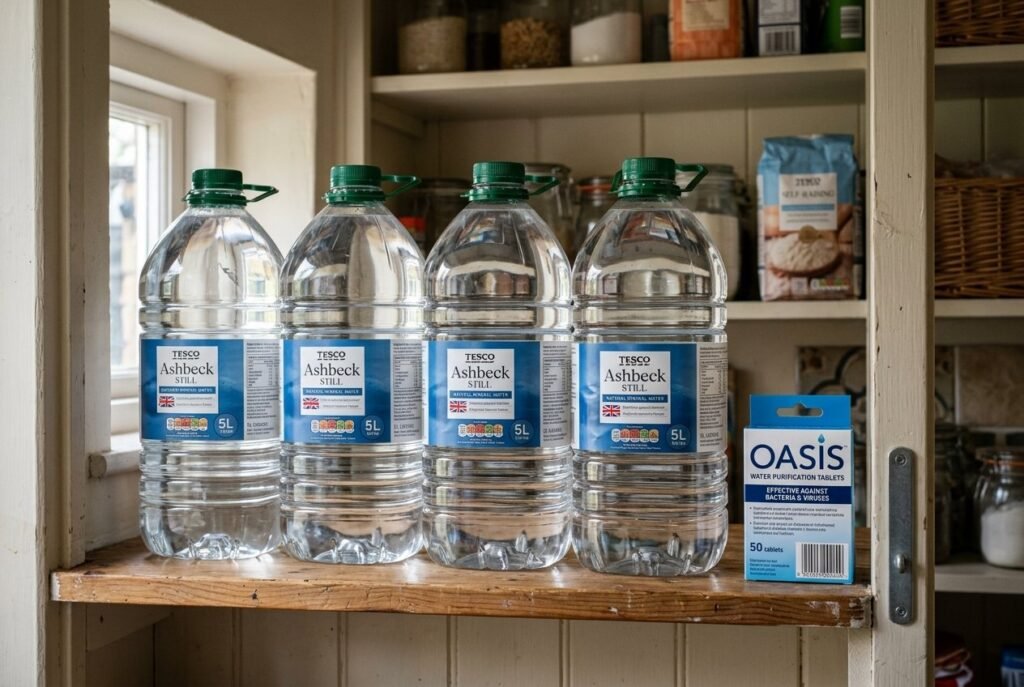
Store around 3 litres of drinking water per person per day, so 9 litres each for the 72 hours, and closer to 10 litres a day if you want to cook and wash too. Sealed supermarket bottles are the easiest option, and they keep for years.
Beyond that, a way to make questionable water safe, purification tablets or a filter, covers you if a disruption outlasts your store.
2. Food & cooking
Keep a store of tinned and dry food your household actually eats: pasta, rice, tinned soup, beans, tuna, porridge oats. Buy a few extra of your normal shop each week and rotate it, no freeze-dried “survival buckets” required, whatever the ads suggest. Our guide on how to build an emergency food supply covers the full list and amounts.
Pair it with a way to cook without power. A £25 camping stove and a few gas canisters turn tins into hot meals, and our guide on how to cook in a power cut covers doing it safely indoors.
3. Light & power
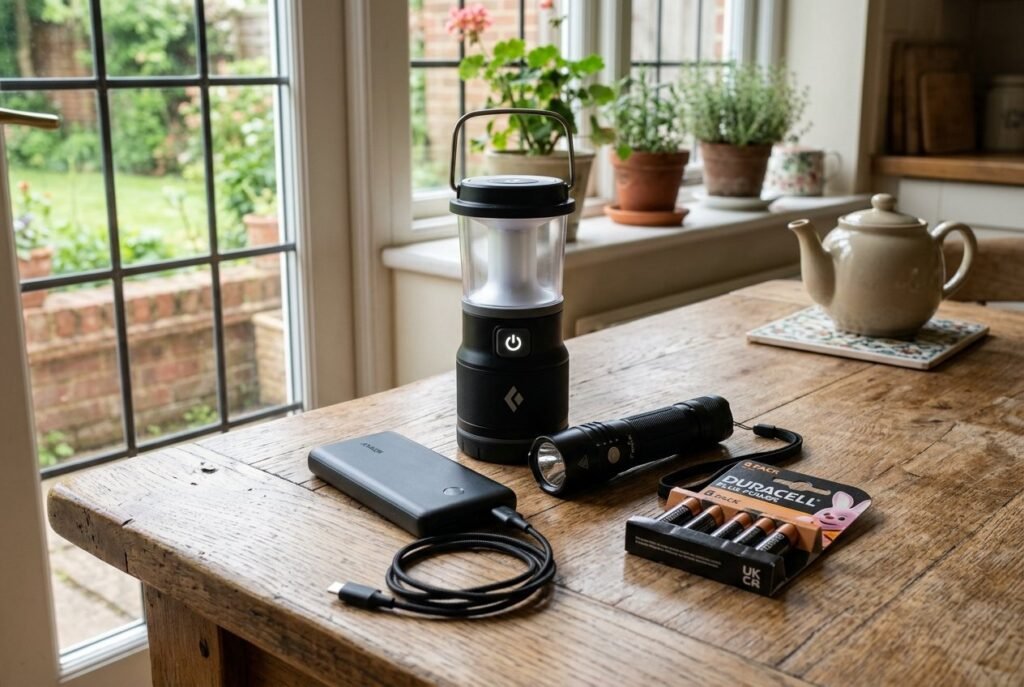
A torch beats candles, that’s not our opinion, it’s the government’s own advice, and candles start more house fires than every heating appliance combined. One torch per floor, a lantern for the living room, and a power bank per person keeps phones alive through a long outage.
For the full setup, including the lights that come on by themselves when the power dies, see our guide on the best lighting for a power cut.
4. Warmth
If the power goes in winter, the boiler goes with it. The 72-hour answer isn’t heating the house; it’s keeping people warm: layers, duvets, hot water bottles, and picking one room to keep comfortable.
Our guide on how to stay warm without heating covers the techniques, and if you want backup heating options, we’ve covered how to heat a room without electricity too.
5. Information & communication
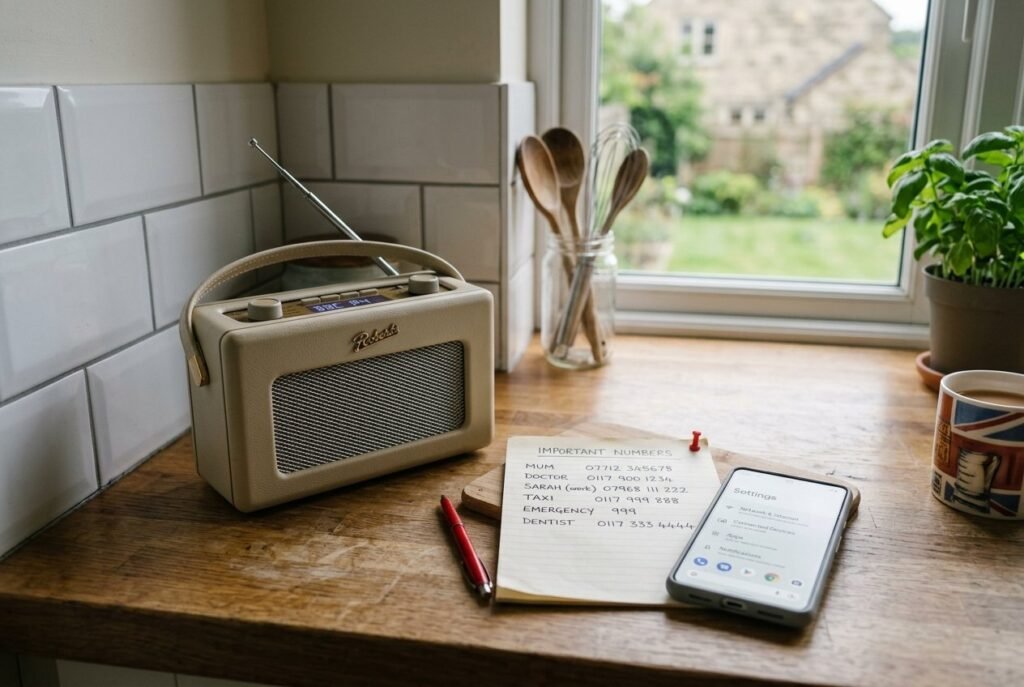
In a serious incident, your phone might have no signal and no charge, so you need a way to receive news that doesn’t depend on either. A battery or wind-up radio costs under £20 and picks up updates when nothing else works.
Two more free jobs: check Emergency Alerts are enabled on every phone in the house (Settings, then search “emergency alerts”), and write the numbers that matter, family, school, 105 for power cuts, on paper.
6. Grab bag & evacuation plan
The government advises keeping a grab bag in case you ever need to leave quickly: ID and important documents, any medicines (a week of prescriptions if you can), a phone charger, cash in small notes, snacks, and water. Our bug out bag guide has the full checklist.
Then the ten-minute job nobody does: agree a household plan. Where you’d meet if you’re separated, who collects the kids, and where the grab bag lives. Write it down; don’t trust it to memory.
The 72-hour checklist
Here’s a quick version you can tick off:
- Water: 3 litres per person, per day, minimum 3 days
- Food: 3+ days of tinned and dry food you’d eat anyway
- Cooking: camping stove and spare gas canisters
- Light: a torch per floor, plus a lantern
- Power: a charged power bank per person
- Information: battery or wind-up radio; Emergency Alerts enabled
- Grab bag: documents, medicines, cash, charger, snacks
- Plan: meeting point and key numbers, written down
Advice you should ignore
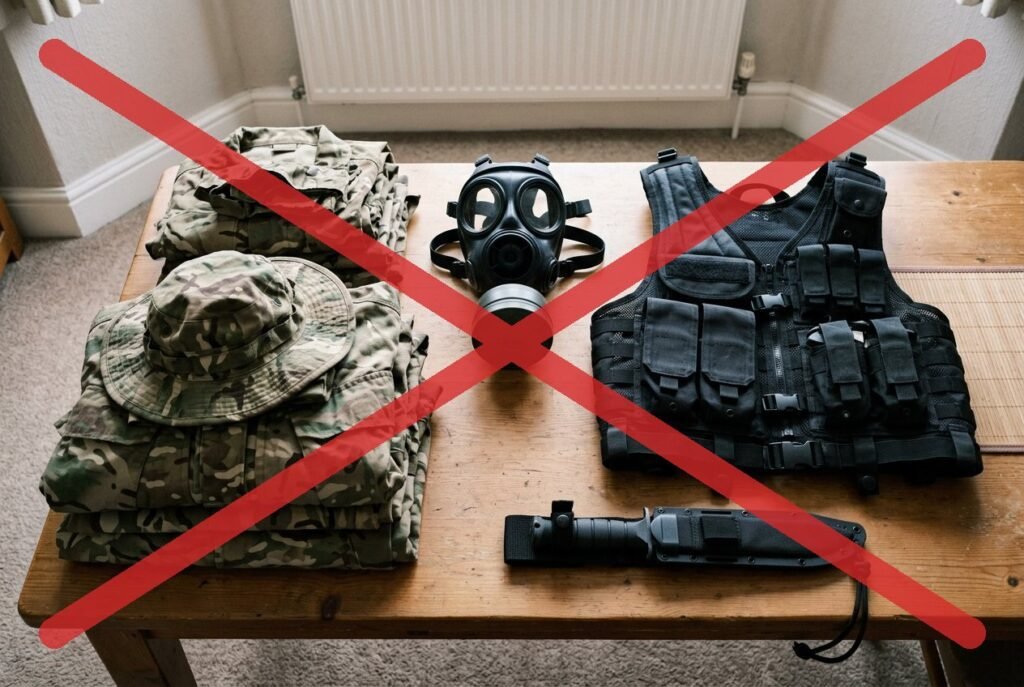
Plenty of what’s circulating right now is worth ignoring completely:
- Bunkers, gas masks, & iodine tablets. None of it appears in any official UK advice.
- Tactical gear. You need a torch and a tin opener, not night-vision goggles.
- Panic buying. Behaviour causes empty shelves during a crisis, not shortages. Your two-week food stash means you never have to join a queue.
- WW3 speculation content. Nobody posting countdown videos knows anything the National Security Strategy doesn’t. Prepare once, properly, and log off.
Prepare, don’t panic
The government has been wary of publishing this kind of advice for years to avoid causing a panic. But preparation is the antidote to panic. Total household resilience costs a few hundred quid, and covering the essentials is even cheaper.
Get it done and forget the headlines. Whether you’re hit by a bad storm, power cut, or water supply disruption, this kind of prep sees you through the worst of it.
If you’re starting from zero, our emergency preparedness guide for beginners walks the whole path.
What should I stock up on in case of war in the UK?
Stock what the government’s own emergency advice lists: around 3 litres of drinking water per person per day, tinned and dry food you’d normally eat, a torch and batteries, a battery or wind-up radio, a power bank, a first aid kit, and any medicines you rely on. Aim for at least 72 hours of self-sufficiency.
What should I do if the UK goes to war?
Follow official guidance through Emergency Alerts, radio, and GOV.UK, and stay put unless told otherwise. Your household preparation is the same regardless of the emergency: water, food, light, warmth, and a way to stay informed. If you’ve covered the 72-hour basics, you’ve done what the government asks of households.
What should go in a grab bag in the UK?
A UK grab bag should hold ID and important documents, a week of any prescription medicines, a phone charger and power bank, cash in small notes, water, snacks, a torch, and spare keys. Keep it somewhere everyone in the house knows, and check it twice a year.
How much cash should I keep for emergencies?
Enough to cover a few days of essentials, food, fuel, transport, in small notes, since card machines and ATMs fail when power or connectivity goes down. There’s no official figure; £50 to 100 in a mix of notes covers most households’ short-term needs.
Is the UK actually preparing for war?
Yes. The National Security Strategy 2025 states the UK must “actively prepare for the possibility of the UK homeland coming under direct threat”, the government has launched a public preparedness campaign, and Parliament’s Defence Committee is examining how prepared civilians are. The advice to households is deliberately calm: build 72 hours of basic self-sufficiency.
Images on MindXP are AI-generated illustrations. Product images are checked against manufacturer photos for accuracy.

Professional writer and editor. Founder of MindXP, helping UK households prepare for power cuts, storms, and supply disruptions.