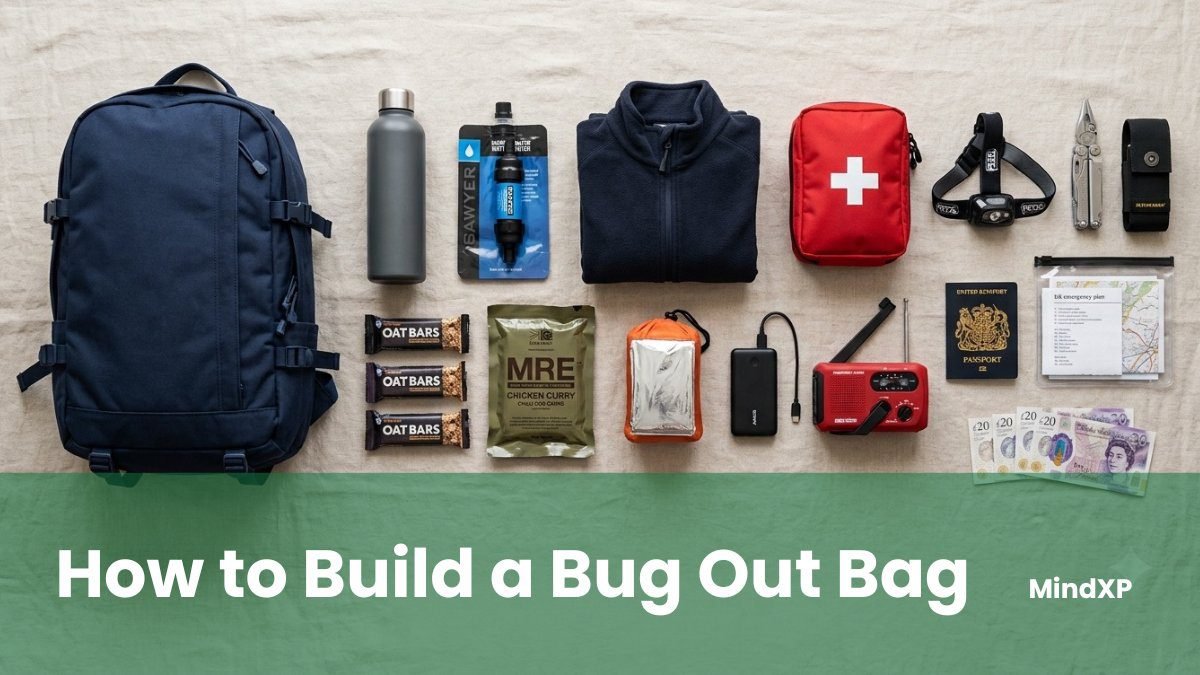
A lot of UK prepping advice centres on stocking up and staying put, but sometimes you need to leave your home on short notice. That’s where a bug out bag comes in.
Also called a grab bag, a go bag, or a 72-hour kit, a bug out bag is a packed backpack you can throw over your shoulder and leave with at a moment’s notice.
It holds enough food, water, and warmth to cover you for around three days, along with the tools to stay functional if you’re out longer, like a water filter, multi-tool, and a wind-up torch.
In this guide, we cover what to include in a bug out bag, how to build one on a budget, and how to tailor it to your household, whether that’s children, pets, or medication that has to come with you.
In this guide
When do you need a bug out bag?
Most UK emergencies call for hunkering down rather than bugging out. Unlike in the USA where there’s vast wilderness to bug out to, in the UK you’re going to quickly find yourself on some unhappy farmer’s land.
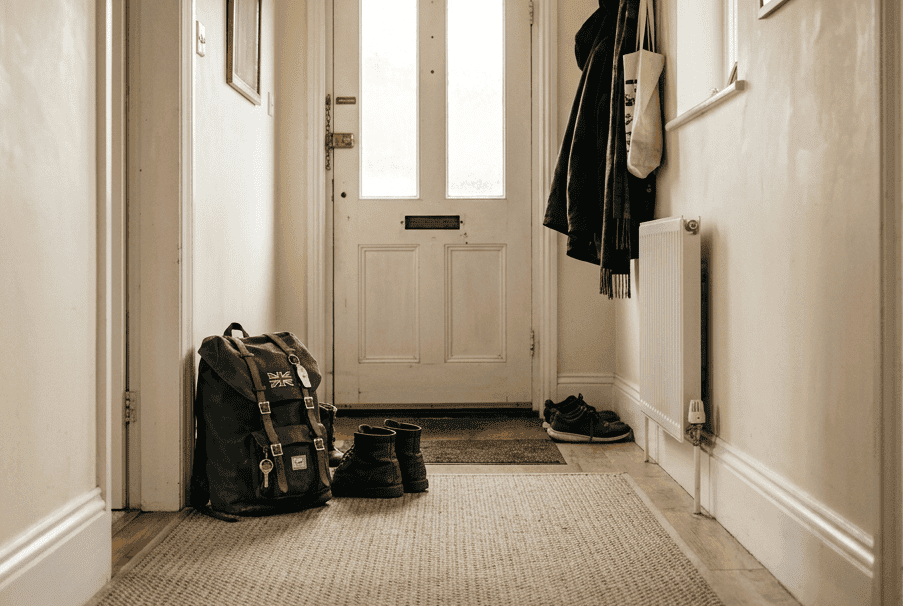
A few items that go into a bug out bag you’ll probably never need. Things like water purification tablets and a mini fishing kit are more for peace of mind than real-world practicality in the UK.
That said, there are many situations that happen annually in the UK that leave people unable to access their homes. If those people didn’t have a bug out bag, you can rest assured they wished they had.
House fire
There’s roughly one house fire every 15 minutes in the UK. They’re usually caught early, but when they take hold, they move fast. The London Fire Brigade’s advice is simple: get out, stay out, and call 999. That’s when you need a bug out bag.
Here’s how to factor it into a fire escape plan:
- Set two ways out. Your normal exit, plus a backup in case it’s blocked. Keep door and window keys somewhere easy to find.
- Keep grab bag handy. By the front door, under the stairs, wherever it’s grabbed on the way out, not fetched from upstairs.
- Practise it. Everyone in the home should know the route and where the bag is, visitors included.
- If you can’t get out, get everyone into one room with a window and a phone, put bedding along the bottom of the door to block smoke, open the window and shout for help, then call 999.
Use this free home fire safety checker to better understand your risk factors and how to prepare.
Flooding
Flooding is the UK’s most common natural disaster. About 6.3 million properties in England are exposed to flood risk, up from 5.5 million a few years earlier.
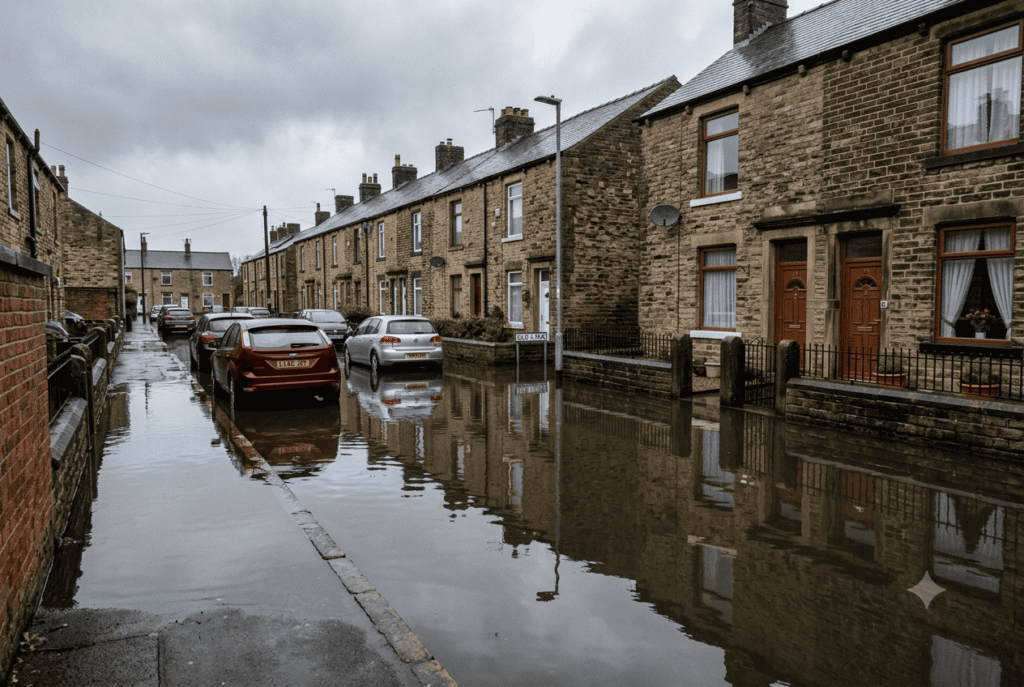
A bug out bag is already a core feature in flood plans. Here’s how it fits in:
- Sign up for flood warnings. Check your property’s flood risk and get free, localised alerts through the GOV.UK Flood Warning Service.
- Prepare a bug out bag. Pack your kit using the steps below and keep it somewhere you can easily grab on the way out.
- Create a flood plan. Use this government resource to create a personalised flood plan covering what to do before, during and after.
- Secure home before leaving. If there’s time and it’s safe, turn off the utilities at the mains and move valuables and documents upstairs. Never wade through fast or deep water to do it.
- Follow emergency advice. Listen to the emergency services and the Environment Agency, and don’t return until you’re told it’s safe.
When a flood warning comes in, you may have hours, not days. A bag that’s already packed turns a frantic scramble into picking it up and getting your family out.
Gas leak or explosion
This one is rare, but a few dozen serious gas explosions happen every year.
When it happens, emergency services evacuate the whole street, and they won’t let you back in for anything. This is when a bug out bag is worth its weight in gold.
When it comes to gas-related emergencies, the focus is more on prevention than preparation:
- Get annual gas safety checks. Have your boiler, cooker and any gas fires serviced once a year by a Gas Safe registered engineer, faulty appliances are a leading cause of leaks.
- Fit a carbon monoxide alarm. Unlike natural gas, carbon monoxide is totally undetectable to our senses. A CO alarm near your gas appliances costs next to nothing and could save your life.
- Know the signs of a leak. The rotten-egg smell, hissing near pipes or the meter, a lazy yellow flame instead of crisp blue, or sooty marks around an appliance.
- Have a plan if you smell gas. Don’t touch any switches or light a flame, open the doors and windows, turn the gas off at the meter if you can, get everyone out, and call the National Gas Emergency line on 0800 111 999.
You can’t predict a gas leak the way you can a flood, so prevention does most of the work. But if you’re told to get out, your bug out bag is your lifeline.
Chemical or industrial incident
This one is the rarest of all, but it’s possible. If you live near one of the 950 industrial sites across Great Britain storing hazardous substances, a fire or leak could force you out of your home on short notice.

The 2005 Buncefield fire near Hemel Hempstead burned for days and damaged homes well beyond the site.
You’ll likely never be near one when it goes wrong, but if you are, having a bug out bag ready means you can leave fast without stressing over the essentials.
Build your bug out bag in 7 steps
A bug out bag is compact and versatile, holding everything you might need in a broad range of emergency situations.
Whether it’s an unplanned trip to the hospital or a total evacuation, your basic needs are covered so you can focus on whatever the situation demands.
The general idea is to have regular supplies to last three days, and tools and gear to keep you going beyond that in rare situations.
Here’s how to build a bug out bag UK:
1. Choose a bag
First, you need the bag itself. Most people will have one laying around, but if not, any hiking or camping backpack will do the trick.
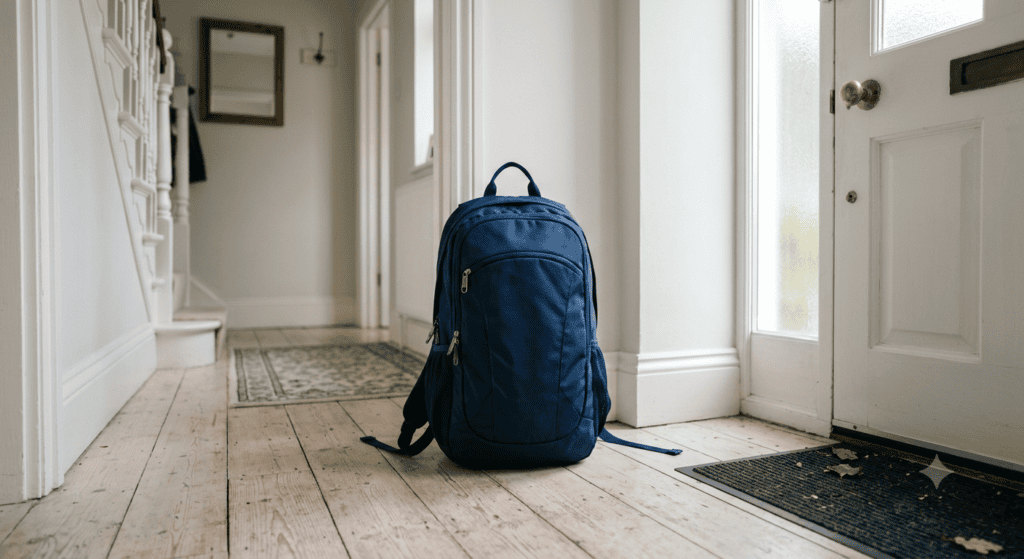
I personally use this 15L Bergaus for a one-man bug out bag – it provides more than enough space for the essentials. I also clip carabiners to the outside to attach a small tent and sleeping bag.
If you’re packing for a family, you’ll probably want to go larger, though anything above 30L is overkill.
2. Water
You can survive about three days without water, so you need enough to cover your immediate needs.
It’s best to pack a 1L bottle and make more as you go. You’ll almost certainly be able to fill it up somewhere, but carry a purification method in case you can’t.
The Sawyer Mini is a great tool. You can use it to filter water in various ways, including drinking straight from the source like a straw. For a lighter and cheaper option, consider a box of chlorine tablets.
This approach gives you some drinkable water straight away while turning every other water source into something you can use. Consider a metal water bottle too for boiling and cooking.
3. Food
Choose calorie-dense food items that don’t require cooking. The goal is keeping your energy up, not making delicious meals.
Good options:
- Cereal bars & flapjacks
- Nuts & trail mix
- Beef jerky
- Peanut butter
- Tinned food
- Ration packs
For complete peace of mind, you can also include something like a mini fishing kit. You’ll probably never use it, but at least you’re covered if you end up seriously stranded.
4. Warmth & shelter
In the UK, staying warm often comes down to staying dry. You have a few options here, so mix and match as you see fit.
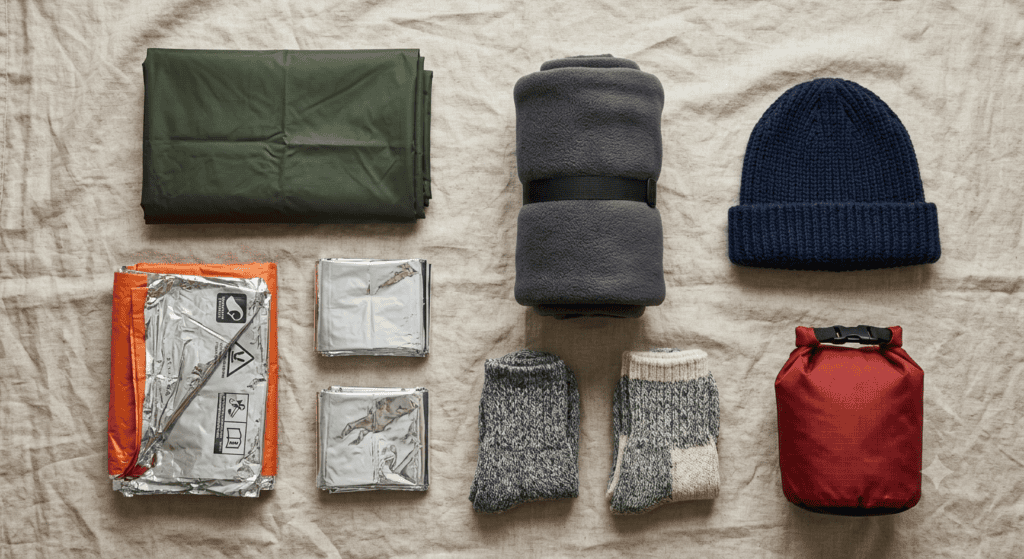
Here are solid options beyond your choice of outfit:
- Bivvy bag. A waterproof outer layer for your sleeping bag, or an emergency shelter on its own. Compact, and it keeps wind and rain off when there’s nowhere dry to be.
- Space blanket. Cheap, pocket-sized, and reflects your body heat back at you. Worth packing two, they weigh nothing and tear easily.
- Hand warmers. Small disposable or reusable warmers that take the edge off in genuinely cold conditions. A morale-booster more than anything.
- Tarp/poncho. These have over 20 documented survival uses, from making an A-frame tent to collecting water.
- Spare clothes. A dry base layer, thick socks, and a warm hat. Dry feet and a covered head make all the difference. Pack them in a dry bag or sealed freezer bag.
The aim isn’t to camp out comfortably, it’s to stay warm and dry enough to keep functioning until you reach proper shelter.
5. First aid and hygiene
Build or buy a small kit to cover the kinds of injuries that actually happen, like cuts, blisters, headaches, and stomach ache.
If you know what you’re doing or have special requirements, you can easily build one yourself.
Either way, make sure you have the following:
- Plasters
- Blister plasters
- Antiseptic wipes
- Bandage & medical tape
- Sterile dressings
- Painkillers
- Tweezers & small scissors
- Disposable gloves
Pack three days worth of any prescription medicine you take too. You might also want a few comfort items like a toothbrush, hand sanitiser, and toilet roll.
6. Tools, light & fire
A few tools cover a huge range of problems. Here are the main considerations:
- Tools. A decent multi-tool is the workhorse, opening tins, cutting cord, turning off the gas at the meter, a dozen jobs you can’t predict. A folding multi-tool blade also keeps you on the right side of UK knife law.
- Light. A head torch is ideal since it leaves both hands free. Pack spare batteries, or go for a wind-up model that never runs flat.
- Fire. A windproof lighter is the best option, with a few windproof matches as a backup. Throw in a small bit of dry tinder too, as getting a flame to catch is the hardest part.
If you want to go further, a bit of duct tape, some paracord and a small pry bar are all worth their weight. But the three above are the essentials, start there.
7. Power, documents, cash & comms
Your phone is your single most useful tool in an emergency. It’s how warnings reach you, how you find your family, and how you get information, so keeping it alive comes first. The rest of this step is about the things that still work when the power and the network don’t.
- Power. A charged power bank and the right cable keeps your phone going through most outages. Top it up every few months so it’s ready when you grab the bag.
- Documents. Paper copies of the essentials in a waterproof wallet: ID, insurance details, prescriptions, and a list of emergency contacts written down in case your phone dies. A USB stick with digital copies is a useful extra.
- Cash. A bit of money in small notes and coins. Card machines and ATMs don’t work in a power cut, and cash is accepted when nothing electronic is.
- Comms. A wind-up or battery radio for updates when the mobile network is jammed or down, plus a loud whistle, which weighs nothing and lets you signal for help without wearing yourself out shouting.
It’s worth agreeing one out-of-area contact everyone in the family can check in with, and texting rather than calling, since messages often get through when calls won’t.
Personalise the bag for your household
If you have pets, young children, elderly relatives, medical needs, or any other non-standard requirements, you need to consider that too.
Formula, nappies, and wipes for babies and young children. Spare glasses, hearing aid batteries, and prescription medication for elderly relatives. Food and leads for pets.
Can you build a bug out bag for under £100?
Yes. A complete bug out bag comes to well under £100 if you shop smart.
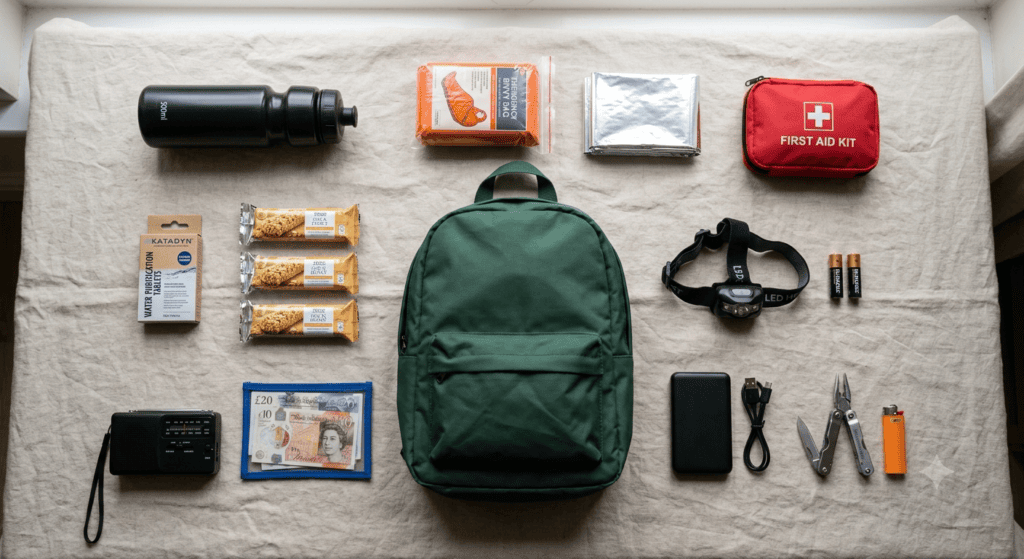
Here’s an example build that lands at £92.88 at the time of writing:
| Item | Why | Price | Link |
| Backpack | Holds everything | £10 | View |
| Purification | Cleans water | £4 | View |
| Food | Keeps energy up | £7 | View |
| Bivvy bag | Keeps you warm & dry | £5.99 | View |
| Space blanket | Keeps you warm | £1.30 | View |
| First aid kit | Treat injuries | £10.50 | View |
| Head torch | Hands-free light | £8 | View |
| Spare batteries | Keeps torch going | £3 | View |
| Multi-tool | Dozens of jobs | £13 | View |
| Lighter | Make fire | £2 | View |
| Power bank | Charge devices | £14.99 | View |
| Portable radio | Keeps you informed | £7.99 | View |
| Documents pouch | Protects docs & cash | £5.11 | View |
Prices are correct as of July 2026 and will vary between retailers and over time. Check the current price before buying.
This table assumes you’ve already got a few basics at home: a change of warm, dry clothes and a reusable water bottle.
Build it before you need it
Having a bug out bag by the door means you’re ready for any emergency that forces you to evacuate. If something goes wrong and you’ve got minutes to leave, you can simply grab your bag and leave without thinking.
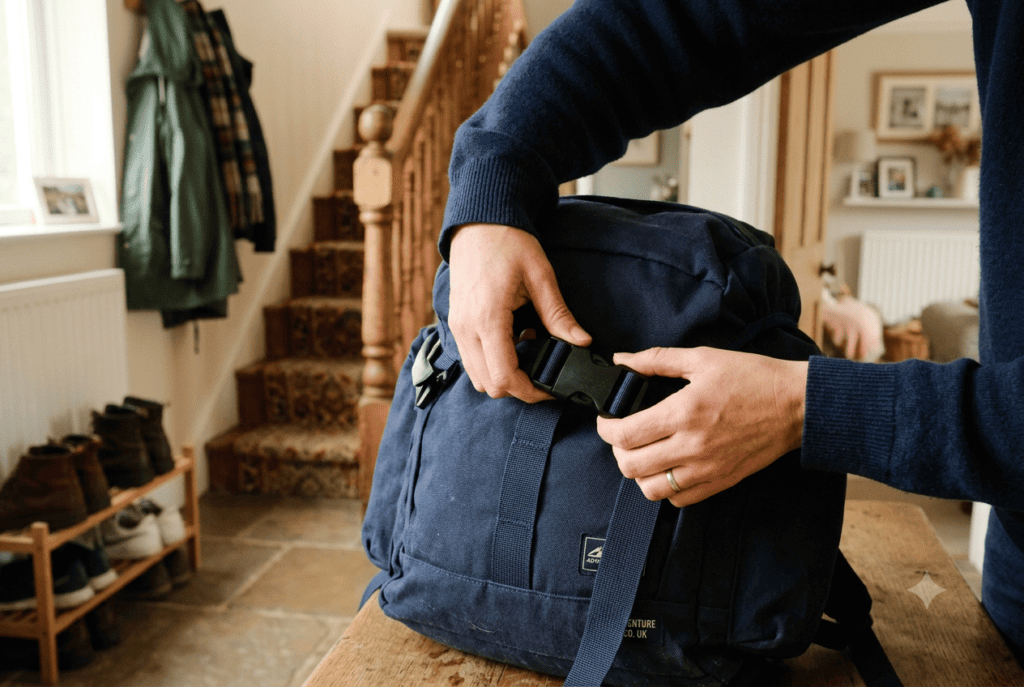
Don’t worry about buying everything in one go. Start with what you’ve got, add a few extra items to your regular shop, and build as you go.
I’ve put everything in this guide into a free downloadable checklist. Print it, tick off each item, and keep it in the bag so you always know what’s in there.
Grab your copy and start building.
FAQs about UK bug out bags
Quick answers to the questions people ask most about building and packing a UK bug out bag.
What is the 3-3-3 rule for survival?
The 3-3-3 rule says you can survive roughly 3 minutes without air, 3 days without water, and 3 weeks without food. It’s a simple way to prioritise your kit.
How many days should a bug out bag cover?
A bug out bag should cover 72 hours (three days). That’s enough to get through most UK emergencies and reach somewhere safe.
Should I buy a pre-made bug out bag or build my own?
Build your own. You get better kit, exactly what you need, and you know what’s in the bag. Pre-made bags work as a starting point but are often padded with cheap filler.
What should you not pack in a bug out bag?
Don’t pack anything that needs cooking, heavy gear you won’t use, or a knife you’ve no lawful reason to carry. The biggest mistake is overpacking; keep it light enough to walk with for miles.
What should be in a bug out bag in the UK?
A UK bug out bag needs seven essentials:
– A comfortable bag
– Water & purification method
– No-cook food
– Warmth & waterproofs
– A first aid kit
– Tools & light
– Documents, cash & a power bank
Staying dry matters most in the UK, so prioritise waterproofs over heavy survival gear.
Images on MindXP are AI-generated illustrations. Product images are checked against manufacturer photos for accuracy.

Professional writer and editor. Founder of MindXP, helping UK households prepare for power cuts, storms, and supply disruptions.