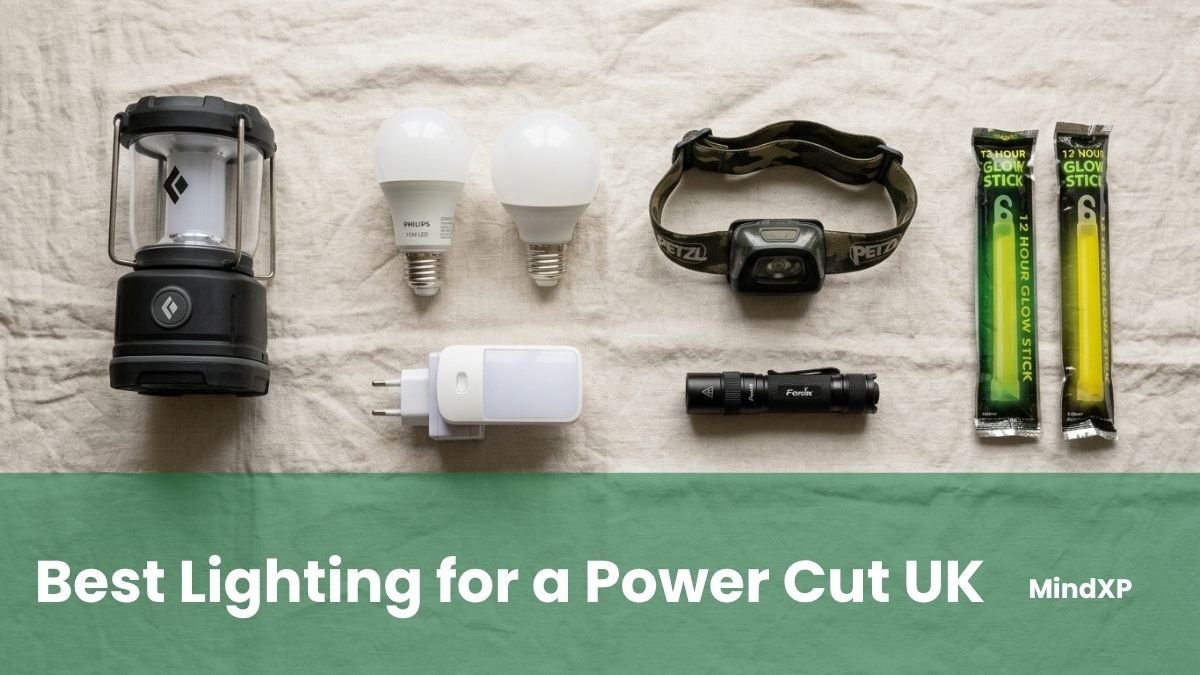
Most UK power cuts are short and local, but the government warns longer cuts can happen and households should prepare. When the power goes out after dark, most people reach for their phone torch. But if the cut is serious, that’s a bad move, as you’ll need to save your battery for updates, contact, and emergencies.
Getting some backup lighting in place is cheap, easy, and keeps you safe. Trips and falls happen more during power cuts for obvious reasons, so if you’re elderly, vulnerable, or just a klutz in the dark, the value of preparing in advance goes up.
This guide covers the six lights worth having, what each one costs, runtime, and what you should mostly avoid. If it’s warmth you’re worried about, check out our guide on how to heat a room without electricity.
Table of Contents
Quick answer: a battery lantern for the main room, a head torch for tasks, and a couple of rechargeable emergency bulbs that stay on when the mains fails. All three cost £10 to 30 each and last for years.
6 lights that actually work in a power cut
Here are the best options, with costs, runtimes, and where to buy each:
1. LED lanterns
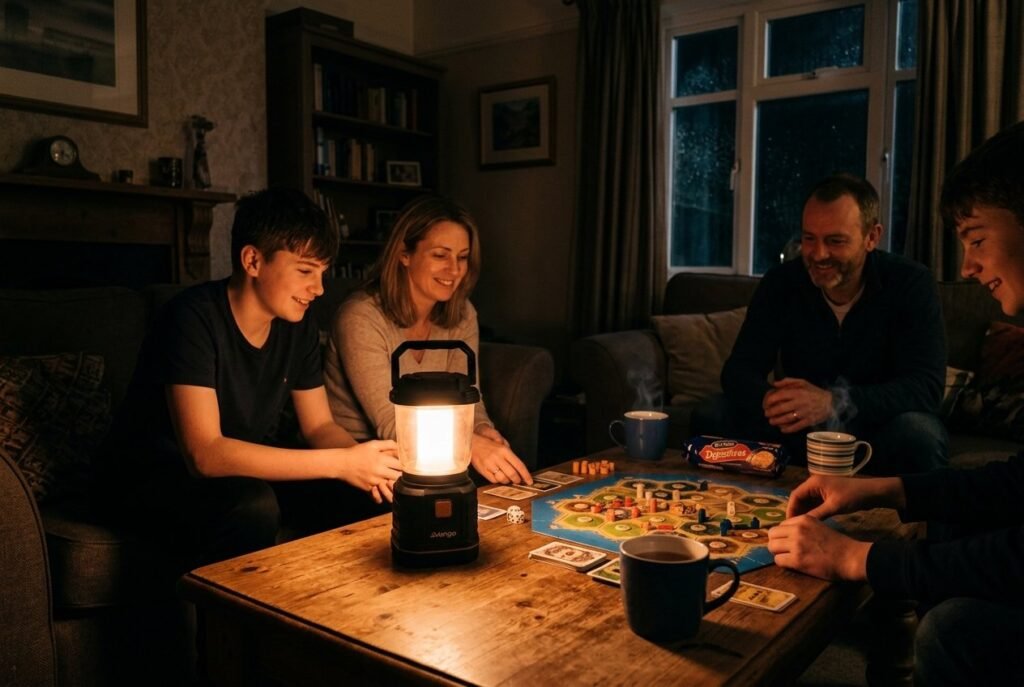
The best backup for room lighting. A lantern throws light in all directions, sits on a table or hangs from a hook, and turns a dark evening back into a normal one.
No flame, no risk, and one set of batteries covers a long outage. Some lanterns also double as power banks that charge your phone, worth considering if you want one box doing both jobs.
- Brightness & runtime: 300 lumens or more lights a living room properly; 800 is close to daylight. On the pick below, the 250 lumen medium setting runs for 80 hours on one set of 4 D batteries.
- Cost & where to buy: This Coleman BatteryGuard lantern ticks all the boxes at £45 (£24.97 member price), with 800 lumens on high and a battery cutoff that stops corrosion while it sits in the cupboard.
2. Rechargeable emergency bulbs
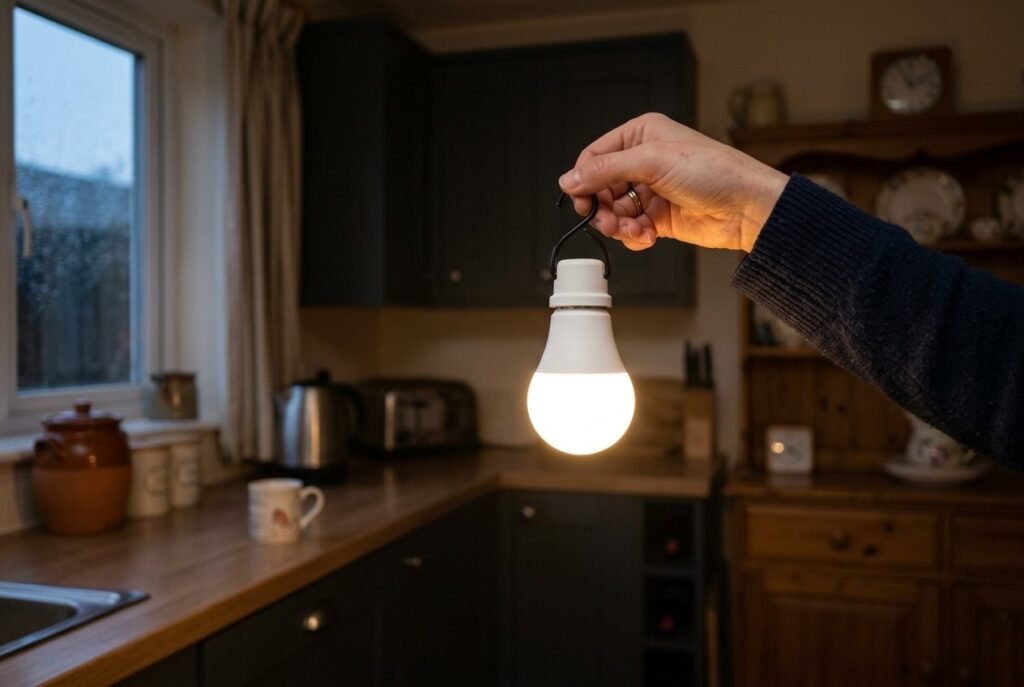
Maybe the coolest product in the category. These look and work like ordinary bulbs, but they have a battery inside and charge themselves while the power is on. When it dies, they just stay lit. Your lights survive the cut.
- Brightness & runtime: The Hylite emergency bulbs linked below run as normal 880 lumen bulbs on mains power, then switch to battery in a cut: 300 lumens for 3 hours, or up to 9 hours on the low setting.
- Cost & where to buy: £19.95 for a two-pack, so a tenner a bulb. They fit standard bayonet fittings, and each one comes with a hook, so you can unscrew it and carry or hang it like a lantern.
3. Plug-in power failure lights
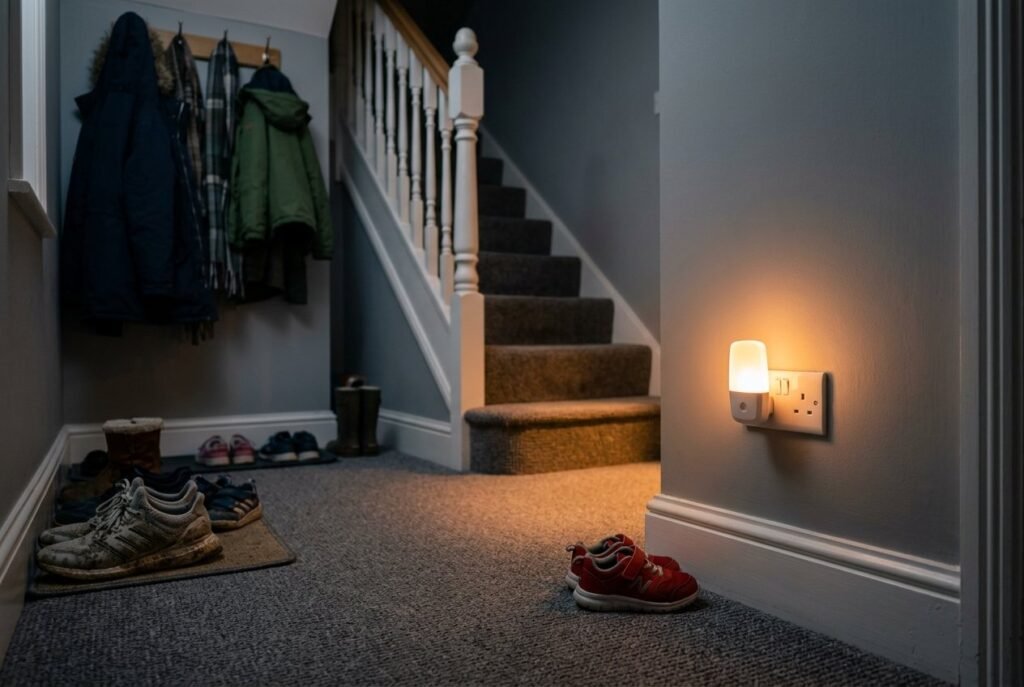
A nightlight that lives in a wall socket, charges itself, and switches on automatically the second the power dies. Then it lifts out of the socket as a fully charged torch.
Even the network operators recommend them: SP Energy Networks’ power cut advice suggests “battery-powered lights that plug into a power socket and come on automatically during a power cut”.
- Brightness & runtime: These are navigation lights, not room lights: our pick below gives up to 15 hours in power failure mode and doubles as a 60 lumen torch.
- Cost & where to buy: At £19.98, this NiteSafe Maxi has a battery that never needs replacing, and can sit switched off and still trigger when the power cuts.
4. Head torches
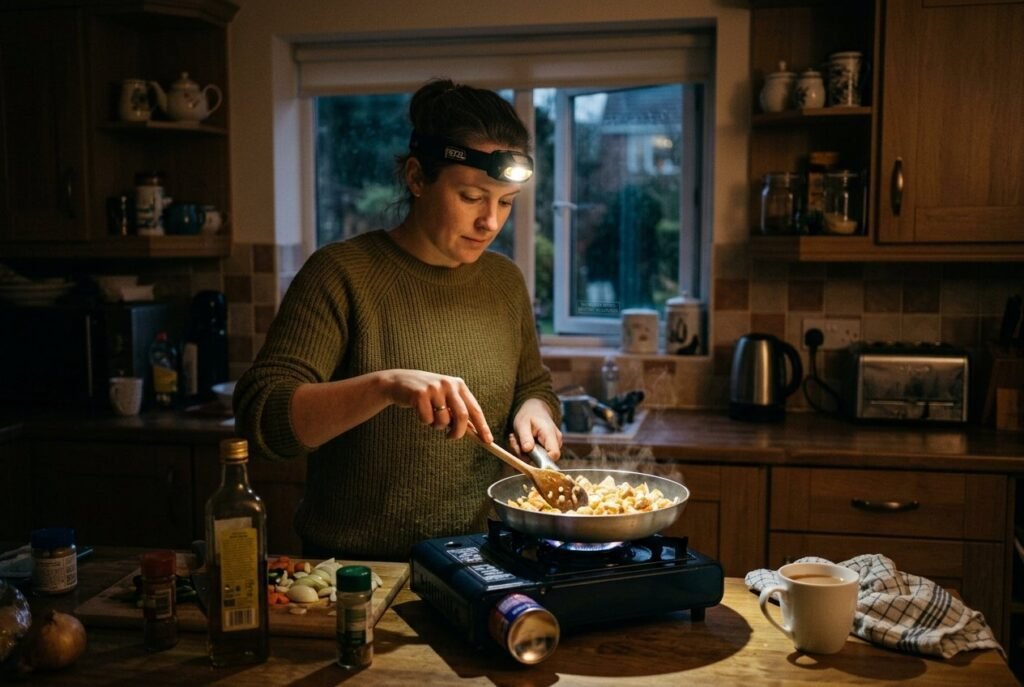
Hands-free light for the jobs a cut creates: cooking on the camping stove, checking the fuse box, sorting kids, walking the dog through dark streets.
A red light mode is handy too: it doesn’t dazzle people you look at, and your eyes stay adjusted to the dark when you switch it off.
- Brightness & runtime: The option below gives 300 lumens, far more than any household task needs, with full, half, and red modes. Runtime is 2 to 3 hours per charge, so treat it as a task light and let the lantern do the long evenings.
- Cost & where to buy: At £24 (£12 member price), the OEX rechargeable head torch is a good pick. It’s USB rechargeable with the cable included, and you can wave your hand in front of a sensor to turn it on or off – which is super useful when your hands are full or wet.
5. Torches
Keep one torch per floor in a fixed place everyone knows, and check the batteries once in a while. National Grid’s power cut advice says the same: keep a torch somewhere easy to find, with working batteries and spares.
- Brightness & runtime: The choice below can do 500 lumens, but its 50-lumen low mode runs for 15 hours, which is the number that matters, and it has a battery indicator – which is very handy.
- Cost & where to buy: The OEX Skystorm torch is £16 (£10 member price), runs on 3 AAA batteries, which are included, and has a zoom that switches between wide beam and spotlight.
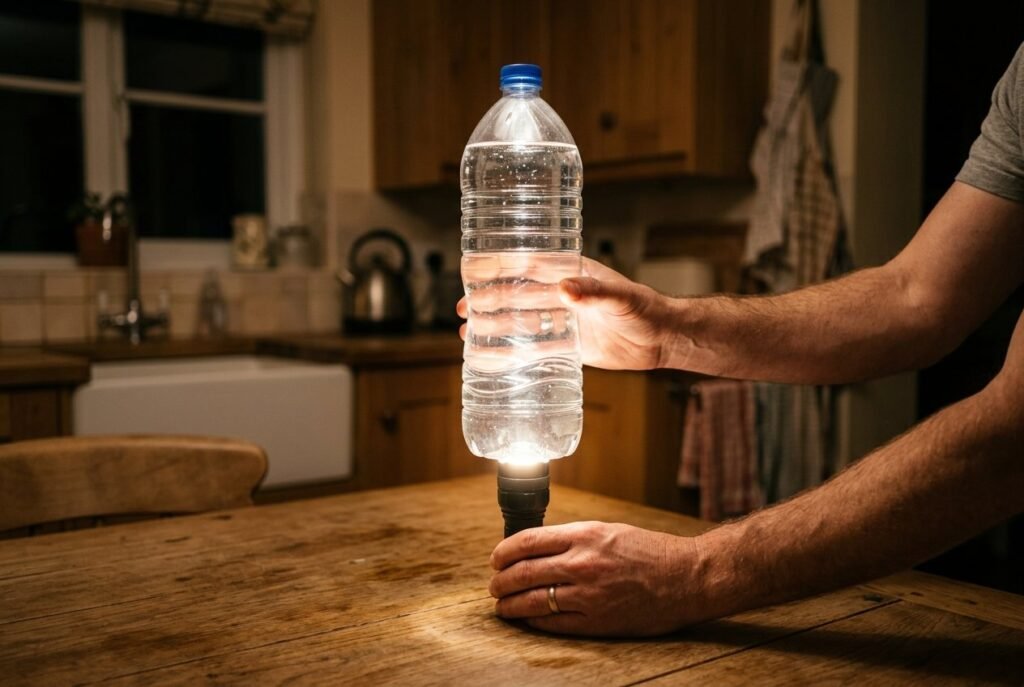
Bonus tip: Torches make rubbish room lights, but this trick fixes that:
- Fill a big milk bottle or a 2L pop bottle with water.
- Stand the torch upright and sit the bottle on top of the beam.
- The water scatters the beam into a soft glow, creating a lantern.
A translucent bottle works best, or even adding a splash of milk to the water when using a clear bottle. This diffuses the water better and improves the effect.
Double bonus tip: If your ceiling is white, stand the torch on its tail and point it upwards. The ceiling bounces the light back down over the whole room.
6. Glow sticks
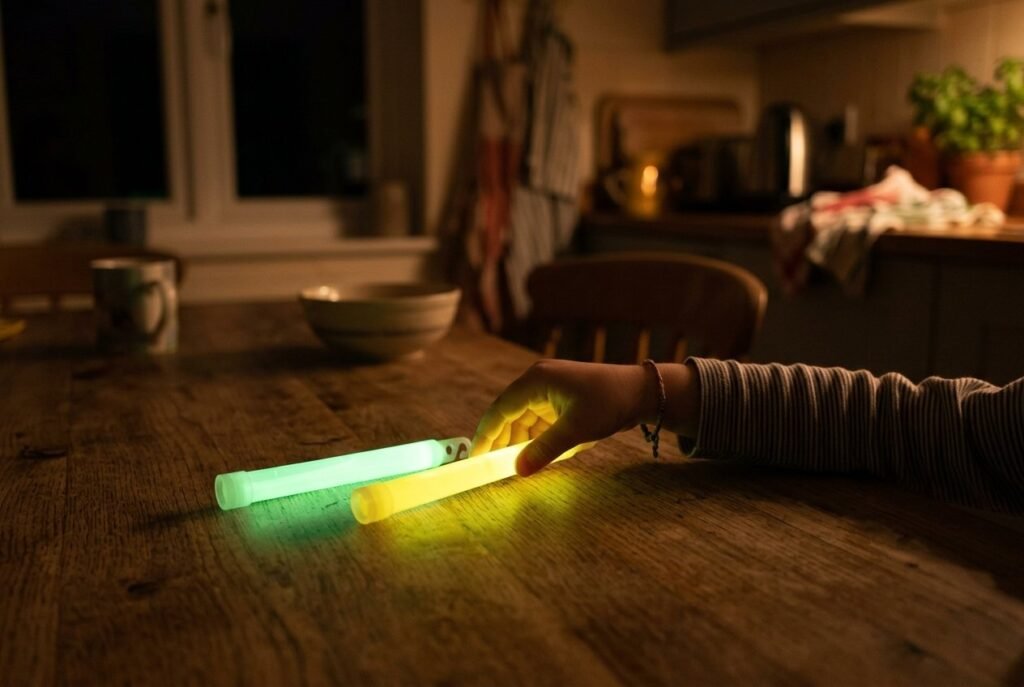
Glow sticks cost pennies, never need charging, can’t start a fire, and they’re pretty cool to look at. Keep a few in the kit drawer, and they’ll still work in five years.
What about candles?
Candles have their place if that’s all you’ve got, but that’s why we’re preparing in advance, so we don’t have to use whatever’s in the kitchen drawer. They aren’t great for lighting rooms and introduce a significant and totally avoidable risk.
Candles started 850 accidental house fires in England in 2024/25. The London Fire Brigade recommends flameless LED candles instead, precisely because you can leave them unattended and nobody can knock them over.
Prepare before the lights go out
A lantern and a couple of emergency bulbs cover most homes for under £40. Add a head torch too if you want your hands free.
If you want to cover more than lighting, our power cut kit guide covers the rest: power, warmth, food, and comms. For getting your household ready in general, our emergency preparedness guide for beginners puts the whole plan together.
What’s the best lighting for a power cut?
The best lighting for a power cut is a battery-LED lantern for the main room, a head torch for tasks, and rechargeable emergency bulbs that stay lit when the mains fails. All three together cost under £80. Lanterns light whole rooms safely, and the bulbs and plug-in failure lights cover you automatically in the first seconds of a cut.
Is there a light bulb that doesn’t need electricity?
Yes, rechargeable emergency bulbs work without mains electricity. They contain a battery that charges while the power is on, and when the mains fails they keep running on the battery, typically for 3 to 9 hours depending on brightness. They fit standard fittings, work as normal bulbs day to day, and many come with a hook so you can unscrew and carry them.
How do I light up a room with no electricity?
The best way to light a room with no electricity is a battery or USB lantern: 300 lumens or more gives proper living room light with no flame. If you only have a torch, sit a bottle of water on top of the beam for a soft all-round glow, or bounce the beam off a white ceiling.
How do I get light in a power cut right now?
Use your phone torch to get oriented, then switch to anything that saves your phone battery: a torch, a camping lantern, or the bottle-of-water trick. If candles are genuinely all you have, use one at a time in a solid holder and never leave it burning unattended. Then buy a £10 lantern tomorrow.
Do I legally need emergency lights at home?
No, ordinary homes have no legal requirement for emergency lighting. The rules that do exist cover businesses and some rented properties: licensed HMOs can be required to have escape lighting as a licence condition, and commercial premises need emergency lighting under fire safety law. The wall-mounted emergency bulkheads sold at trade counters exist for those buildings, not for your hallway.
Images on MindXP are AI-generated illustrations. Product images are checked against manufacturer photos for accuracy.

Professional writer and editor. Founder of MindXP, helping UK households prepare for power cuts, storms, and supply disruptions.