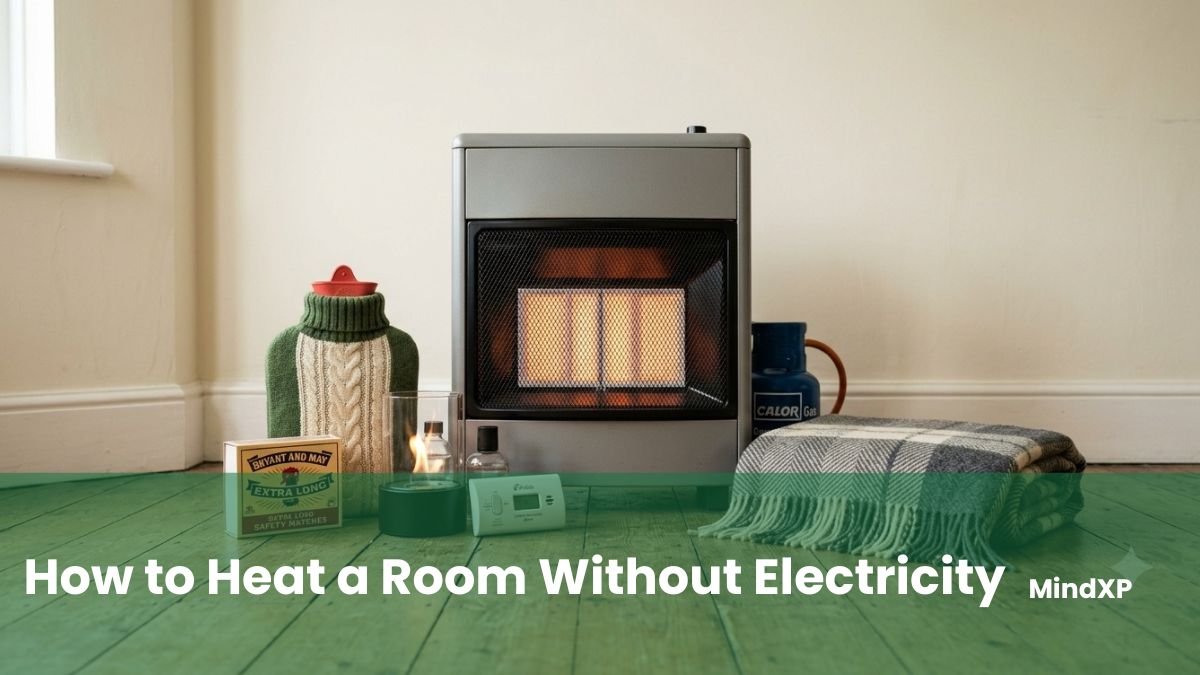
If your power goes, the central heating will most likely go with it. Gas, oil, and heat pump systems all rely on electricity to function.
When Storm Arwen hit in 2021, just over 1 million homes lost power. Most were back on within 24 hours, but some were left without power and heating for up to 13 days, just as winter was setting in.
Depending on where you live and the time of year, losing central heating can be a lot more than an inconvenience.
Whether you’re looking to save on energy costs or build household resilience, here are 10 solutions for how to heat a room without electricity.
In this guide
Safety reminder
When looking for alternative heating sources, remember a few key safety rules:
- Anything that burns fuel indoors can produce carbon monoxide (CO). This is a deadly gas you can’t see or smell. The NHS names several appliances that produce CO, including gas and paraffin heaters, wood, gas and coal fires, and portable generators.
- Fit a carbon monoxide alarm before you use any fuel-burning heater. Always ventilate properly, and never run one while you sleep.
- Never use outdoor equipment indoors. This includes BBQs, patio heaters, and generators.
If you smell gas or suspect a leak, call the free National Gas Emergency line on 0800 111 999.
Check what still works
Before buying anything, check what you can actually use without electricity. A modern gas boiler won’t work, but a gas hob and some older gas fires probably will.
Run the checks by switching off the power and trying to use the appliances as normal. You might need to light the hob with a match if it won’t spark. If your hob works, you’ve got hot water bottles, warming stones, and hot food and drink.
If your fire works too, you’re probably all set. If both or either aren’t working, keep reading.
How to heat a room without electricity: 10 options
Here are 10 ways to heat your home without electricity, including costs, where to buy them, and essential safety information:
1. Butane cabinet heater
These sell out first in winter or when a big storm is on the way. A cabinet heater is a portable gas heater on wheels. The gas cylinder sits inside the cabinet, and the panels on the front give off heat.
No electricity and no installation required: you connect the cylinder, wheel it into the room, and it puts out enough heat for a living room within a few minutes.
- Heat output: Up to 4.2kW across three settings, ideal for small to medium rooms.
- Cost & where to buy: This product ticks all the boxes at £99. A 15kg butane cylinder costs around £100 and provides roughly 135 hours of continuous heat on the low setting.
- Safety: Choose a model with a flame failure device (FFD) and oxygen depletion sensor (ODS). Always ventilate when using indoors, fit a CO alarm, and never run it while you sleep. Store spare cylinders outside, not in living spaces.
We compare five options, including paraffin heaters, in our guide to the best non-electric heaters.
2. Power station + heated throw
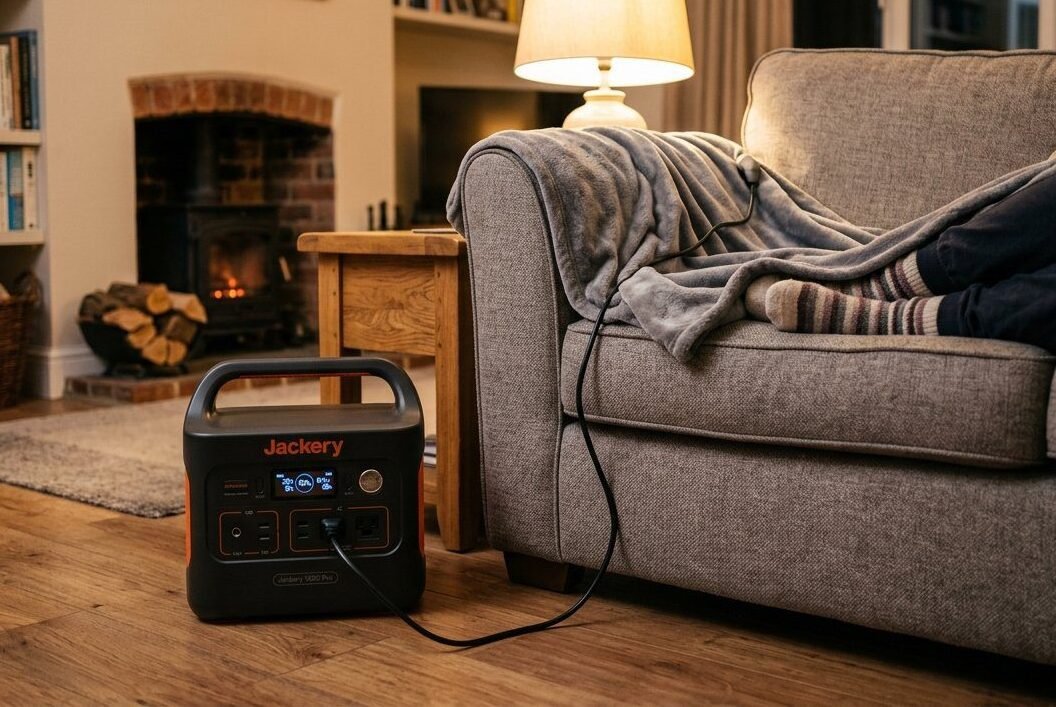
A portable power station is a large rechargeable battery with mains sockets. Plug a low-watt heated throw into it and you have hours of warmth with no flame and no fumes, making it the safest method on this list.
- Heat output: A 100W heated throw warms one person comfortably.
- Cost & where to buy: At £449, this power station covers your blanket with plenty left over to charge phones, power lights, or plug in a router. A good-quality heated throw will cost around £70.
- Safety: This is the safest option on the list by far, but follow the manufacturer’s guidance closely, as many models aren’t suitable for sleeping with.
3. Paraffin heater
These are big in Japan and southern Europe. Inside is a fuel tank and a burner: a wide wick draws paraffin up from the tank, and the burner on top of it turns that fuel into a steady, stove-like heat.
- Heat output: 3kW, ideal for medium to large rooms.
- Cost & where to buy: This heater ticks all the boxes at £209.95. It runs on premium paraffin marked BS 2869 C1, about £18 per 4l bottle, which fills the tank and gives up to 12.8 hours of continuous heat.
- Safety: Choose an indoor-rated model with a tip-over auto shut-off. Ventilate, fit a CO alarm, and refuel outside with the unit cold. Always use premium paraffin.
4. Bioethanol fires
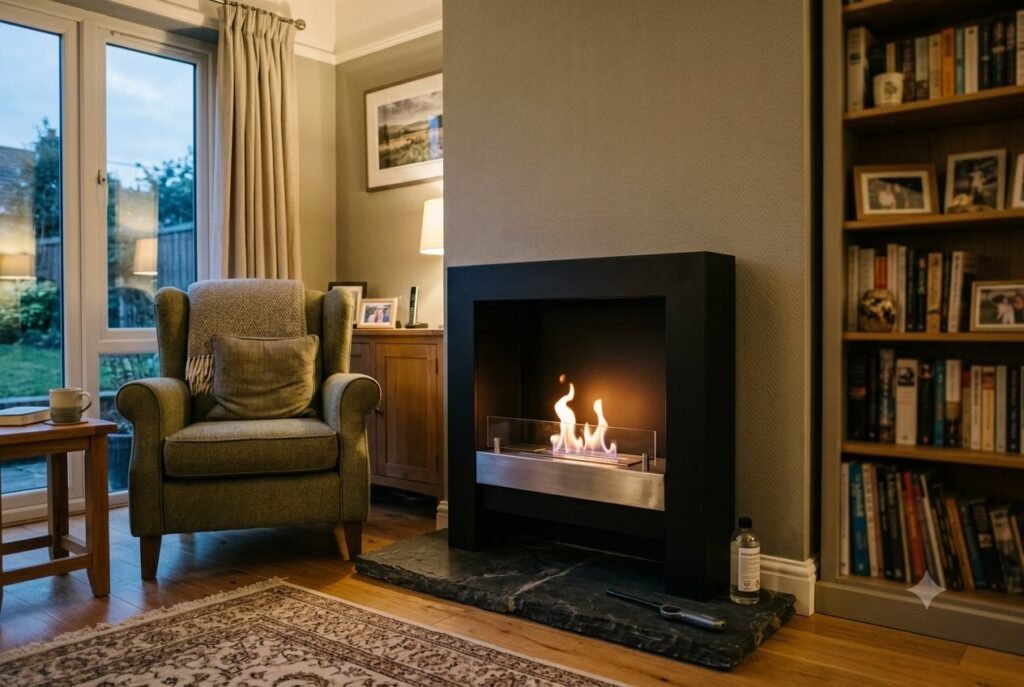
These are freestanding fires that burn a liquid fuel with no flue. They produce a clean, smokeless fire, and while pleasant to sit around, they aren’t as effective at heating the room as some other options.
Heat output: Up to 3kW with an adjustable flame, best for larger rooms.
Cost & where to buy: This bioethanol fire ticks all the boxes at £245, including testing to BS EN 16647. It takes liquid bioethanol, around £33 for six 1 litre bottles, and the 1.5 litre burner gives 3 to 5 hours per fill depending on flame height.
Safety: Check manufacturer’s guidance on minimum room size. Ventilate, fit a CO alarm, and only refuel when the burner is cold, as the flame can be nearly invisible in daylight. Never use gel fuel.
5. Gas fire
You might already own this one. A gas fire with a standing pilot light works in a power cut because it doesn’t need mains electricity. If you’re choosing between an old gas fire and buying a portable heater, the serviced gas fire wins: it is flued, fixed, and designed for the room.
- Heat output: Varies by model, but most living room gas fires sit between 2 and 4kW.
- Cost & where to buy: It costs about £150 to bring an unused fire back to life, or around £750 to install a new one.
- Safety: A blocked flue is a CO risk. Get any long-unused fire checked by a Gas Safe engineer before use. Service it annually, fit a CO alarm, and never block its vents.
6. Thermal mass
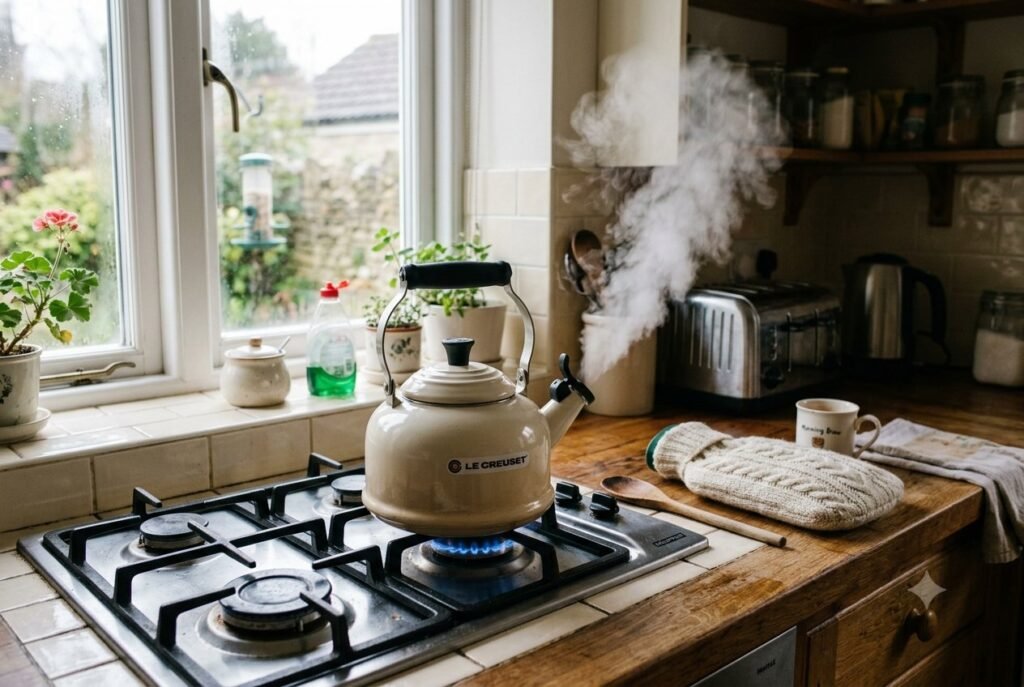
This is an old trick that’s survived because it works. Thermal mass is the ability of a material to absorb, store, and release heat energy. The modern version is hot water bottles, but traditionally people used heated bricks, stones, and soapstone wrapped in cloth. It does require a working gas hob to boil water and transfer heat, so check that first.
- Heat output: While it won’t heat a room, it will keep you warm and allows you to make use of surviving heat sources.
- Cost & where to buy: Hot water bottles cost around £5 at any supermarket, and stones are free.
- Safety: Use hot water bottle covers, don’t fill straight off the boil, and replace old bottles. Heat only dry stones (damp ones can crack and spit) and wrap them well before they touch fabric or skin.
7. Open fire
A lot of British homes have open fireplaces that haven’t been lit in years. With some preparation, this can become your alternative heat source. After a good sweep and a professional inspection, you’re ready to go. Be aware though, open fires are actually very inefficient. They feel great while you’re sitting in front of them, but they suck up warm air and pull in cold air from outside.
- Heat output: Strong radiant heat if you sit near it, but only about 10 to 20% of the fuel’s heat reaches the room.
- Cost & where to buy: A chimney sweep will cost you around £90, and a bag of Ready to Burn certified firewood costs less than a tenner from most supermarkets.
- Safety: Sweep the chimney, fit a CO alarm, use a fireguard, and never leave fires unattended. In most UK cities, burning ordinary wood on an open fire is illegal, with fines up to £1,000. Check whether your area is covered.
8. Diesel heater
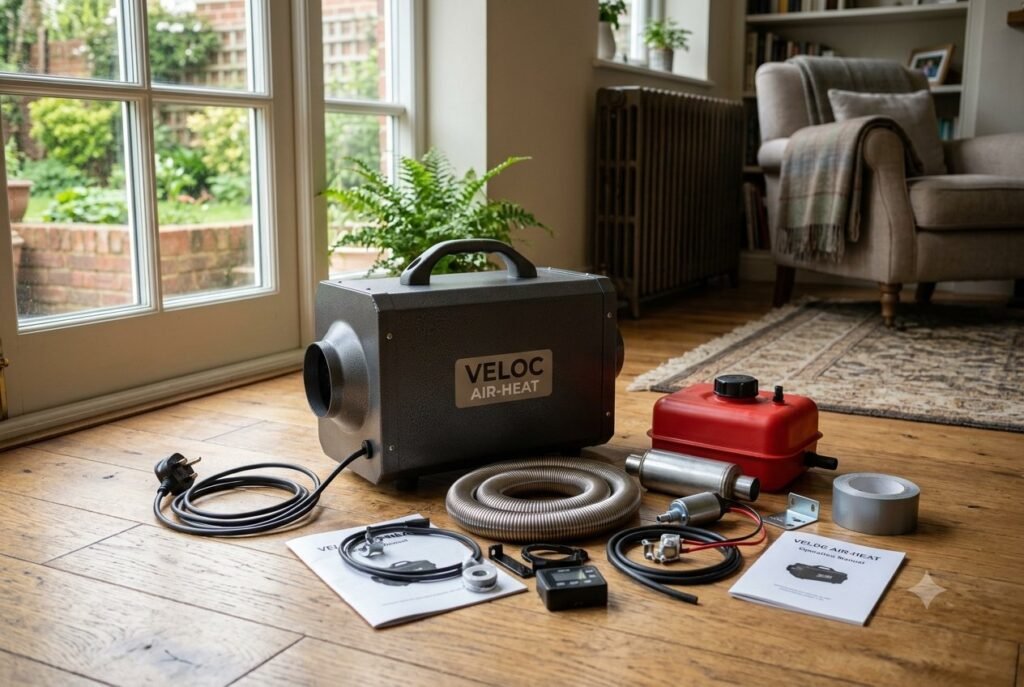
A diesel air heater is a compact unit that burns diesel in a sealed chamber and blows out warm air. The combustion is completely separate from the air you breathe: intake and exhaust run through their own pipes. Installed properly, it’s safer than any open-flame heater on this list. Installed badly, it’s lethal, so don’t attempt it unless you know what you’re doing, or hire a professional.
- Heat output: 5kW on the common units, ideal for medium to large rooms even in serious cold.
- Cost & where to buy: Around £100 to £150 for the Chinese-made units that copy £1,000 plus Webasto and Eberspacher designs, and diesel is one of the cheapest fuels per hour on this list.
- Safety: Run the exhaust outside through a sealed pipe, well away from anything hot. Install a CO alarm. If in doubt, hire a pro.
9. Generator
A petrol generator sits outside with a cable running in, and lets you run an electric heater, and everything else, through an outage. It’s the most capable option on this list, and the one with the least room for error. For what size you actually need and how to run one safely, see our full guide on generators for power cuts.
- Heat output: A suitcase inverter generator comfortably runs a 2kW heater, enough for a large room.
- Cost & where to buy: This 3kW inverter generator is a good option at £499, plus petrol.
- Safety: Outside only, well away from windows, doors, and vents, with the exhaust pointing away from the house. Never run it in a garage, shed, or conservatory, even with the door open. Let it cool before refuelling.
10. Wood burner
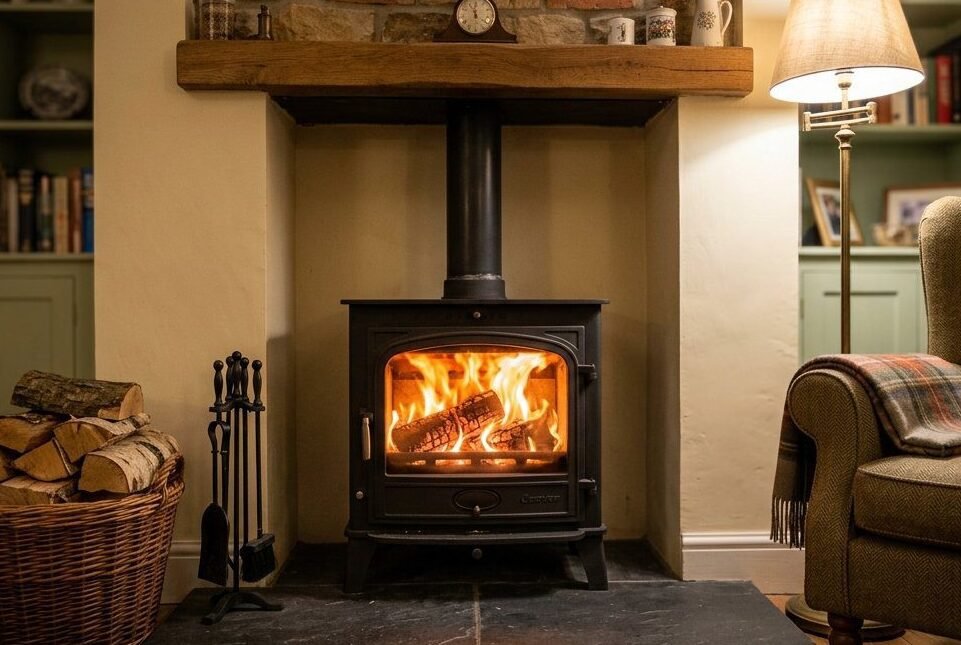
A wood burning stove is a sealed metal box that vents up a flue, and the sealed part is what makes the difference: 70 to 80% of the wood’s energy reaches the room, against 10 to 20% from an open fire.
- Heat output: Typical living room stoves are 4 to 8kW, ideal for medium rooms up to open-plan spaces.
- Cost & where to buy: This is an investment: roughly £1,500 to £3,000 plus, fitted by a HETAS registered installer. Skip pellet stoves, as most need mains power.
- Safety: Professional installation, an annual sweep, and a CO alarm in the room. In a smoke control area, the stove must be DEFRA exempt and burning authorised fuel.
Cheap heating myths debunked
These myths just won’t go away. Here’s the reality so you don’t waste your time and money:
Candle/terracotta heaters
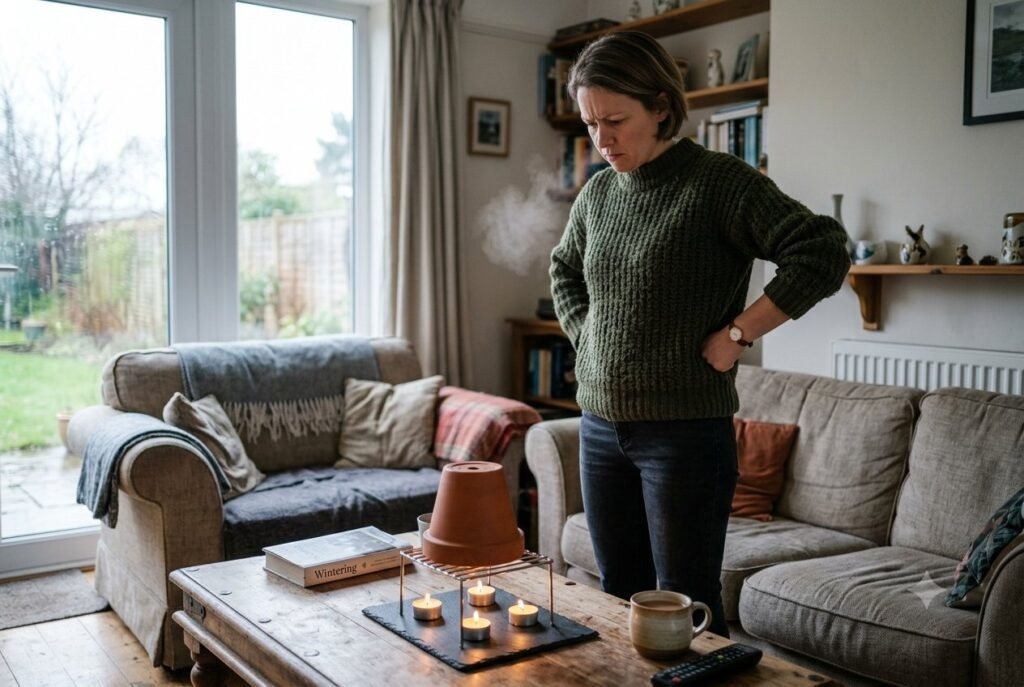
The viral flowerpot-over-tealights heater can’t create heat. A tealight gives off around 45 to 50 watts, so four of them under a pot is under 200 watts. That’s a tenth of a small fan heater, and the pot doesn’t add anything: it just gives you a warm surface to hold your hands near. The room gets the same tiny amount of heat either way.
The fire risk is the bigger problem. Candles started 850 accidental house fires in England in 2024/25, more than every type of space heating appliance combined. Those fires killed 7 people and injured 285. A cluster of tealights under a hot ceramic dome, left burning for hours, is exactly how that happens. Skip it entirely.
Battery-powered heaters
You’ll see £25 to 30 “cordless rechargeable heaters” in the shopping results above articles like this one.
They don’t work. A pocket-sized battery holds a few watt-hours of energy, and heating a room takes thousands.
A £450 power station the size of a toolbox can’t run a room heater for even 15 minutes, so a battery that fits in your hand doesn’t stand a chance. At best, it’ll take the chill off your hands for a few minutes. Not worth it.
How to retain more heat
You can stretch your fuel a lot further by retaining the heat you do make.
The basics: pick one small room, shut the doors, block the draughts, close the curtains at dusk, and get everyone in it.
We have an entire guide on staying warm without central heating, offering 30 cheap ideas.
What to do if outages keep happening
If your power keeps going off, there are a few things worth knowing:
- You may be owed compensation. Under Ofgem’s rules, a cut of more than 12 hours in normal weather pays £95, plus £45 for each further 12 hours.
- Report cuts by calling 105. Free from any phone, or through Power Cut 105, which also tells you who your network operator is.
- Join the Priority Services Register. Contact your energy supplier if anyone in your home relies on electricity for medical equipment, or is elderly, disabled, or has young children. You’ll get priority support and updates during outages.
If power cuts are a regular thing where you live, it’s worth preparing for them properly by building a power cut kit. Our emergency preparedness guide for beginners covers the rest, from water and food to lighting and communications.
Prepare before the cold hits
The worst time to sort out backup heating is during a power cut, when the cabinet heaters are sold out and the roads are icy. A bit of preparation now means a cold snap becomes an inconvenience instead of an emergency.
For most homes, it comes down to this: check what still works, then pick one backup that suits your setup, a cabinet heater for real room heat, or a power station and heated throw if you’d rather have no flame at all. Fit a CO alarm with anything that burns fuel. Then keep one small room warm and you’ll see out any cut in comfort.
What’s the best way to heat a room without electricity?
The best way to heat a room without electricity is a butane cabinet heater. It delivers around 4.2kW of real warmth with no installation and no mains power, as long as you ventilate the room and fit a CO alarm. If you want safe personal warmth rather than room heat, a power station running a heated throw is the only option with no flame and no carbon monoxide risk.
How can I safely heat a room without electricity?
To safely heat a room without electricity, follow four rules with any fuel-burning heater: fit a carbon monoxide alarm, keep some ventilation open, never run it while you sleep, and never use outdoor equipment like barbecues, patio heaters, or generators indoors. Choose appliances with a flame failure device and a UKCA or CE mark, and get fixed gas appliances serviced annually.
How do you produce heat without electricity?
Producing heat always needs an energy source. Without electricity, that means burning a fuel (gas, paraffin, bioethanol, diesel, or wood), using stored energy (a battery power station), or moving heat from somewhere it already exists, like boiling water on a gas hob to fill hot water bottles.
How do I warm up a room with no heating at all?
With no heating at all, the only heat source left is people. A resting adult gives off about as much warmth as a 100W heater, so getting everyone into one small room with the doors shut genuinely raises its temperature. Block the draughts and close the curtains at dusk to trap that warmth, and layer up with blankets, hot food and drink, and hot water bottles to stay comfortable while it builds.
Do candle heaters actually work?
No, candle heaters don’t work. Four tealights under a terracotta pot produce under 200 watts, around a tenth of a small heater, and the pot doesn’t add any heat, it just redistributes it. Candles also started 850 accidental house fires in England in 2024/25, more than all space heating appliances combined, so you’re taking on a real fire risk for almost no warmth.

Professional writer and editor. Founder of MindXP, helping UK households prepare for power cuts, storms, and supply disruptions.