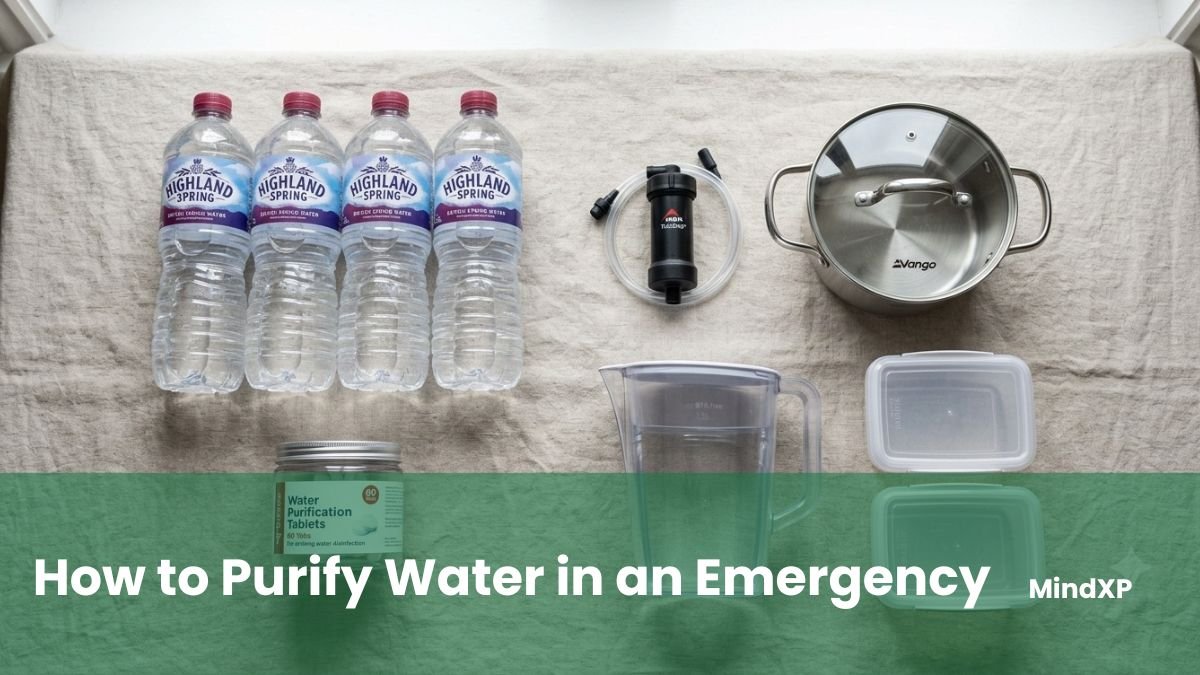
Water shortages can happen in the UK. Floods, power cuts, contamination, burst mains – all can leave you without water for hours or days.
In January 2026, Storm Goretti knocked out water for tens of thousands of homes across Sussex and Kent, with massive queues forming at overwhelmed bottled-water stations.
This guide explains how to store, purify, and source water during emergencies like these to keep your household safe and resilient.
In this guide
Why prepare for a water shortage in the UK?
Supply outages happen in the UK, and they might become more frequent. We’re seeing supply tighten and demand increase. No new major reservoirs have been built in England since 1992, despite the population growing by 10 million in that time.
The Environment Agency recently reported that demand for water will outpace supply in England by 2055. Even when there’s enough supply to meet demand, boil-water notices happen, like the Brixham Cryptosporidium outbreak in May 2024.
These facts alone make preparing for a water shortage a sensible idea, especially when it’s so cheap and easy to do.
Start with stored water
When the taps go off, your first port of call should be stored water. It’s clean, ready to use, and buys you some time to start thinking about collecting and purifying more.
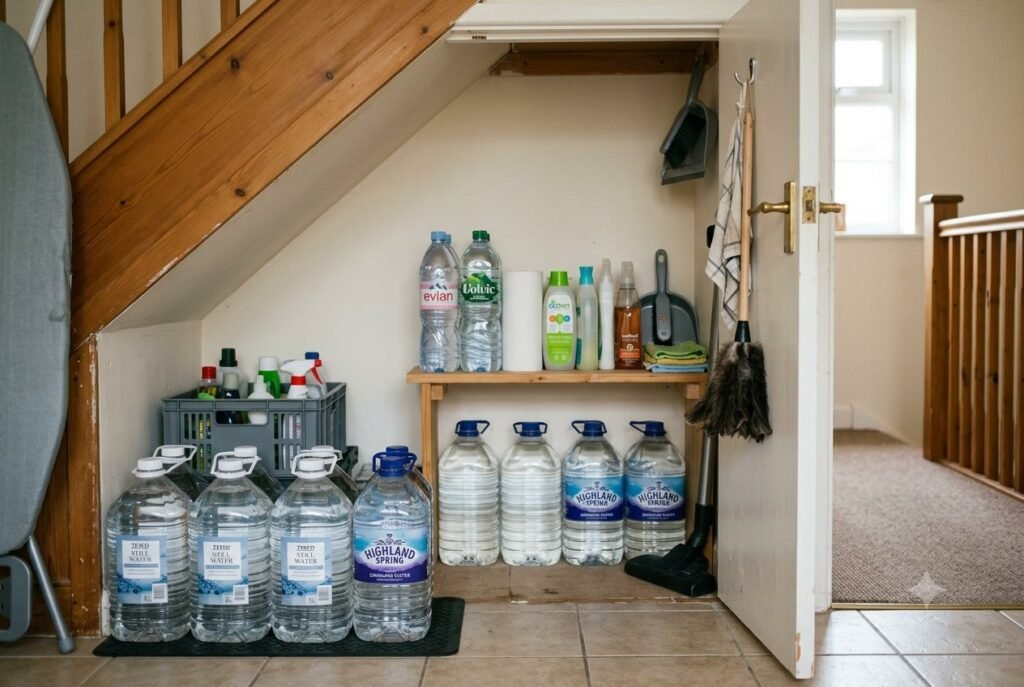
Never rely on supermarkets. Even during emergencies that aren’t directly related to water, bottled water is one of the first things to vanish from shelves.
Water companies are also slow to set up tankers/stations, so preparing in advance is key. Our guide on how to store water for an emergency covers the best containers and where to keep them.
Here’s how much to store:
| Per person | Drinking only | Drinking, cooking & hygiene |
| Per day | 3L | 10L |
| 3 days | 9L | 30L |
| 1 week | 21L | 70L |
In an extreme situation where a family of four are left without water for a full week, you’d need around 280L stored to continue drinking, cooking and washing as normal. That’s roughly two filled bathtubs.
And don’t forget pets, they need water too.
Where to find water in an emergency
If you use up all your stored water or didn’t have any in the first place, you need to locate a reliable water source. Here are your main options in the UK, ordered from best to worst:
Safest
These are the cleanest sources, though you can still treat the water if you’re unsure:
- Hot water tank. If you have a stored-tank system, there’s clean water sitting in it.
- Toilet cistern. The upper tank only, never the bowl, and not if you use cistern blocks.
- Ice from the freezer. Just frozen tap water; let it melt.
- Fresh rainwater. Cleanest straight from the sky, before it hits a dirty surface.
For most people, even the safest options are a bit grim, which is why preparing in advance is the way to go.
Risky
If you’ve used up or can’t access safer options, here are some alternatives that always require treatment before drinking:
- Streams & rivers. Flowing water is better than still, but never drink it untreated.
- Ponds & lakes. Still water harbours more bacteria; treat thoroughly.
- Questionable rainwater. Collected from a dirty roof or an old butt.
All of these can be made safe with the right treatment, which we’ll come to next. Pick the clearest, cleanest-looking source you can, then filter and purify it.
Dangerous
These are water sources you should never touch:
- Floodwater. Full of sewage, chemicals, and whatever it’s washed through.
- Water near industrial sites. Risk of chemical contamination no filter removes.
- Swimming pools & hot tubs. The chemicals aren’t safe to drink in quantity.
- Stagnant water. If there’s visible growth or an oily sheen, steer clear.
Boiling, filtering, and tablets deal with germs, but they do nothing for chemicals, and can even concentrate them. If there’s any chance water is chemically contaminated, don’t drink it and don’t try to treat it.
How to purify water in an emergency
Once you’ve found water, the next step is making it safe by removing the bacteria, viruses, and parasites that make you sick. Whichever method you choose, if you’re starting out with cloudy water, be sure to filter it through a clean cloth or let the sediment settle first.
Boiling water
This is the most reliable method. Always boil if you can.
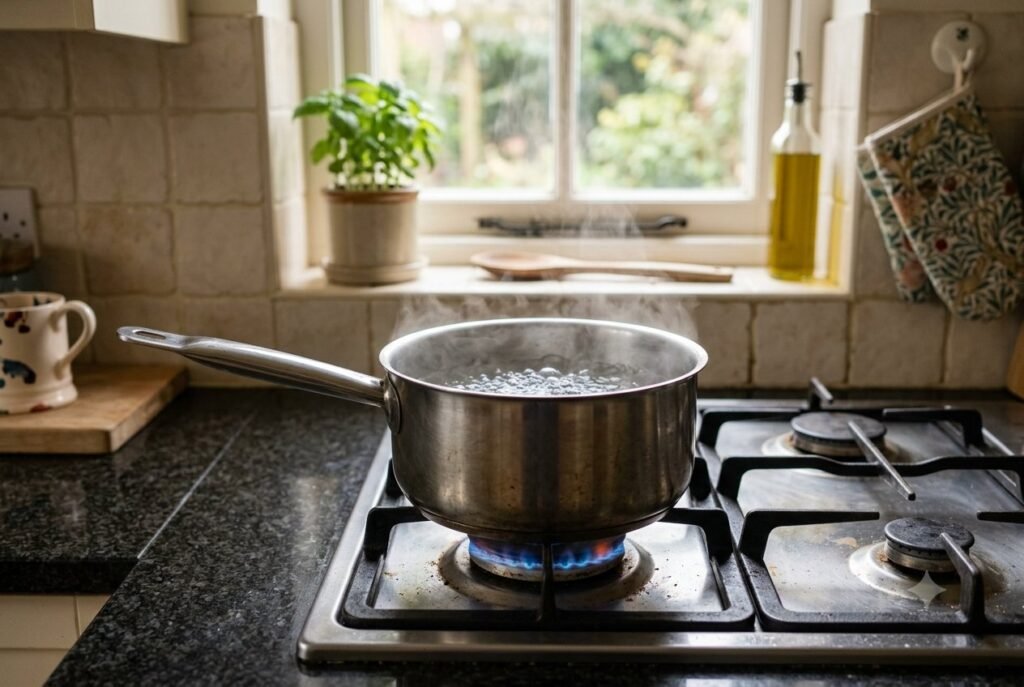
How it works: heat kills pathogens. Bringing water to a boil gets it hot enough for long enough to destroy the bacteria, viruses, and parasites that make you ill.
How to do it:
- Filter cloudy water through a clean cloth first.
- Bring it to a rolling boil.
- Keep it boiling for one minute.
- Let it cool on its own before drinking.
Boiling handles everything biological, including Cryptosporidium and Giardia. It won’t remove chemicals or heavy metals, though, so don’t use it on water you think is chemically contaminated.
Purification tablets & bleach
This is your next-best option after boiling.
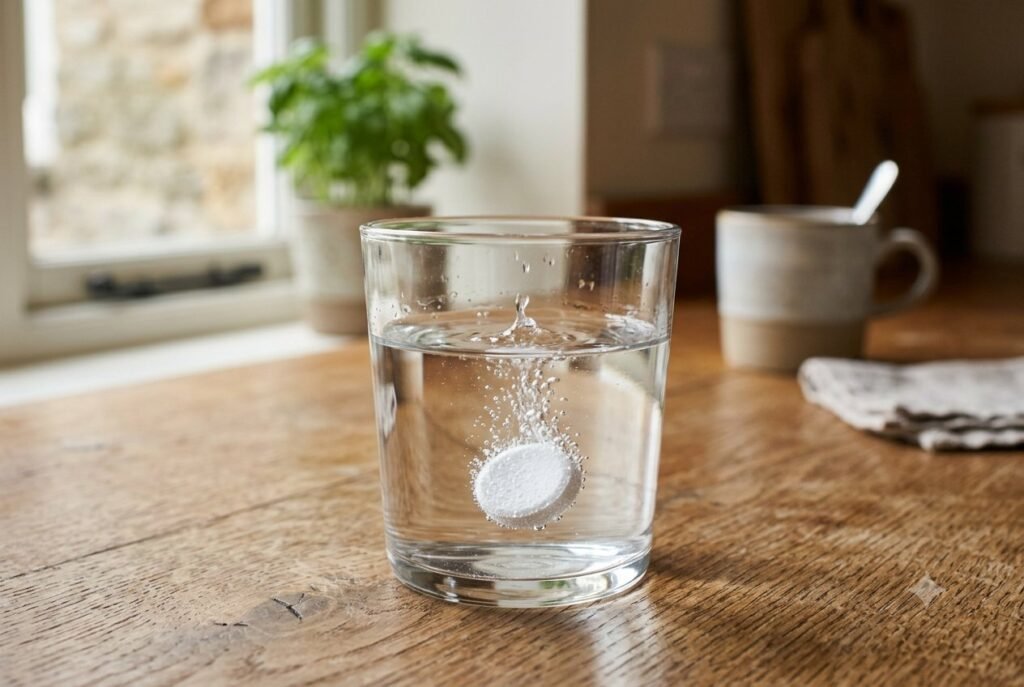
How it works: chemicals kill pathogens. A measured dose of chlorine-based treatment destroys bacteria, viruses, and most parasites; no heat or power needed.
How to do it with tablets:
- Filter cloudy water first.
- Drop in the right number of tablets for the volume (check the pack).
- Wait the time stated, usually around 30 minutes.
- Drink.
How to do it with household bleach (last resort):
- Use plain, unscented bleach (5 to 6% sodium hypochlorite, no fragrance or thickeners).
- Add 2 drops per litre of clear water, or 4 drops if cloudy.
- Stir and leave for 30 minutes.
- It should smell faintly of chlorine. If it doesn’t, repeat the dose once.
Chlorine tablets like Aquatabs are the easiest option: cheap, light, and good for years unopened.
The bleach method is a genuine last resort, so only use plain unscented bleach and follow current GOV.UK guidance to get the dose right.
Water filters & purifiers
A handy addition to your bug out bag when drinking from natural sources.
How it works: physical filtration strains pathogens out. Water is forced through microscopic pores that trap contaminants and let clean water through.
A filter (like the Sawyer Mini or LifeStraw) removes bacteria and parasites, such as Giardia and Cryptosporidium.
Important: A filter alone does not remove viruses. A purifier (like a Grayl or LifeSaver bottle) uses finer technology that removes viruses too.
In the UK the virus risk from a stream is lower than in much of the world, so filters are usually fine for wild water. But lower isn’t zero, especially near a sewage overflow.
If you’re ever unsure:
Filter first, then boil or treat the filtered water with tablets. That combination handles everything.
Choosing one: a gravity filter like the British Berkefeld cleans large volumes on the worktop with no power, best for the home. A squeeze filter like the Sawyer is light and lasts thousands of litres. Straw filters are smallest, but you can only drink through most of them. For our top picks, see our guide to the best water filter for emergencies.
UV treatment
Fast and effective, if you have power.
How it works: ultraviolet light scrambles the DNA of bacteria, viruses, and parasites, so they can’t reproduce or harm you. It treats water fast and changes nothing about the taste.
How to do it:
- Filter cloudy water first, UV can’t pass through murky water.
- Swirl the UV pen (such as a SteriPen) in the water for around 90 seconds.
- Drink.
The catch is power: UV pens need batteries or charging, so keep spare batteries or a way to recharge, and treat this as a fast backup rather than your only method.
Solar disinfection (SODIS)
A last resort that needs no kit at all.
How it works: the sun’s UV rays do the same job as a UV pen, just slower. Left in strong sunlight, the radiation kills the pathogens in the water for free.
How to do it:
- Filter the water and fill a clear plastic bottle.
- Shake it to add oxygen.
- Lay it in direct sun for at least 6 hours, or 2 full days if overcast.
- Drink.
It’s proven and used by millions worldwide, and it needs nothing but a bottle and daylight. The only problem for us is the British weather; reliable strong sun isn’t a given, so treat SODIS as a genuine last resort.
How to make your water last
We’ve covered storing, collecting, and purifying water, but it’s equally important to know how to stretch your supply when there’s a shortage.
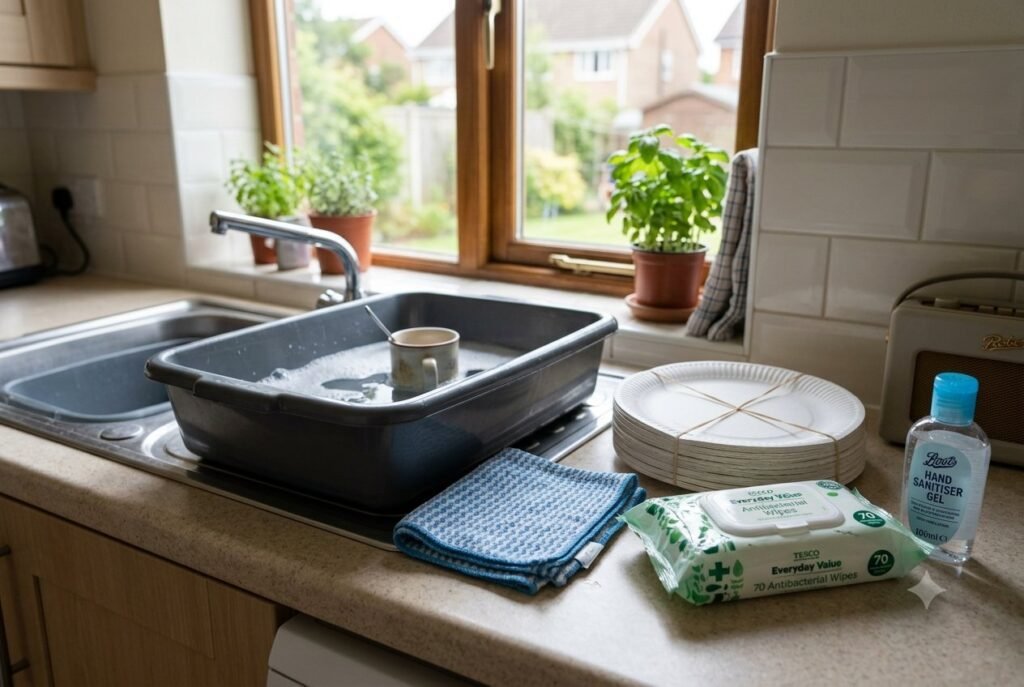
Here are some habits to help you get more from your existing water:
- Prioritise ruthlessly. Drinking water comes first, then water for food, then hygiene, then everything else. Don’t spend drinking water on anything that isn’t essential.
- Use wet wipes. Baby wipes and a bit of hand sanitiser handle most personal hygiene without running water. Bin them, never flush.
- Strip-wash instead of showering. A flannel and a small bowl of water cleans you using a fraction of what a shower needs.
- Use disposables. Paper plates, cups, and disposable cutlery mean no washing up, a tip that came from people who lived through long US hurricane outages.
- Flush less & with dirty water. You don’t need clean drinking water to flush a toilet. Use collected rainwater, pond water, or old washing water poured straight into the bowl.
Small changes like these can turn a few days worth of stored water into a week’s supply.
Emergency water safety tips
Here are some quick-fire tips to keep you safe during a water shortage:
If you suspect chemical contamination, DO NOT DRINK. No amount of boiling or filtering can make it safe. Boiling can even concentrate some chemicals. If water is near industry, mixed with floodwater, or smells of fuel or solvents, use a different source or wait for official advice.
In a boil-water notice, follow the instructions exactly. The water company will say what the water can and can’t be used for, often it’s fine for washing but not drinking. Keep boiling until they confirm the notice is lifted.
Filter cloudy water before treating it. Every method works better on clear water.
When in doubt, don’t drink it. Dehydration is dangerous, but so is drinking bad water. If you genuinely can’t make a source safe, it’s better to wait and seek clean water than to gamble.
How to prepare for a water shortage
It doesn’t take much to prepare, so the benefits massively outweigh the hassle. Here’s a simple step-by-step approach:
- Store some water. A few days’ worth per person, rotated, so it stays fresh. This is your first line of defence.
- Have a way to clean water. A pack of purification tablets covers most situations for a few pounds, and you’ve probably got a pan to boil with already. A filter adds resilience if you want to go further.
- Make a plan. Think through where you’d get water if the taps stopped tomorrow, and how you’d treat it. Also, factor in your new water-saving habits.
This covers you for the vast majority of UK water emergencies. A few bottles of water and a pack of tablets cost very little and take up almost no space.
Prepare in advance
Water is one thing you can’t go without, so it makes sense to plan for a shortage. None of it is expensive or complicated. The key is doing it before you need it.
A few bottles of stored water and a cheap pack of purification tablets take up almost no space, yet they turn a water emergency from a crisis into a minor inconvenience.
If you’re building wider household resilience, water is just one piece of the puzzle. Our prepping for beginners guide puts the full picture together, from power cuts to food supplies.
FAQs
Quick answers to the questions people ask most about making water safe in an emergency.
How do you purify water in an emergency?
Boil it for one minute, this kills bacteria, viruses, and parasites. If you can’t boil, use purification tablets or a few drops of plain unscented bleach, and always filter cloudy water through a cloth first.
Can you drink tap water during a boil-water notice?
No. Boil the water for one minute and let it cool before drinking, or use bottled water, until your water company confirms the notice has been lifted.
How much water should I store for an emergency?
Store around 10 litres per person per day to cover drinking, cooking, and hygiene, or about 3 litres per person per day for drinking alone. Aim for at least three days’ worth, and a week if you have the space.
Does boiling remove chemicals from water?
No. Boiling kills germs but doesn’t remove chemicals or heavy metals, and can even concentrate them. If you suspect chemical contamination, don’t drink the water, use another source.
Do water filters remove viruses?
Most don’t. Filters like the Sawyer Mini and LifeStraw remove bacteria and parasites but not viruses. For full protection, filter the water and then boil it or treat it with tablets, or use a purifier designed to remove viruses.
Is rainwater safe to drink in the UK?
Not without treating it first. Freshly collected rainwater is relatively clean but picks up pollutants from the air and the surface it runs off, so filter and then boil or treat it before drinking.
Can you purify water with regular bleach?
Yes, as a last resort. Use plain, unscented bleach at 2 drops per litre of clear water (4 drops if cloudy), stir, and wait 30 minutes. Check current GOV.UK guidance for the exact dose.
How long does stored water last?
Shop-bought bottled water keeps for years unopened. Tap water stored in clean, sealed containers is best rotated every six months. Use the oldest first and top up on your regular shop.
Images on MindXP are AI-generated illustrations. Product images are checked against manufacturer photos for accuracy.

Professional writer and editor. Founder of MindXP, helping UK households prepare for power cuts, storms, and supply disruptions.