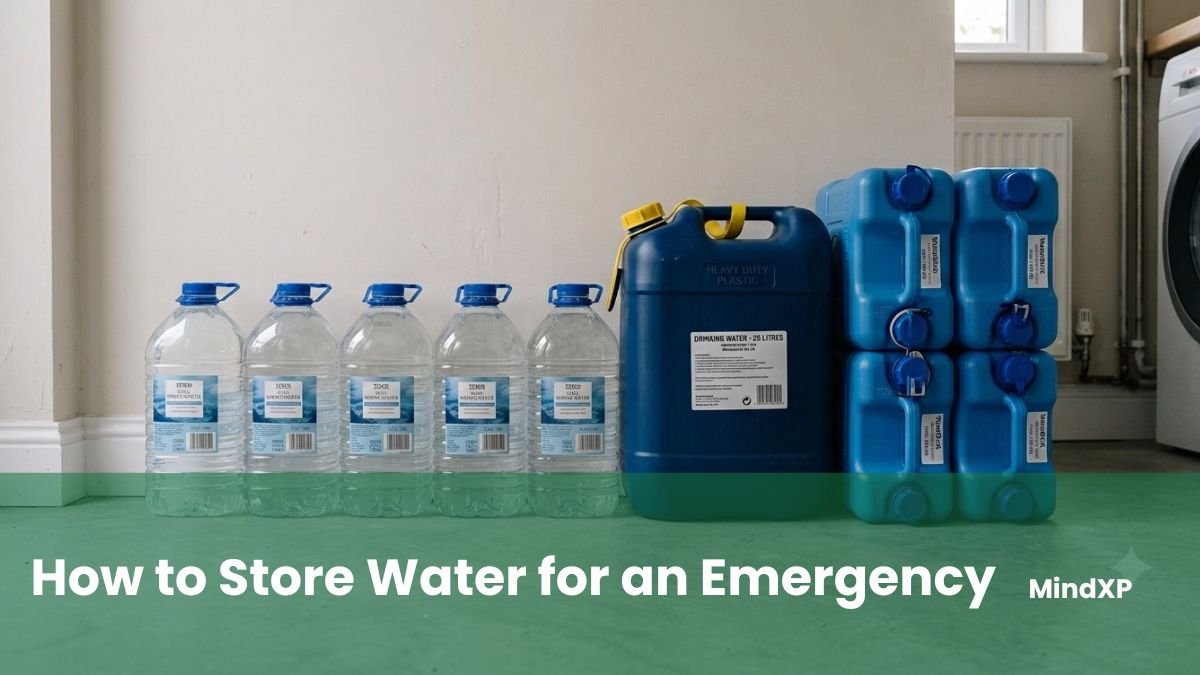
Water cuts are rarer than power cuts, but they’re worse when they happen: no taps, no kettle, no flushing, and the bottled water aisle empties within hours.
Burst mains, contamination alerts, and boil-water notices hit UK homes every year, and the water companies’ emergency stations take time to set up.
The fix costs less than a takeaway and takes an afternoon. This guide covers how much water your household actually needs, the five ways to store it, and how to keep it fresh.
In this guide
How much water do you need?
The government’s Prepare campaign recommends a minimum of 2.5 to 3L of drinking water per person per day, and 10L per day for comfort once you add basic cooking and hygiene.
Here’s what that means in practice:
| Per person | Drinking only | Drinking, cooking & hygiene |
| 1 day | 3L | 10L |
| 3 days | 9L | 30L |
| 1 week | 21L | 70L |
So a family of four wanting a sensible 3-day drinking reserve needs 36L, which is eight of the big 5L supermarket bottles. That’s one shelf, not a bunker.
Aim for 3 days as the minimum and a week if you have the space. Add extra for pets, babies (formula needs clean water every feed), and anyone with medical needs.
The 5 ways to store emergency water
Here are the options from cheapest to most serious, and most households want a mix of the first two or three:
1. Supermarket bottled water
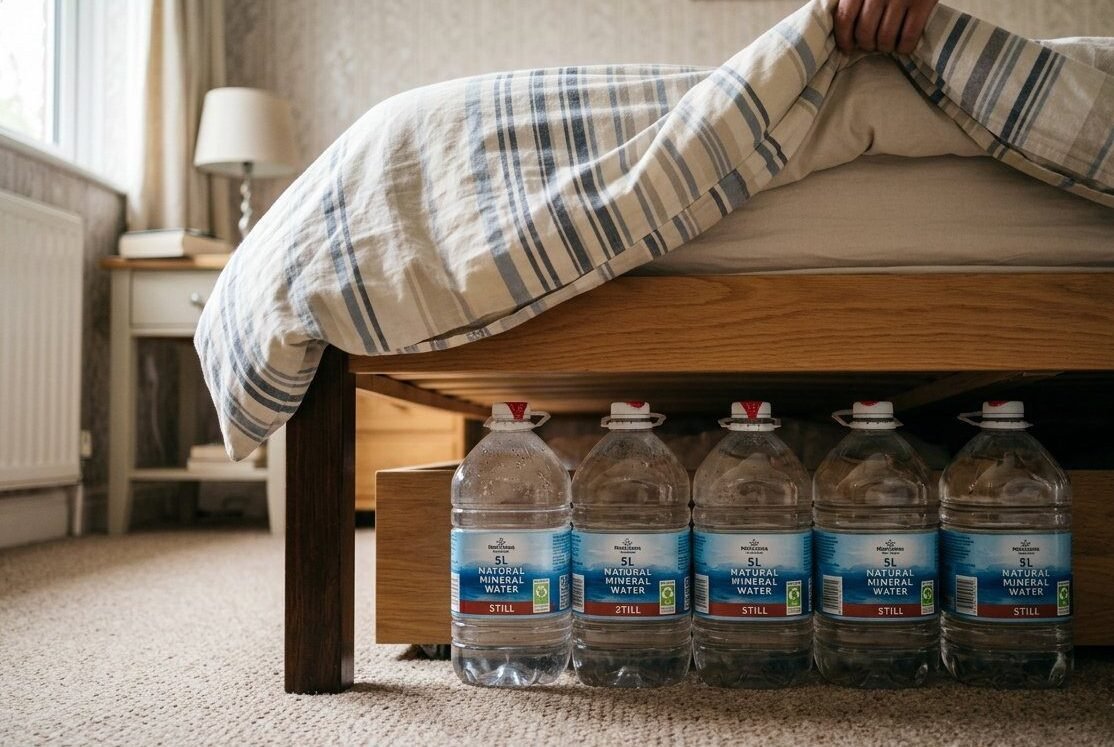
This is the easiest and best option for most households. Sealed bottled water stays good for years (check the date on the bottle), costs pennies per litre in 5L bottles, and doesn’t need cleaning or treating.
Buy a few more than you need, store them somewhere cool and dark, and rotate them through normal use so the stock stays fresh. At around £2 for 5L, a family of four’s 3-day drinking reserve costs less than £20.
2. Refilled containers from the tap
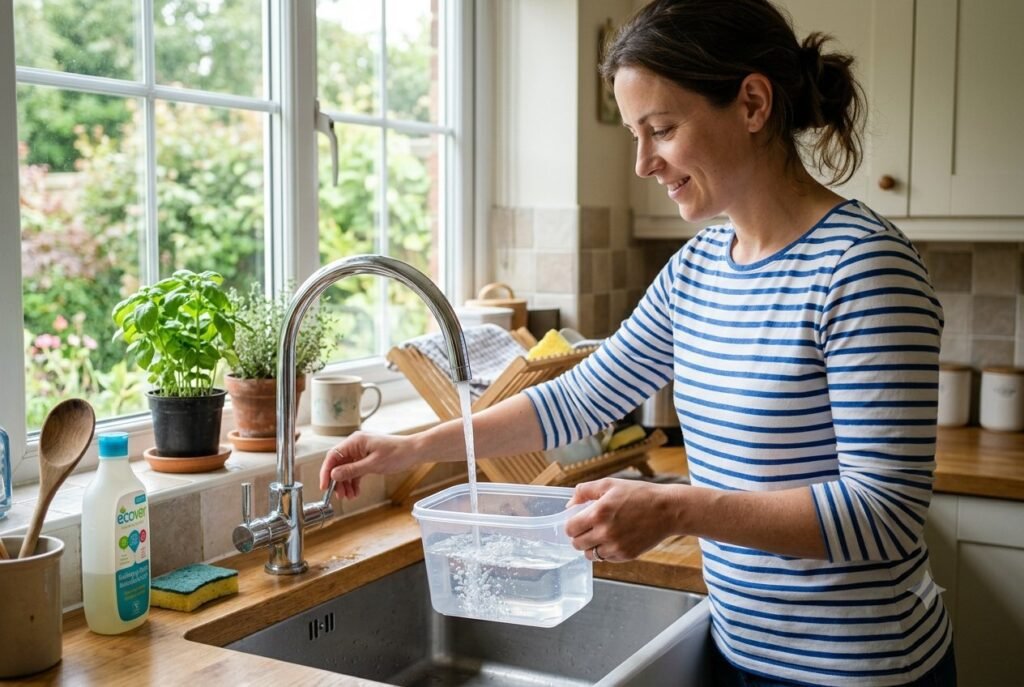
The free option. UK tap water stores well because it arrives with residual chlorine already in it, so filling clean containers from your own kitchen tap gives you a solid reserve for nothing.
Do it properly:
- Use food-grade containers. Look for the glass-and-fork symbol or “HDPE” stamp, and never reuse old milk bottles, which harbour bacteria however well you rinse them.
- Clean before filling. Hot soapy water, rinse, then sanitise.
- Fill to the brim. Less trapped air keeps it fresher; cap tightly and label with the date.
- Replace every six months. The chlorine that keeps tap water fresh fades, and plastic slowly breathes. When the clocks change, use that as a reminder to replace the water.
3. Proper water containers
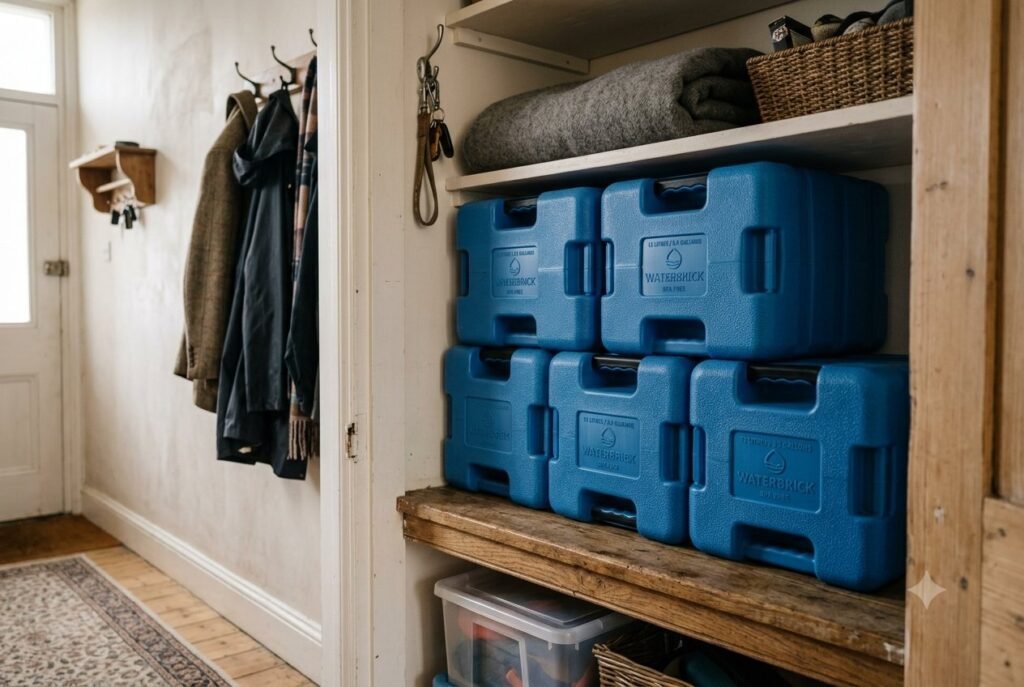
These are purpose-made containers that store more water, more securely, in less space. They keep water fresher for longer too, as they use better seals and plastic.
- Food-grade jerrycans. Choose one designed for water, not fuel, marked food-grade HDPE, like this 20L container at £26.46. Never wash and reuse a fuel can.
- Water bricks. These are stackable rectangular containers that interlock like building blocks. They cost more per litre, but pack more water into less space.
- Large drums. These can store 60L+ – the most storage for your money, but immovable once full, so you need space. Worth it for a week’s supply for a family; overkill for a basic reserve.
- Long-life sealed water. Purified and sealed at the factory, so it keeps for 5 to 10 years with zero upkeep. Sold as foil pouches and sealed cans; dearer than filling your own containers, but there’s nothing to clean or remember.
One rule across all of them: water weighs 1kg per litre. A full 25L can is 25kg, so if you’d struggle to lift that, buy two smaller cans instead of one big one.
4. The bathtub bladder
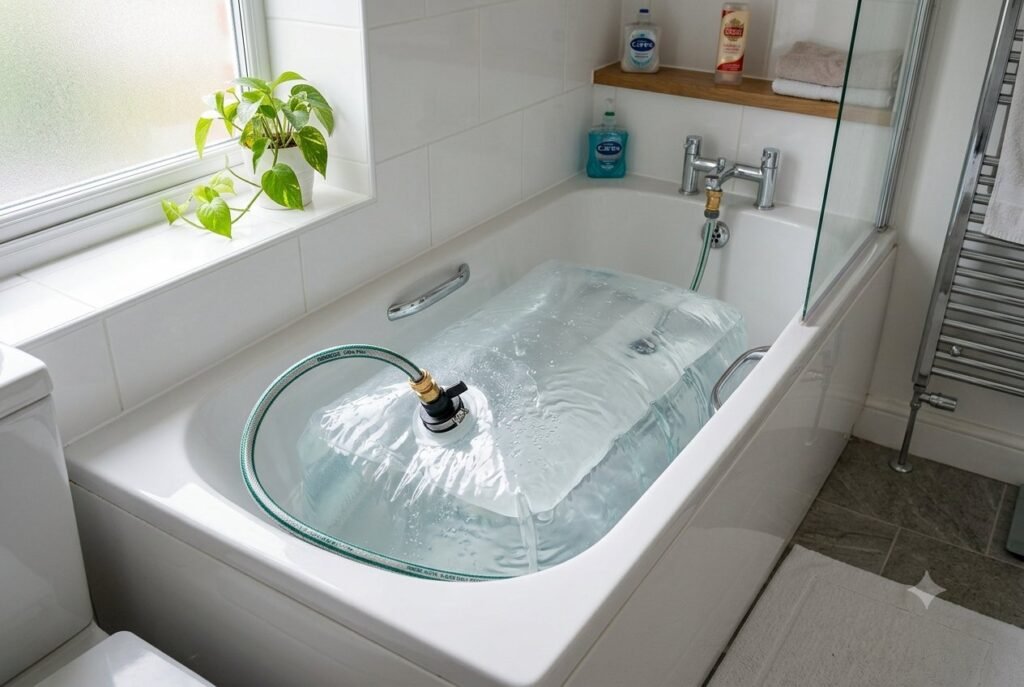
A bath bladder (sold as the WaterBOB and similar) is a huge food-grade liner that sits in your bathtub and fills from the tap in about 20 minutes, holding up to 100L.
The catch is that it only works with warning: a forecast storm, a planned works notice, or the early hours of an incident.
Water cuts don’t always announce themselves. Treat it as a brilliant supplement to stored water, not a replacement for it.
5. Water butts (for flushing, not drinking)
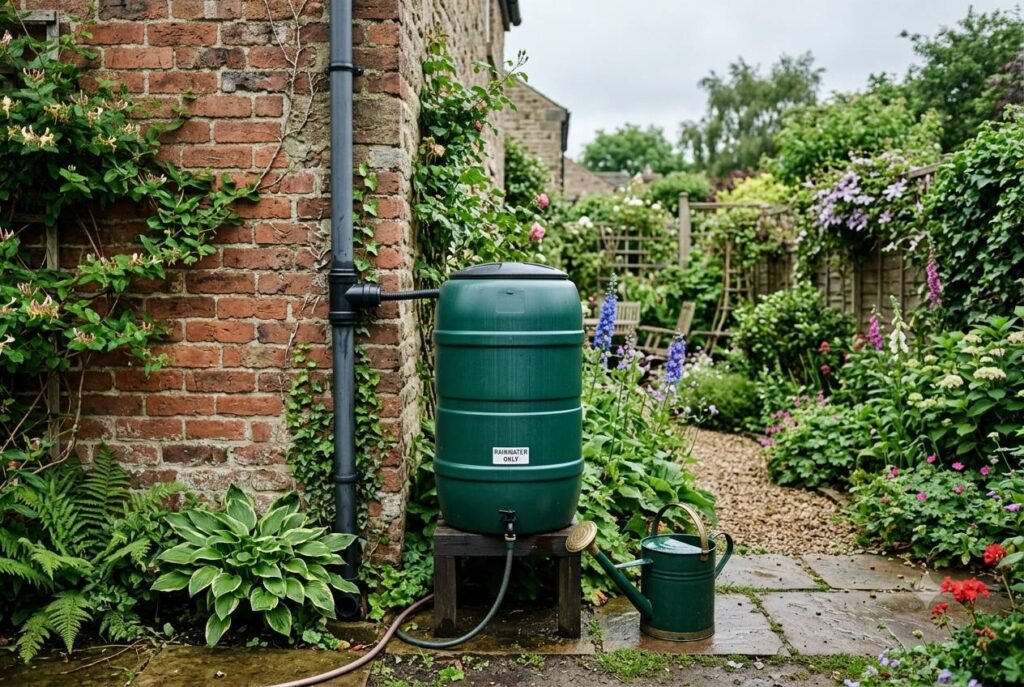
A garden water butt fed from your downpipe gives you tens or hundreds of litres for the jobs that don’t need clean water: flushing toilets, washing hands with soap, cleaning.
Never drink butt water without treating it first; it’s collected off your roof, and it isn’t food-grade storage. Our water purification guide shows you exactly how to make questionable water safe.
Storing water in a flat
Three days’ water for a couple is about 18L, a 12-pack of the big 1.5L bottles, or one of those blue office water cooler jugs. The shape of the container will largely dictate where it goes.
- Bottles: under the bed, wardrobe floors, on top of kitchen cupboards.
- Water bricks: stack into corners, and two or three high with a board on top doubles as a side table.
- Jerry cans: one on a cupboard floor holds most of a day’s supply on its own.
Water is 1kg per litre, so that 18L reserve already weighs 18kg. Keep the big containers at floor level.
Keeping your water fresh
Water doesn’t really expire, but it picks up tastes and grows things if you store it badly. The rules:
- Cool and dark. Sunlight plus water equals algae. A cupboard beats a windowsill.
- Off bare concrete & away from chemicals. Plastic containers breathe slightly, so petrol, bleach, and strong-smelling products stored alongside will eventually flavour the water.
- Label everything with the fill date.
- Rotation: sealed shop-bought bottles last years; tap-filled containers need fresh water every 6 months. A bath bladder doesn’t count as storage at all: it’s filled when a warning comes and used within days.
If stored water tastes flat, it’s usually just lost its dissolved air, not gone bad. Pour it between two jugs a few times and the taste comes back.
Prepare before the taps run dry
A water reserve is one of the cheapest pieces of emergency cover there is: less than £20 of supermarket bottles covers a family for three days, and a few jerrycans cover a week.
Do it now, because the one guarantee in a water incident is that everyone else is heading to the same supermarket shelf.
For even greater protection, check out our guide on the best water filters for emergencies. Add one of those and you’re still prepared if your stash runs out.
For the rest of your household’s cover, from power cuts to food, our emergency preparedness guide for beginners puts the whole plan together.
How much water should you store for an emergency in the UK?
Store around 3L of drinking water per person per day, and aim for at least 3 days’ worth, so 9L per person as a minimum. If you add cooking and basic hygiene, allow around 10L per person per day. A family of four’s 3-day drinking reserve is 36L, about eight big supermarket bottles.
How long can you store tap water?
Tap water stored in clean, sealed, food-grade containers keeps for about 6 months. UK tap water contains residual chlorine that helps it store well, but the protection fades over time and plastic containers slowly breathe, so replace tap-filled containers twice a year; the clock changes make a good reminder.
What are the best containers for storing water long term?
Food-grade jerrycans and stackable water bricks are the best containers for long-term water storage: they’re opaque, sealed, and made from HDPE plastic that won’t leach. Look for a tamper-proof cap and a tap fitting. Avoid reusing milk bottles or other food containers, which degrade and harbour bacteria.
Can I store water in plastic bottles?
Sealed shop-bought bottled water stores for years in its original plastic and is the easiest reserve to keep. Refilling single-use bottles is a different story: the thin plastic degrades, the necks are hard to clean, and they’re not designed for reuse. If you want to refill from the tap, use proper food-grade containers instead.
Is it better to store water in glass or plastic?
Food-grade plastic is the practical choice for emergency water: it’s light, tough, and safe. Glass keeps water tasting cleaner for longer and doesn’t breathe, but it’s heavy, fragile, and lets light through, which encourages algae. If you use glass, store it somewhere dark and padded.
How do you store water for 6 months or longer?
For storage beyond 6 months without rotation, use sealed shop-bought bottled water (lasts years) or long-life emergency water in ration pouches or sealed barrels, which keep for 5 to 10 years. Tap-filled containers need replacing every 6 months, so for a store-and-forget reserve, sealed commercial water is the answer.
Images on MindXP are AI-generated illustrations. Product images are checked against manufacturer photos for accuracy.

Professional writer and editor. Founder of MindXP, helping UK households prepare for power cuts, storms, and supply disruptions.