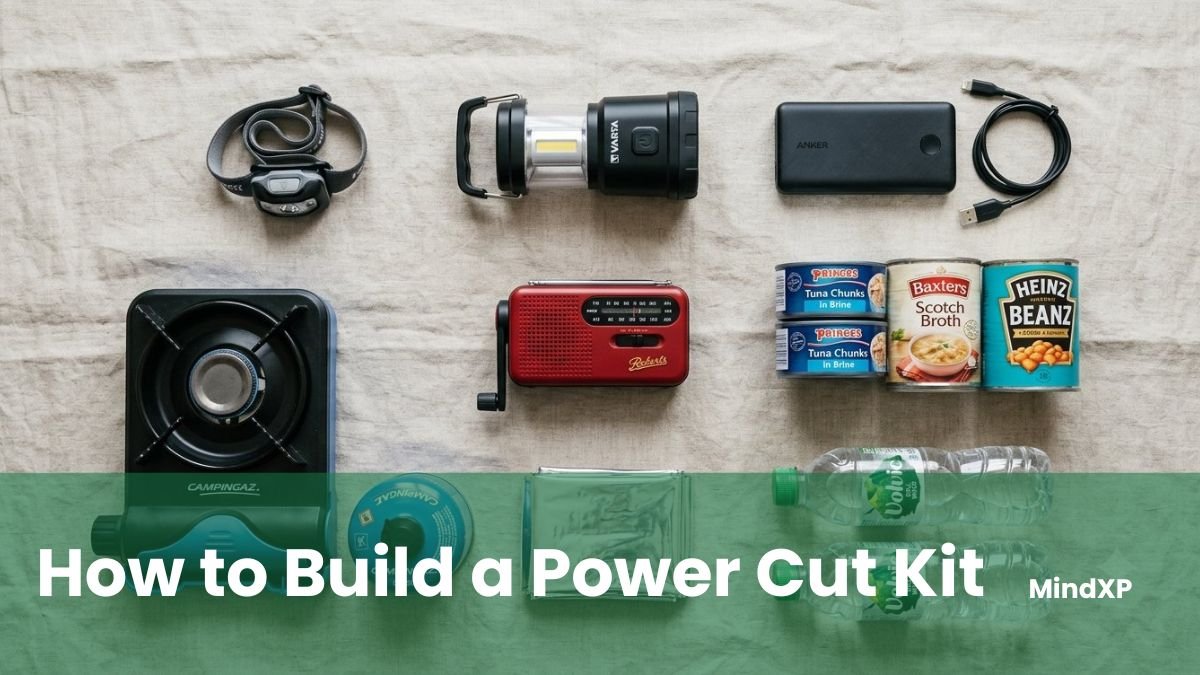
The UK has one of the most stable electrical systems in the world, yet power cuts still happen, through weather damage, local accidents, and strains on the grid.
In June 2026, over 1,000 homes in Bedworth were left without power for hours due to a fault with underground cables.
The Iberian Peninsula blackout in 2025 that left Spain and Portugal without electricity for hours proved developed countries aren’t immune. The UK Government now encourages households to prepare for potential blackouts.
This guide covers everything you need to build a power cut kit, so the next outage is a minor inconvenience instead of a scary one.
In this guide
Why do you need a power cut kit?
The UK experiences thousands of power cuts annually. Areas with more extreme weather, like Scotland and the North West, are most at risk, but they can happen anywhere.
In 2021, Storm Arwen left thousands of homes without power for days, forcing communities to pool emergency resources and come together to support each other.
Having a power cut kit prepared in a situation like this is invaluable. You’re not just surviving, you’re comfortably waiting for it to blow over. Depending on how well you prepare, you can pretty much carry on as normal.
What to put in a power cut kit
Basically everything we take for granted relies on electricity, from hot showers to refrigeration. A power cut kit minimises disruption when the supply suddenly stops.

First, you need a container for your kit. Unlike packing a bug out bag, you need something waterproof and more durable than a backpack. Choose a decent-sized plastic box with a clip-on lid.
Here’s what to pack:
Lighting
Light is often the first problem in a power cut. Without it, everything else becomes much more difficult. It’s best to avoid candles if possible. Investing in a cheap torch beats risking a house fire.
Here are some good options:
- Head torch. This is going to be your most useful bit of kit when the lights go out. It keeps both hands free for checking the fuse box and other activities. Look for adjustable brightness and a red-light mode.
- LED lantern. These are best for placing in rooms or at the top of the stairs to light entire areas. They should provide ambient lighting for around 8 to 12 hours depending on the model.
- Plug-in emergency torch. These live in a glowing wall socket, so they’re always fully charged and easy to find. If you live in an area prone to power cuts, this could be your best bet, as it’s readily available and very reliable.
- Glow sticks. A low-cost, low-effort lighting solution that’s also child-friendly. They’re good for marking key areas like doorways or staircases.
- Wireless puck lights. These come in various forms, but are typically battery-powered discs that stick to walls and ceilings. They’re often activated by motion sensors, so if you’ve got a few stuck around when the power goes, they’ll come in very handy.
Mix and match a few solutions so you’re fully covered. The more the merrier. LED light is brighter, safer, and produces no heat. Candles should be used as a last resort, if at all. For prices, runtimes, and our picks for each, see our full guide on the best lighting for a power cut.
Power & charging
Your phone is your link to the outside world during a power cut. Charged devices will also provide some well-needed entertainment, as well as a bunch of other handy gadgets, like a back-up torch.
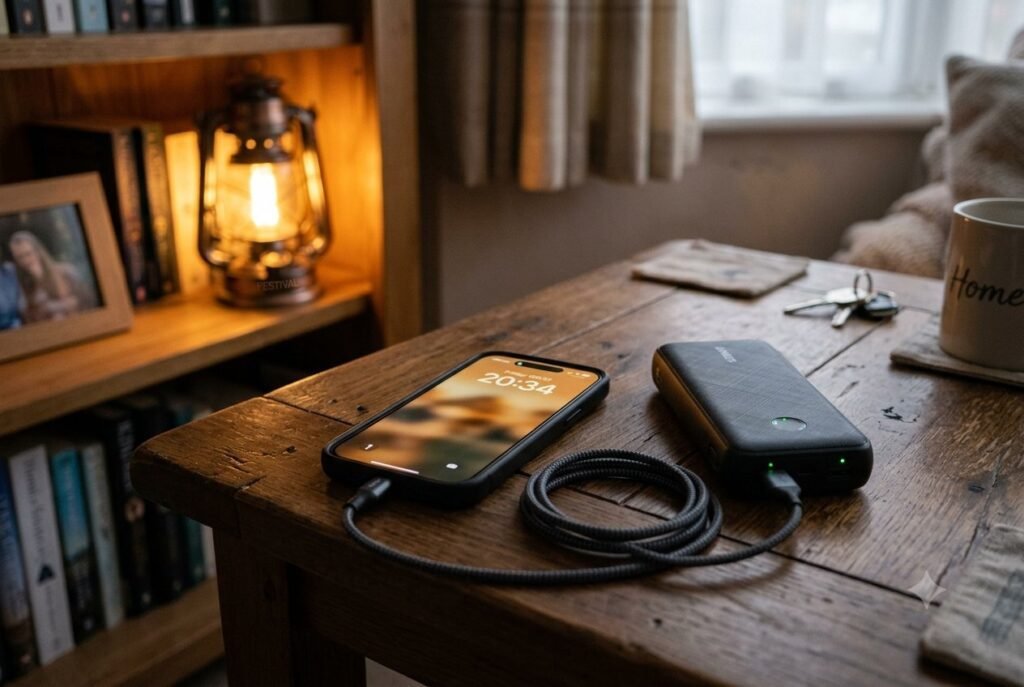
Here are your best options:
- Power bank. A fully charged 20,000mAh power bank can charge at least a few phones. This should keep you going for a 72-hour power cut if you’re sensible with it.
- Spare cables. Keep a few spare cables in your power cut kit so you’re not rooting around for them when the time comes.
- A power station. These are more of a luxury and will be overkill for a short cut, but they’re also great for camping or powering appliances away from home. A battery power station (Jackery, EcoFlow, or Bluetti type) is a large rechargeable battery with normal plug sockets, enough to keep a fridge, router, or medical equipment running through a longer outage.
Consider your realistic needs when picking a solution. You can always get a few power banks too instead of a bulky station.
Never use a petrol generator indoors or in a garage. If you’re worried about powering your refrigerator or keeping medical equipment running, a power station is your only reliable option.
Tip: If members of your household are very ill, elderly, disabled, or rely on power for medical equipment, you can join the National Grid’s Priority Services Register.
Warmth
Those affected by Storm Arwen said staying warm without power was the number one challenge. You can make use of things you already own, like a warm outfit during the day and extra duvets and blankets at night, but there are also various useful extras to go in your kit.
For example:
- Space blankets. Also called emergency foil blankets, these are cheap and stackable reflective sheets that trap your body heat. They’re great for an extra boost of warmth under the covers.
- Hand warmers. These are more of a comfort item, but they do take the edge off and lift morale. You can get disposable air-activated sachets or USB rechargeable ones.
- Hot water bottles. These will likely be your most effective solution (providing heat for 2-6 hours), but they require boiled water. Not a big deal if you follow the advice in the next section.
The most effective solution is free: get everyone in a single room, shut the doors and windows, block any draughts, and sit on cushions and blankets instead of cold floors. Here’s a full guide on staying warm without heating.
And for heaters that keep a room warm without power, see our pick of the best non-electric heaters.
Cooking & hot water
In emergency situations, small comforts make a big difference, and a hot brew and meal are top of the list. If you’re a fan of camping, you probably already own some ideal gear.
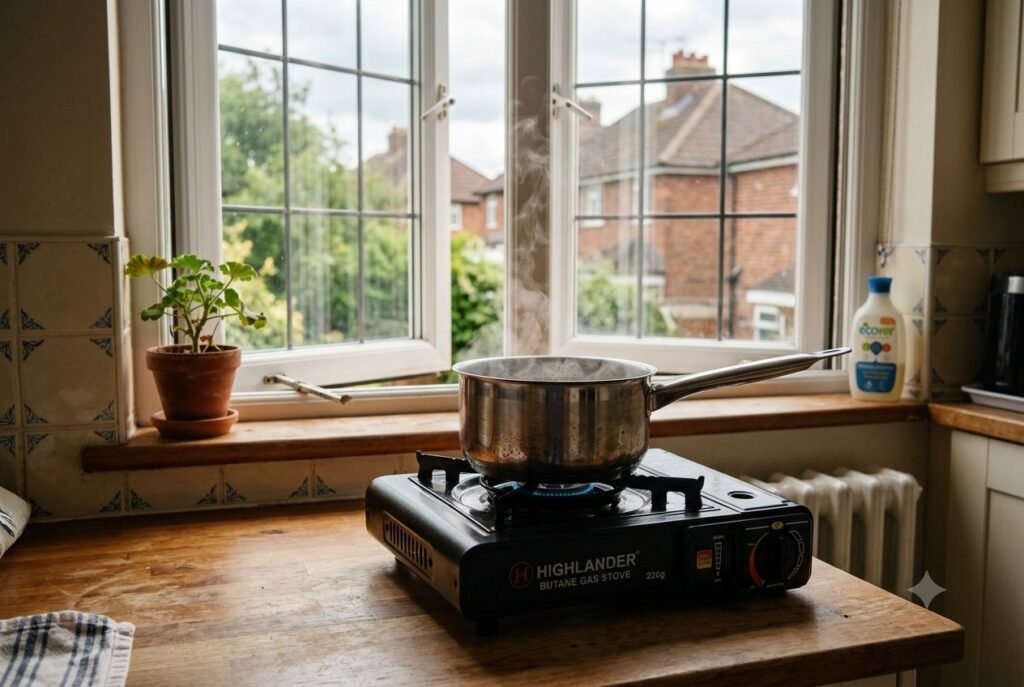
Here are the cooking essentials:
- Portable camping stove. The single-burner type with a lock-on canister boils a pan of water in minutes. Stable, simple, and clean enough for indoor use with a window cracked.
- Spare butane canisters. One canister gives you a few hours of burn time. Keep at least four in the box, enough for hot meals and drinks across a 72-hour outage, and store them somewhere cool.
Always keep a window open an inch when running any gas appliance indoors, and never bring a BBQ or petrol generator inside, both pump out deadly carbon monoxide.
For the full range of methods, see our guide on how to cook in a power cut.
Food & water
Your kitchen probably contains several suitable meals, like tinned goods, instant pasta or noodles, and cup-a-soups. You can cook many normal meals on a camping stove, but it’s best to keep it quick and simple; the kind of meals you’d take camping.
Here’s what to keep in your blackout box:
- Bottled water. Your cold tap may still work, but the UK Government recommends keeping around 3L per person in case water supply is disrupted. If you live in a tall apartment building, your water supply might rely on electrically powered pumps, so this applies to you. Our guide on how to store water for an emergency covers containers and amounts.
- Easy meals. Set aside things that need no fridge and little more than boiling water or a single pan: pasta, instant rice, porridge oats, cup-a-soups, noodles, tinned soup, beans, tuna, and dehydrated camping meals. Buy what you’d eat anyway and rotate it so it stays fresh.
- Eat the fridge food first. This stuff is on its way out anyway if you don’t plug it into a power station, so start with the more perishable items and work your way down.
Don’t forget: If you have a baby or pets at home, pack some extra formula and a few tins of pet food. If your supply is affected, see how to purify water in an emergency or pick one of the best water filters for emergencies.
Information & comms
In any emergency, you need to know what’s going on outside and be able to receive official updates. This becomes much harder in a power cut without proper preparation. Keeping your phone charged is the priority, but even then, local phone masts can be affected, so you might lose signal.
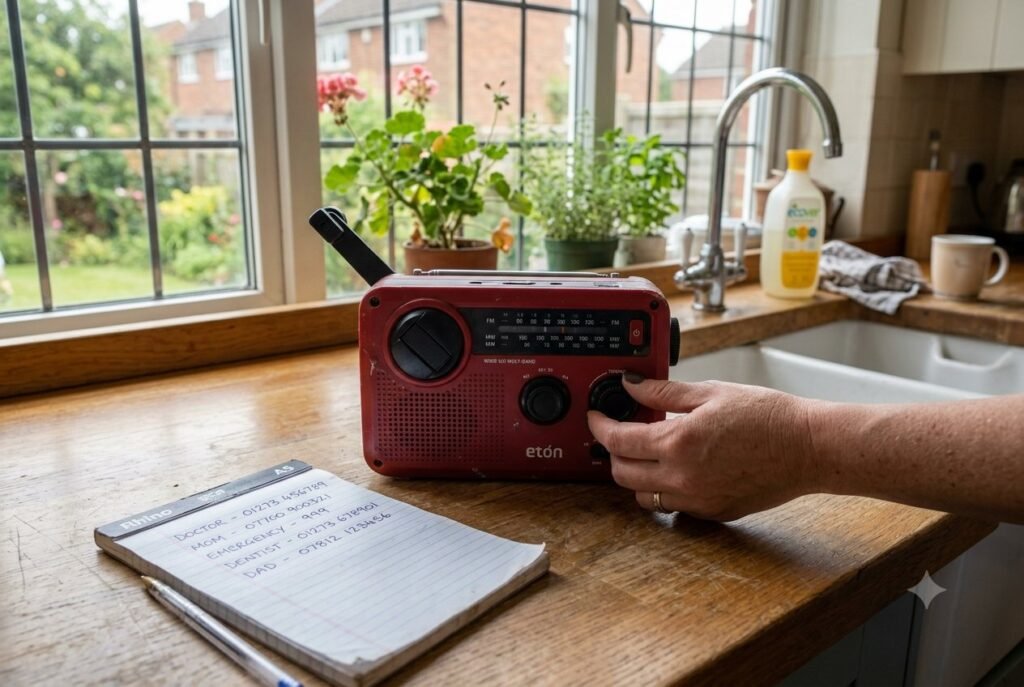
Your kit needs a back-up option:
- Wind-up or battery radio. BBC local radio carries live power cut updates, weather warnings, and emergency advice when the internet’s gone. A multi-power model (mains, USB, battery, wind-up, and solar) is ideal, and some double as a phone charger.
- Printed emergency contacts. Write down family numbers, your GP, your electricity network operator, and the power cut line, on paper, in case your phone dies. Save the number in your phone now too: it connects you straight to your local network operator to report a cut or check when power’s coming back. Our guide to making a household emergency plan covers the other numbers worth writing down.
One important detail: the free power cut line is 105 in England, Scotland, and Wales, but Northern Ireland has its own number (03457 643643), so save the right one for where you live.
And if you rely on a landline or a telecare alarm, check with your provider, modern digital lines often won’t work in a power cut without a backup battery, which they can usually supply free.
The extras
Here are a few optional extras:
- Offline entertainment. A pack of cards, a board game, colouring pens. These will also keep the kids happy, turning a frightening experience into something fun.
- Basic first aid kit. Cuts and knocks happen more easily by torchlight, so keep plasters, painkillers, and the basics in the box.
How much does it cost to build a power cut kit?
A basic power cut kit can cost as little as £50 to build and covers the essentials, though for prolonged blackouts, powering medical equipment, or just additional comfort, you might want a more comprehensive kit.
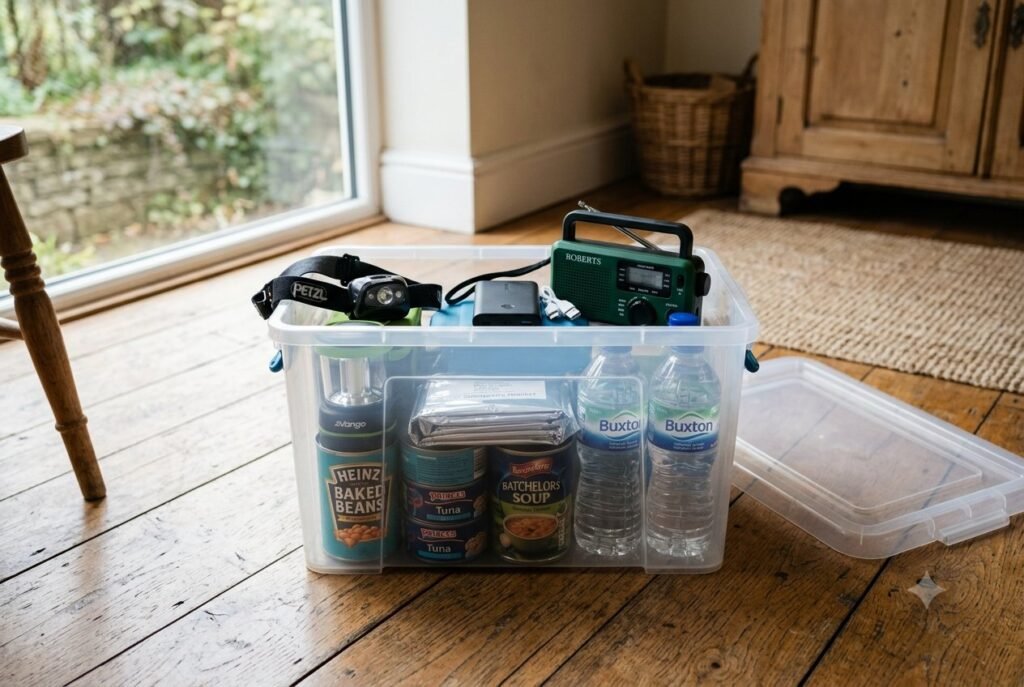
Here are three examples builds at different price ranges:
Basic (£40 to £80)
The essentials for a short outage, some of which you’ll own already:
- Two head torches
- A 20,000mAh power bank
- A wind-up or battery radio
- A few foil blankets
- A few days of tinned & no-cook food
- A couple of large bottles of water
- Printed emergency contacts (free)
This covers you for the typical few-hour power cut: light, a charged phone, news, warmth, and something to eat.
Medium (£120 to £200)
Solid comfort for a 24 to 72-hour outage. Everything in the Basic kit, plus:
- An LED lantern
- Extra food & water
- A small first aid kit
- A couple of plug-in emergency torches
- A butane camping stove & four canisters
- A hot water bottle & a pack of hand warmers
Now you can cook hot meals, light a whole room, and stay comfortable through a longer outage rather than just endure it.
Advanced (£400 to £900+)
For long outages, rural homes that lose power often, or households with medical needs. Everything in the Medium kit, plus:
- Extra canisters & a spare power bank
- A documents folder and any medical backup you rely on
- A battery power station to run a fridge, router, or medical equipment
The big cost here is the power station, so this tier is really only worth it if you genuinely need mains-level power during an outage. Most households never need to go this far.
Where to keep it & how to maintain it
Keep your power cut kit somewhere easily accessible and clearly label it. Don’t put it somewhere it’ll get buried in clutter or on a high shelf in the garage. You might have to retrieve it in the dark, after all.
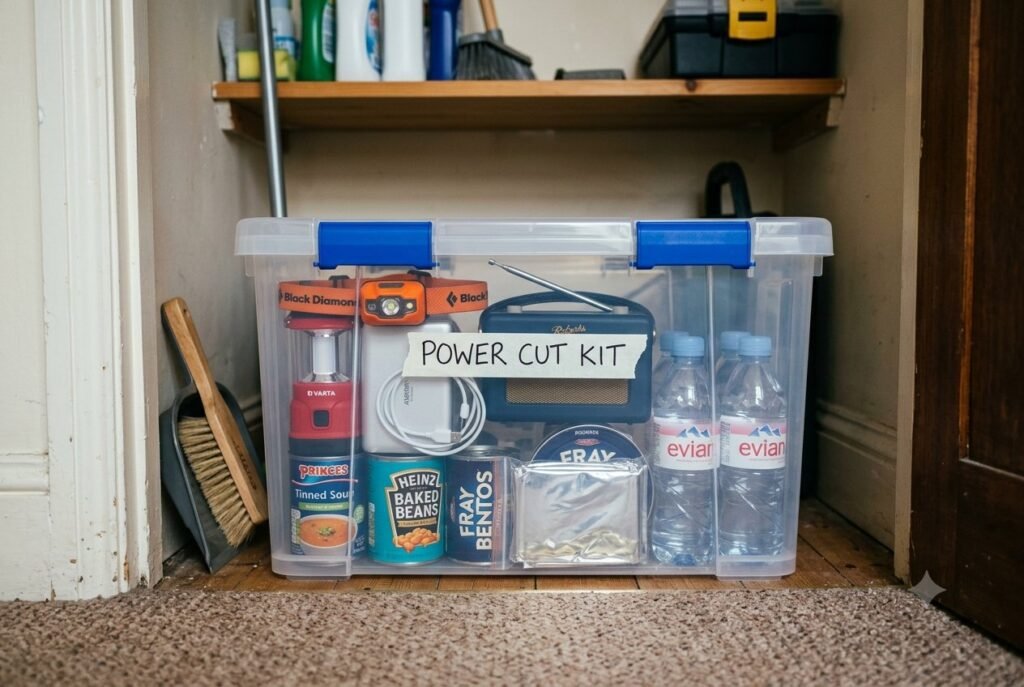
Check it roughly twice a year. A good idea is to do it the same days clocks change. Test torches and radios, check the dates on food, and anything you use, be sure to replenish.
Prepare before the lights go out
Power cuts are only stressful for the unprepared. Build the box once, keep it topped up, and they become one less thing to worry about.
If you’re building wider household resilience, our prepping for beginners guide puts the full picture together, and our bug out bag guide covers the grab-and-go version.
FAQs
Quick answers to the questions people ask most about building a power cut kit.
What should I put in a power cut kit?
A power cut kit should include a head torch, an LED lantern, a power bank, a wind-up radio, blankets, no-cook or camping food, water, and printed emergency contacts. For longer outages, add a camping stove, a first aid kit, medication, and some cash.
What is the 105 number?
105 is the free UK number to report a power cut or check on one in your area, connecting you straight to your local electricity network operator. It works in England, Scotland, and Wales; Northern Ireland uses 03457 643643.
Can I flush the toilet in a power cut?
Yes, in most homes, because toilets rely on mains water pressure and gravity, which aren’t affected by a power cut. The exception is if your home uses an electric pump, such as an upper-floor flat or a property with a pumped or macerator system.
Do mobile phones work in a power cut?
Usually at first, though phone masts can be affected in a widespread or lengthy outage, so signal isn’t guaranteed. The bigger issue is keeping your phone charged, which is why a power bank and a wind-up radio are worth having.
How long will food last in the fridge without power?
A fridge keeps food safe for about four hours with the door kept shut, and a full freezer for roughly 24 hours (up to 48 if it stays closed). If chilled food has been above fridge temperature for more than about four hours, throw it out even if it looks and smells fine, you can’t always tell by looking.
How do I prepare for 3 days without power?
Scale up the essentials: three days of water and no-cook or camping food, extra gas canisters, and enough battery capacity to keep phones and any medical equipment running. A power bank covers phones; a battery power station covers larger or essential items.
Are candles safe to use in a power cut?
They’re best avoided, as you’d need several of them and keeping an eye on them all becomes impractical and dangerous. LED torches and lanterns are brighter, safer, and last for years, so use those and keep candles only as a last resort.
Images on MindXP are AI-generated illustrations. Product images are checked against manufacturer photos for accuracy.

Professional writer and editor. Founder of MindXP, helping UK households prepare for power cuts, storms, and supply disruptions.